Server Uniforms Guide
The dining room's working wardrobe: server shirts, waist and bistro aprons, vests and ties, graded from café casual to fine-dining formal.
Shop Server Uniforms Now
Shop Server Uniforms on Amazon Shop Server Uniforms on eBayThe Amazon and eBay links on this page are affiliate links. If you make a purchase through them, Apparel Search may earn a commission.
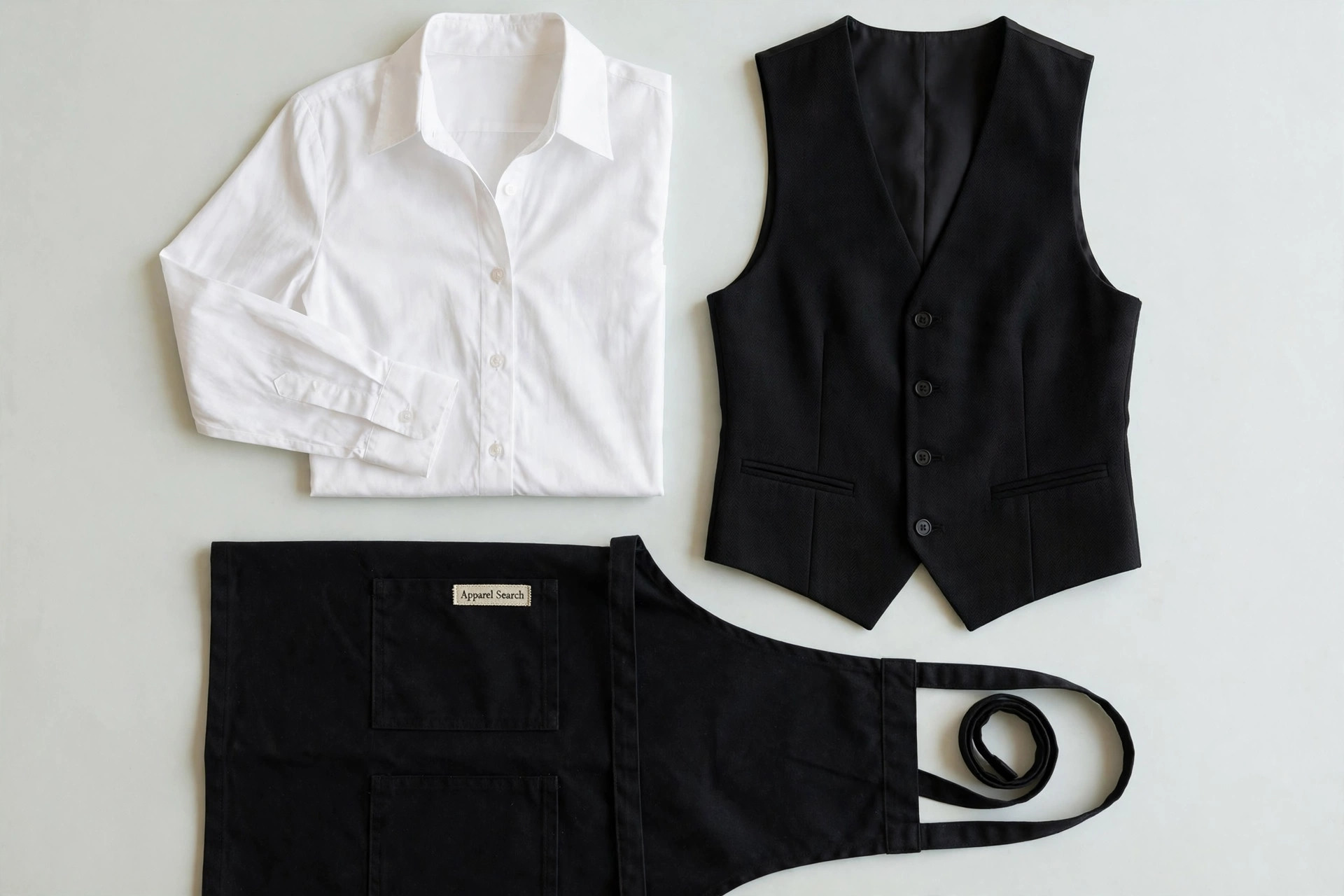
A server's uniform is set by the menu's price point: the café's branded tee and denim apron, the bistro's shirt and long bistro apron, the fine-dining room's waistcoat, tie and bib apron are all saying the same thing in different registers — you are in professional hands. The pieces are few but hard-working: a shirt that survives a double shift, an apron that carries the tools of the trade, and trousers and shoes that can do fifteen thousand steps on hard floors.
This guide breaks down the pieces and how they grade from casual to formal, the fabrics that survive food service, and the apron — the server's signature garment — in its three main forms. It completes this cluster with the hospitality uniforms guide, and the family is indexed in the women's uniforms guide.
The Pieces, Casual to Formal
The base is a shirt — a polo or branded tee at the casual end, a button-down Oxford or blouse in the middle, a fitted dress shirt with a tie or cravat at the formal end — worn with black or charcoal trousers and non-slip shoes. Over it, the grading pieces: a waistcoat/vest adds formality and pockets; a tie, bow tie or scarf adds the house colour; a jacket in fine dining marks captains and sommeliers out from the team.
Bartenders take the same kit more tailored — shirt, waistcoat, long apron — and baristas the most casual: tee or shirt with a sturdy cross-back apron that can take milk, syrup and a full shift at the machine. Across all grades the principle holds: one step more formal than the guests, never two.
Aprons: Waist, Bistro and Bib
The waist (half) apron ties at the waist with divided pockets for order pad, pens, corkscrew and cash — the classic server's toolbelt, worn short in cafés and longer in formal rooms. The bistro apron is its long version, falling below the knee with a front slit for walking, the uniform of brasseries and fine dining. The bib apron covers the chest for kitchen-adjacent and barista work where splashes fly; cross-back straps spare the neck on long shifts.
Apron fabrics are canvas, denim and poly-cotton twill, with leather and waxed canvas at the premium end. Pockets should be bar-tacked at the corners — apron pockets fail from the corners out — and ties long enough to wrap and tie in front, which is both the practical and the traditional way.
Fabrics, Fit and Care
Food service fabrics need stain resistance and frequent hot washing: poly-cotton shirts with soil-release, aprons in tightly woven twill that sheds crumbs and resists splashes. Black remains the industry default because it hides the most, with white reserved for shirts that are changed the moment they mark — a fine-dining room keeps spares at the pass for exactly this reason.
Fit is movement: servers reach, carry, crouch and turn in tight spaces, so shirts need shoulder room and a length that stays tucked (or is designed to be worn untucked), and trousers need a waistband that works with an apron tied over it. Care is daily and unforgiving — uniforms are washed after every shift in most houses, which is why staff hold several sets and why the rental model described in our mechanic uniforms guide is equally common in restaurant groups.
Common Questions
What do restaurant servers wear?
A shirt (polo to dress shirt, depending on formality), black or charcoal trousers, non-slip shoes and an apron — waist, bistro or bib. Formal rooms add a waistcoat and tie; cafés may use a branded tee with a denim or canvas apron.
What are the three types of server apron?
The waist apron (short, ties at the waist, pocketed — the classic server style), the bistro apron (long, below the knee, with a walking slit) and the bib apron (covers the chest, used for barista, bar and kitchen-adjacent work).
Why do servers wear black?
Black hides stains and spills better than any other colour, reads formal without effort, and standardises a team's appearance. It is the default in mid-range and fine dining; casual venues often substitute branded colours on shirts and aprons.
More Trade Uniform Guides in This Cluster
The other trade uniform guides in this wave — hospitality, security, salon and spa, mechanic and restaurant server uniforms:
Workwear & PPE Guides
Protective workwear systems from Apparel Search — hi-vis, flame-resistant and arc-rated clothing, welding and chainsaw protection, and safety footwear:
More to Explore on Apparel Search
Complete the circle with the wider hospitality picture — continue to the hospitality uniforms guide.
Next: Hospitality Uniforms Guide: Hotel Staff Uniforms by Role »Looking for Women's Clothing Stores?
This guide helps you choose server uniforms graded to the restaurant's style and price point. To browse where to buy, visit our womens clothing store directory, where you can find retailers that carry them.