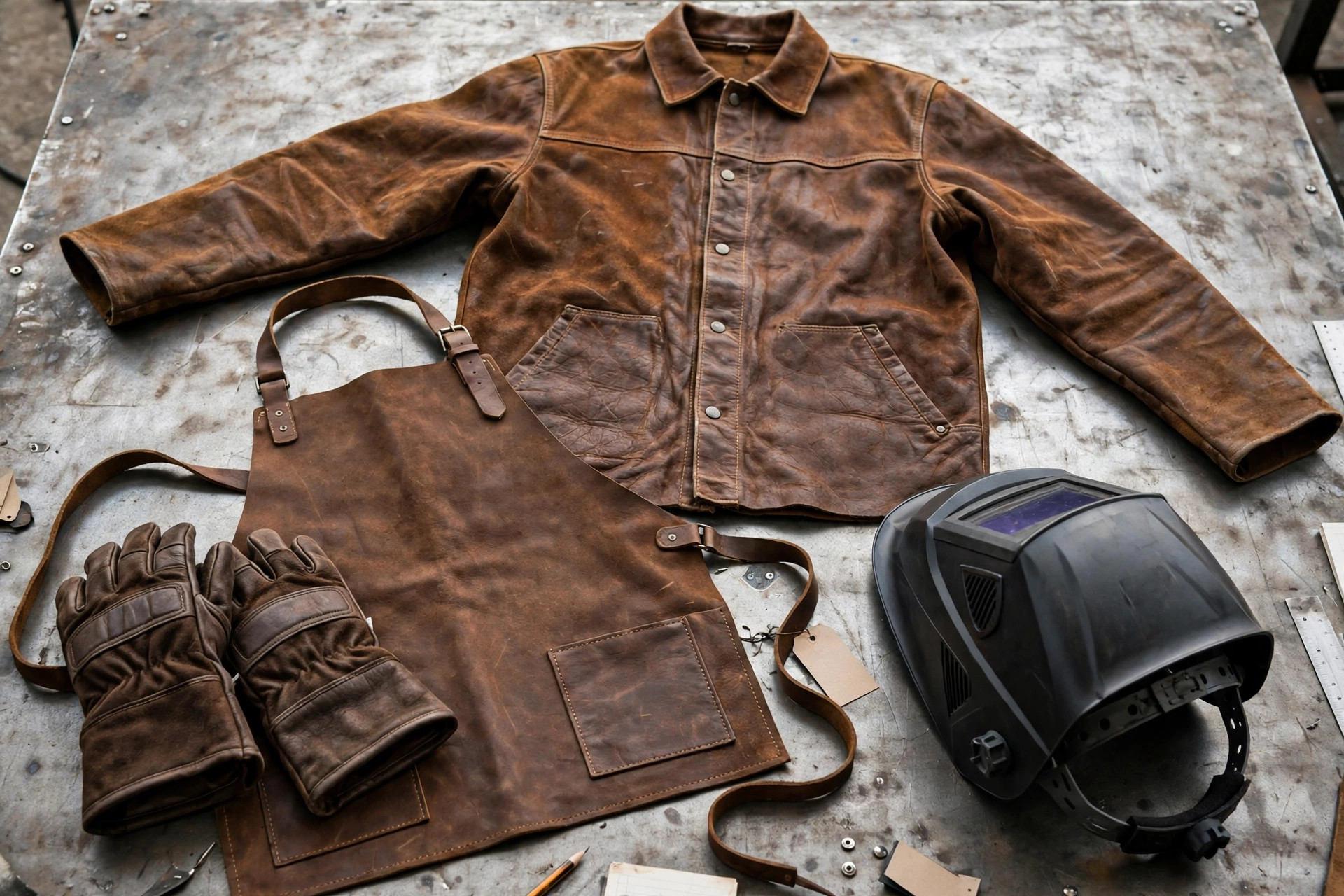
Welding apparel protects against sparks, molten spatter, radiant heat, and ultraviolet radiation from the arc. The ensemble is a system: a welding helmet or shield for the eyes and face, a flame-resistant or leather jacket, a bib apron for the lap and legs when seated, gauntlet gloves, and spats or boot covers so spatter cannot lodge in footwear. Cotton work clothes alone are not welding apparel — untreated fabrics ignite and synthetic fabrics melt.
The Core Garments
Jackets come in leather (the traditional choice for heavy spatter, durable and spark-shedding), FR cotton and blends (lighter and cooler for light-to-medium work), and hybrids with leather sleeves and an FR body. Aprons — bib and split-leg styles in leather or FR material — protect the front of the body and the tops of the legs, especially when welding seated. Gloves are gauntlet-style to cover the wrist gap, in heavier leather for stick welding and finer leather for TIG work where dexterity matters. Spats and leggings cover the ankle and shoe top. Caps and bandanas under the helmet protect the scalp and ears, and protective aprons in other trades follow the same material logic.
Choosing for the Process
Match the ensemble to the process and position. Heavy stick and flux-core work, overhead welding, and cutting throw the most spatter and call for leather and full coverage; light TIG work allows lighter FR clothing and finer gloves. Overhead work demands ear protection and closed collars because sparks fall. Where the wider workplace also requires FR daily wear, welding gear layers over flame-resistant clothing rather than over street clothes.
Care and Limits
Shake out cuffs, pockets, and folds before and after work — trapped spatter smolders. Keep leather dry and supple, store garments away from UV and ozone, and retire jackets and gloves with holes, hardened or cracked leather, or failed seams: a pinhole is where the next spark lands. Never weld in torn clothing, rolled sleeves, or synthetic layers, and keep apparel free of oil and grease contamination.
FAQs
- Why is leather used so much in welding apparel?
- Leather resists sparks and spatter, does not melt, and is durable against abrasion, which makes it the traditional material for jackets, aprons, gloves, and spats in heavy welding. Its trade-offs are weight and heat, so lighter FR fabrics are used where the spatter load allows.
- Can I weld in a regular cotton shirt?
- Untreated cotton can ignite from spatter and keeps burning. Welding calls for FR or leather apparel worn closed, with gauntlet gloves and eye and face protection. At minimum, the clothing system should be flame-resistant and free of cuffs and open pockets that trap sparks.
- What are welding spats for?
- Spats cover the top of the boot and ankle so sparks and molten spatter cannot drop into the footwear or lodge against the ankle. They are part of the ensemble along with the helmet, jacket, apron, and gloves.
Workwear & PPE Guides
This guide is part of the Apparel Search workwear and PPE systems series. Browse the full series and the related trade uniform guides below.
- High-Visibility Clothing
- Hi-Vis Classes
- Arc-Rated Clothing
- NFPA 2112
- Flame-Resistant Clothing
- Chainsaw Chaps
- Cut-Resistant Sleeves
- Disposable Coveralls
- Protective Aprons
- Safety Toe Boots
- Composite Toe Boots
- Specialty Safety Toe Features
- Steel-Toe Boots (Men's Clothes Guide)
Trade Uniform Guides
Apparel Search: explore the Clothes Guide and shopping directory for more workwear and uniform resources.