Men's Steel-Toe Boots Guide
Men's steel-toe boots are protective work boots whose toe boxes are reinforced with a steel cap rated to withstand falling objects and compression - the boot form of safety footwear, rising above the ankle for support and coverage on construction sites, in warehouses, plants and yards. This guide covers the boot specifically: cap standards, boot construction and heights, while its lower-cut siblings - steel toe shoes and the wider work boot family - have their own guides in this letter.
Shop Men's Steel-Toe Boots Now
Shop Men's Steel-Toe Boots on Amazon Shop Men's Steel-Toe Boots on eBayThe Amazon and eBay links on this page are affiliate links. If you make a purchase through them, Apparel Search may earn a commission.
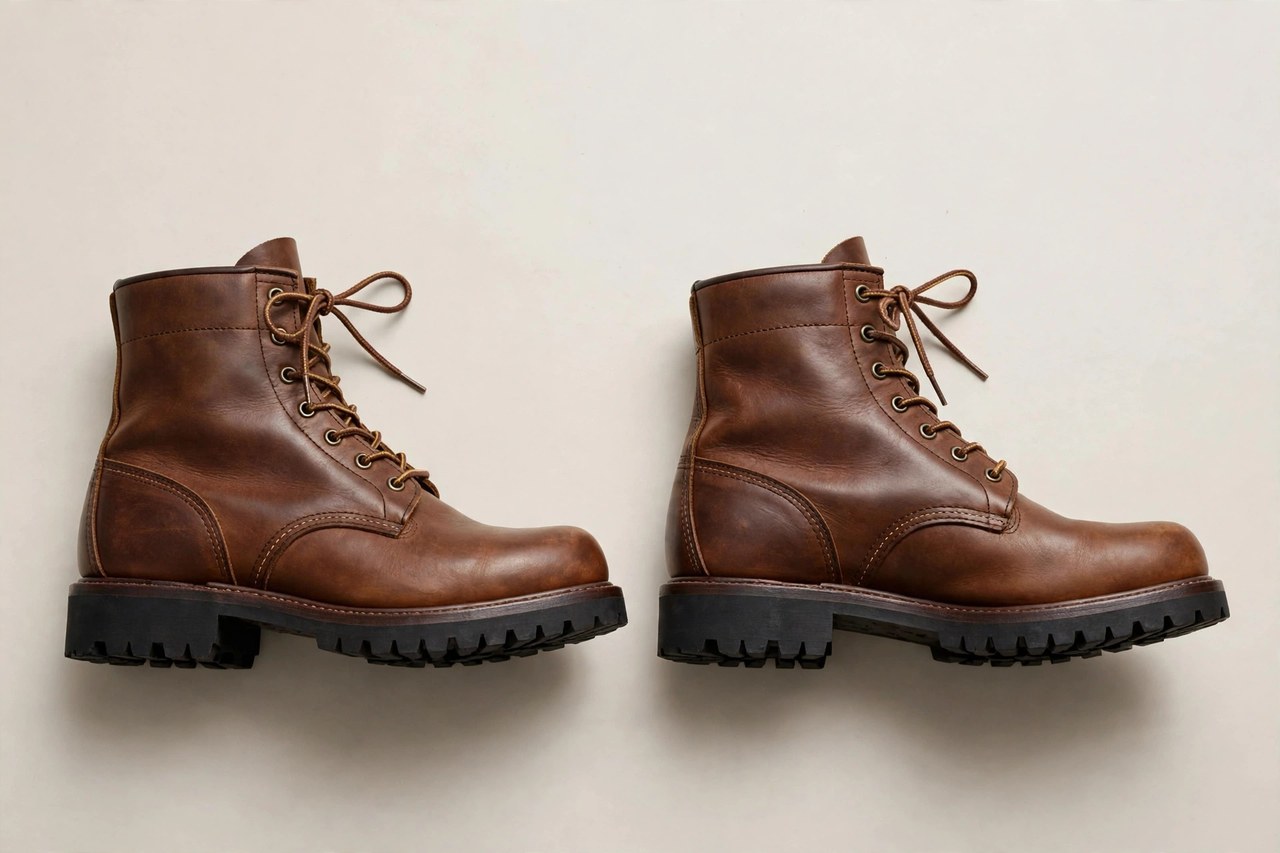
Men's steel-toe boots are protective work boots whose toe boxes are reinforced with a steel cap rated to withstand falling objects and compression - the boot form of safety footwear, rising above the ankle for support and coverage on construction sites, in warehouses, plants and yards. This guide covers the boot specifically: cap standards, boot construction and heights, while its lower-cut siblings - steel toe shoes and the wider work boot family - have their own guides in this letter. This guide walks through the choices that matter - style, fit, fabric and finish - with the practical detail a product listing rarely gives you, and closes with the care habits that keep the garment in service.
Ratings, Caps and Boot Construction
A safety boot is a rated system, and the cap is only its headline. In the United States, look for ASTM F2413 markings: impact and compression ratings (I/C), with optional codes for metatarsal guards, electrical hazard (EH), static dissipation and puncture-resistant plates. The boot around the cap matters as much: full-grain leather uppers that survive abrasion, Goodyear-welted or direct-attached soles that resist the floor's chemistry, oil- and slip-resistant lug outsoles, and heights from six-inch work boots to eight and ten-inch lineman and logger builds. Composite and alloy caps exist for men who pass through metal detectors or work in cold that steel chills - same ratings, different materials, covered in the steel toe shoes guide's comparisons.
Judge footwear by attachment and compound: cemented soles are light and affordable, stitched or welted constructions cost more and can be repaired, and the outsole rubber decides grip against longevity - soft compounds bite, hard compounds endure. Linings decide comfort over hours, removable insoles decide whether your own supports can come along, and honest weight decides whether the pair disappears on the foot or taxes every mile of the day.
Fit and Sizing
Safety boots fit like the work boots they are: room for the toes to work behind a cap that does not forgive - your toes should never touch the cap's edge, which is a sizing failure the steel will announce all shift. Fit at day's end in work socks, with the heel held and the instep locked by the laces the boot provides. Width is a real choice in this category and matters more than in fashion boots: a squeezed forefoot behind an immovable cap is a twelve-hour punishment. Break-in is real for leather work boots; the first week is a negotiation, conducted in short shifts if the job allows.
Fit footwear late in the day in the socks you will actually wear, with roughly a thumb's width beyond the longest toe, the heel held without lift, and the foot's widest point meeting the shoe's widest point. Sizes are unstandardized between makers - trust your measured length and width over the printed number, and require no break-in argument: a shoe that needs excuses in the shop delivers them on the road.
Wearing and Care
Work boots earn their keep in filth: brush off daily, wash down weekly, dry at room temperature (forced heat cracks leather and kills cement), and condition on the leather's schedule, not the calendar's. Rotate two pairs if the work allows - a rested boot dries fully and doubles its life. Inspect the cap zone and sole bond monthly; a safety boot with a separated sole or a dented cap has spent its rating, and no amount of leather care buys it back.
Rotation is the first care rule: a day of rest between wears lets linings dry and cushioning rebound, and it doubles a rotation's life compared with daily wear of one pair. Clean after use, dry at room temperature away from radiators, hold shape with trees or paper, and condition leather on a schedule rather than when it looks thirsty. Reproof weather finishes when water stops beading, and resole stitched footwear before the wear reaches the welt.
Common Questions
What do the ASTM ratings on steel-toe boots mean?
ASTM F2413 is the North American standard for protective footwear. The core ratings are impact (a falling weight) and compression (a rolling or static load), marked I and C on the label sewn inside the boot. Additional codes add metatarsal protection (Mt), electrical hazard resistance (EH), static-dissipative (SD) and puncture resistance (PR). Your employer's safety program specifies which codes the job requires - match the label to the requirement, not to the marketing.
Steel, composite or alloy toe - which is best?
Steel is the strongest per millimeter, the most affordable, and conducts cold and electricity. Composite (carbon fiber, Kevlar, plastic) is lighter, warmer in winter, metal-detector friendly and non-conductive, at a bulkier profile. Alloy (aluminum, titanium) splits the difference - light like composite, slimmer like steel. All can meet the same ASTM ratings; choose by your site's hazards, climate and security gates, not by hierarchy.
How should steel-toe boots fit?
With room the steel cannot negotiate: toes clear of the cap in every direction, the forefoot in its correct width (never squeezed against an immovable wall), the heel held and the instep laced snug. Fit them late in the day in your work socks. A pinch that a leather shoe would stretch out of is permanent behind a cap - which makes width, in this one category, worth paying attention and money for.
More in Men's Clothes Guide S
The Safety Boot, Defined
A steel-toe boot - also known as a safety boot, steel-capped boot or safety shoe - is a durable boot or shoe with a protective reinforcement in the toe which protects the foot from falling objects or compression, usually combined with a midsole plate to protect against punctures from below. Although traditionally made of steel, the reinforcement can also be made of composite material, a plastic such as thermoplastic polyurethane (TPU), aluminum or other materials, and steel-toe boots are important in the construction industry and in many industrial settings, under occupational safety rules.
More to Explore on Apparel Search
Looking for Men's Clothing Stores?
This guide explains men's steel-toe boots. To browse where to buy, visit our men's clothing store directory, where you can find retailers that carry them.