Men's Steel Toe Shoes Guide
Men's steel toe shoes are low-cut protective footwear: the safety cap and rated sole of a work boot in a shoe's body - oxfords, hikers and athletic-styled safety shoes for warehouses, light industry, delivery and service work where the hazards are real but the ankle support of a boot is not required. This guide takes the shoe form on its own terms; the boot form is covered in our steel-toe boots guide, and the heavy-duty intersection in steel toe work boots.
Shop Men's Steel Toe Shoes Now
Shop Men's Steel Toe Shoes on Amazon Shop Men's Steel Toe Shoes on eBayThe Amazon and eBay links on this page are affiliate links. If you make a purchase through them, Apparel Search may earn a commission.
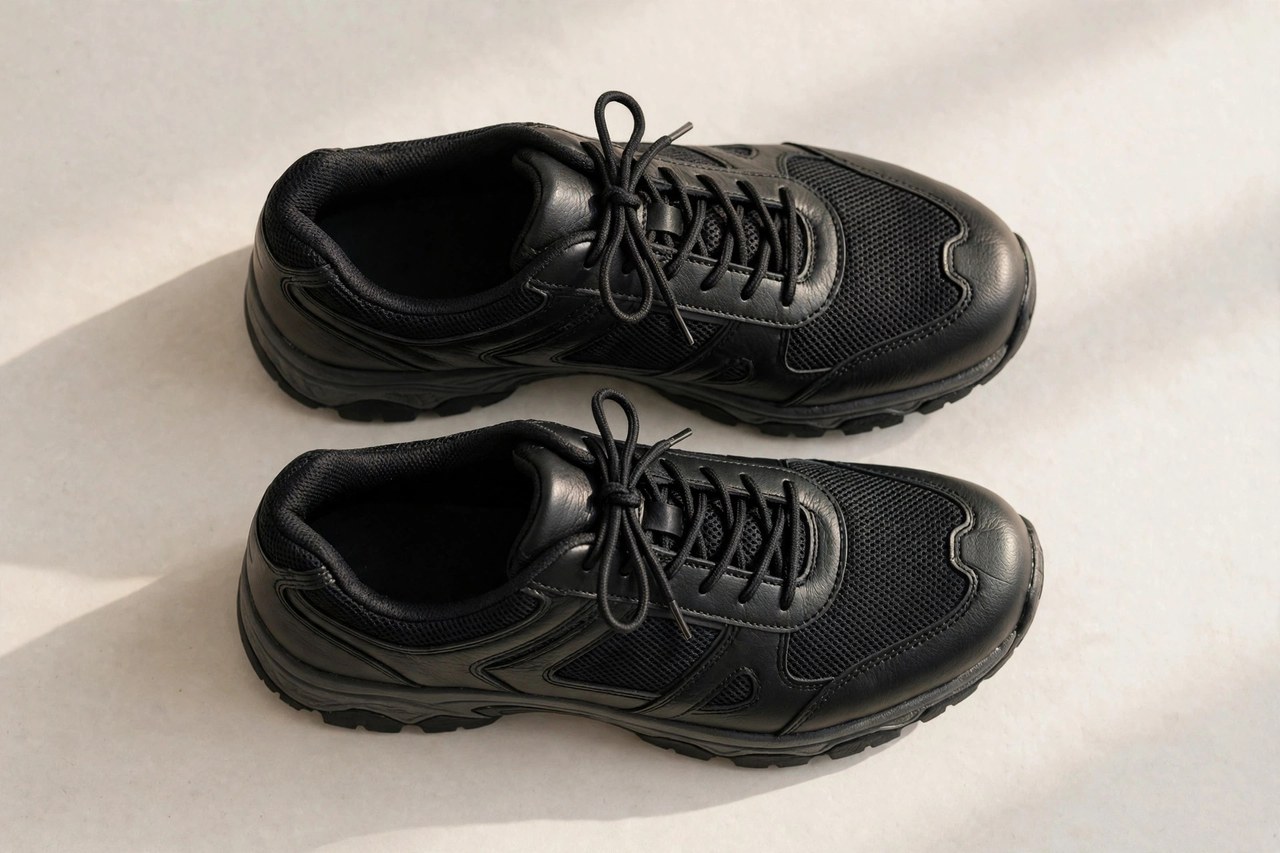
Men's steel toe shoes are low-cut protective footwear: the safety cap and rated sole of a work boot in a shoe's body - oxfords, hikers and athletic-styled safety shoes for warehouses, light industry, delivery and service work where the hazards are real but the ankle support of a boot is not required. This guide takes the shoe form on its own terms; the boot form is covered in our steel-toe boots guide, and the heavy-duty intersection in steel toe work boots. This guide covers the styles worth knowing, the fit points that decide comfort, the fabrics and construction that separate a good buy from a regret, and the simple care that makes the garment last.
Oxford, Hiker and Athletic: The Safety Shoe Silhouettes
The category has modernized into three silhouettes. The safety oxford dresses like a work shoe and suits supervisors and light-duty floors. The hiker-styled safety shoe adds ankle padding and aggressive tread for mixed indoor-outdoor duty. The athletic safety shoe - the growth story - builds the cap into a trainer's body: knit or mesh uppers, foam midsoles, weights that end the old complaint that safety shoes are punishment. All carry the same ASTM F2413 impact and compression ratings as boots, with electrical hazard and slip-resistance codes by model. Cap material is the live choice: steel for slim strength, composite for weight, warmth and metal-free sites, alloy between them.
Judge footwear by attachment and compound: cemented soles are light and affordable, stitched or welted constructions cost more and can be repaired, and the outsole rubber decides grip against longevity - soft compounds bite, hard compounds endure. Linings decide comfort over hours, removable insoles decide whether your own supports can come along, and honest weight decides whether the pair disappears on the foot or taxes every mile of the day.
Fit and Sizing
Fit safety shoes as you would the shoes they imitate, with the cap's one amendment: the toes must clear the cap entirely - no contact at the front, no squeeze at the sides - because the cap will not stretch a millimeter across a career. Athletic models are worn in trainer sizes with trainer socks; oxford patterns in work socks. The heel holds by the last's shape rather than a boot's lacing height, so a heel that lifts in the shop will lift on the floor, at hour nine, when it matters.
Fit footwear late in the day in the socks you will actually wear, with roughly a thumb's width beyond the longest toe, the heel held without lift, and the foot's widest point meeting the shoe's widest point. Sizes are unstandardized between makers - trust your measured length and width over the printed number, and require no break-in argument: a shoe that needs excuses in the shop delivers them on the road.
Wearing and Care
Safety shoes split their care by silhouette: leather oxfords get brushing and conditioning; athletic models get air, rotation and an occasional cool wash of the uppers (never the dryer). All of them want drying between shifts and a sole inspection habit - tread worn smooth on a warehouse floor is a slip rating spent. When the cap dents, the midsole dies or the sole separates, the shoe's rating has left with its structure: replace it as equipment, not as fashion.
Rotation is the first care rule: a day of rest between wears lets linings dry and cushioning rebound, and it doubles a rotation's life compared with daily wear of one pair. Clean after use, dry at room temperature away from radiators, hold shape with trees or paper, and condition leather on a schedule rather than when it looks thirsty. Reproof weather finishes when water stops beading, and resole stitched footwear before the wear reaches the welt.
Common Questions
Are steel toe shoes as protective as steel-toe boots?
At the cap, identically - both are rated to the same ASTM impact and compression standards, and a rated shoe protects the toes exactly as a rated boot does. The boot adds what the shoe cannot: ankle support and coverage, higher protection against punctures, spills and rolling hazards at the ankle, and a taller shaft against debris. Match the form to the hazard assessment, not to habit: many floors genuinely need only the shoe.
Why choose composite toe shoes over steel?
Weight, temperature and detection. Composite caps are markedly lighter across a long shift, do not conduct winter cold into the toes, and pass metal detectors - the airport, courthouse and secure-site advantage. They are bulkier for the same rating and usually cost more. Steel remains slimmer and cheaper. Both meet the same standards; the job's environment, not the cap's mythology, should decide.
Can I wear steel toe shoes all day comfortably?
Modern ones, yes - that is the category's whole recent history. Athletic-styled safety shoes with foam midsoles and knit uppers wear like the trainers they imitate, and even leather safety oxfords have adopted cushioned, removable insoles. The comfort conditions are the footwear universals: correct width (vital behind an unyielding cap), rotation between shifts, and socks that belong to the work. A safety shoe that hurts is usually a sizing confession.
More in Men's Clothes Guide S
From Our Original Guide: The Safety Shoe
Our original steel toe shoes page noted the category’s other name - this type of shoe can also be referenced as a safety shoe - and repeated the protective definition in the shoe’s form: a steel-toe shoe is durable footwear with a protective reinforcement in the toe protecting the foot from falling objects or compression, usually combined with a midsole plate against punctures from below, the reinforcement traditionally steel but also made of composite material or plastic. It set the shoe inside the general definition this letter keeps: footwear intended to protect and comfort the human foot while the wearer does various activities - and also an item of decoration and fashion, a claim the modern athletic safety shoe works hard to honor. Its links are carried on this page.
Looking for Men's Clothing Stores?
This guide explains men's steel toe shoes. To browse where to buy, visit our men's clothing store directory, where you can find retailers that carry them.