Men's Steel Toe Work Boots Guide
Men's steel toe work boots are the heavy-duty union of two ideas this letter also treats separately: the work boot - built for labor's abrasion, weather and hours - and the steel safety toe that rates it for impact and compression. Where our steel-toe boots guide reads the category from the cap outward, this guide reads it from the work inward: the boot as a tradesman's tool system, chosen for a specific job's ground, weather and hazards, and maintained like the equipment it is.
Shop Men's Steel Toe Work Boots Now
Shop Men's Steel Toe Work Boots on Amazon Shop Men's Steel Toe Work Boots on eBayThe Amazon and eBay links on this page are affiliate links. If you make a purchase through them, Apparel Search may earn a commission.
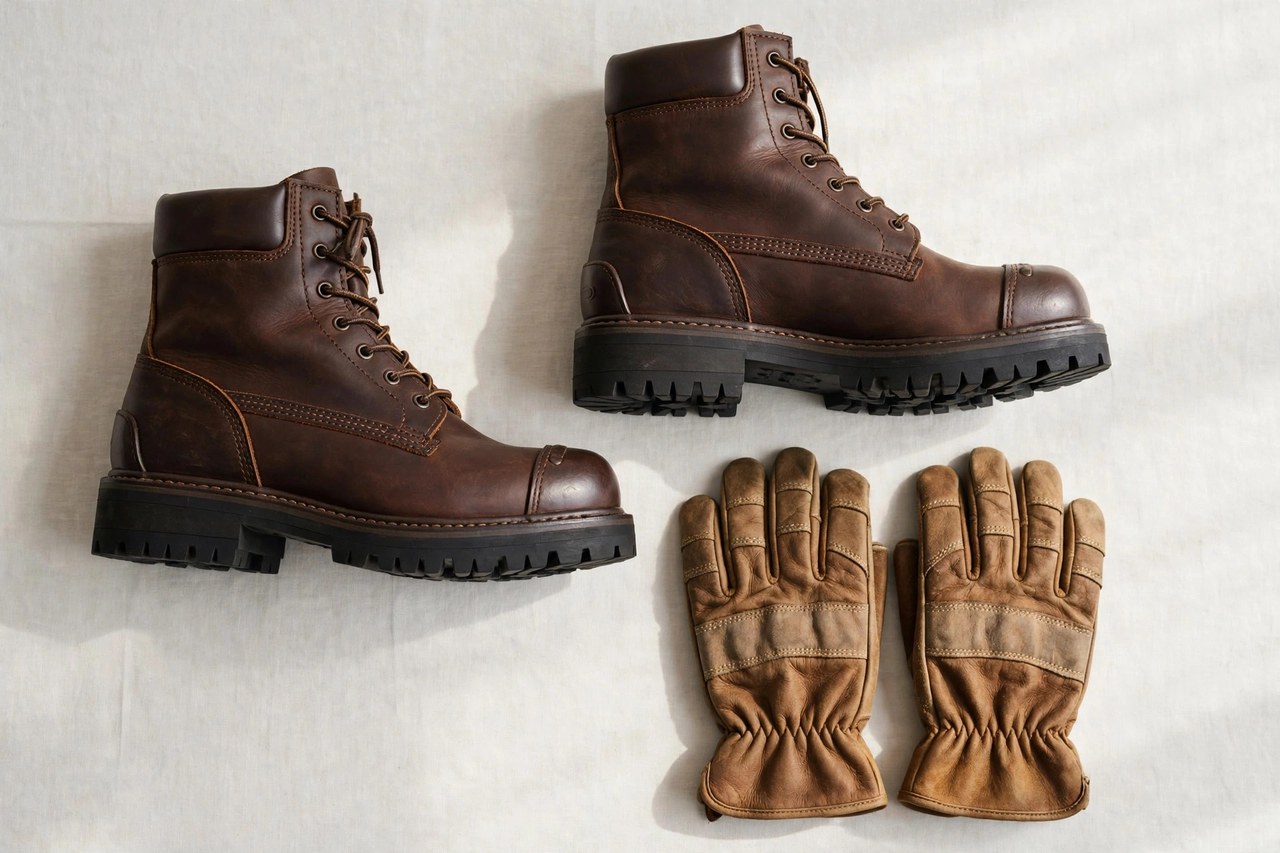
Men's steel toe work boots are the heavy-duty union of two ideas this letter also treats separately: the work boot - built for labor's abrasion, weather and hours - and the steel safety toe that rates it for impact and compression. Where our steel-toe boots guide reads the category from the cap outward, this guide reads it from the work inward: the boot as a tradesman's tool system, chosen for a specific job's ground, weather and hazards, and maintained like the equipment it is. This guide walks through the choices that matter - style, fit, fabric and finish - with the practical detail a product listing rarely gives you, and closes with the care habits that keep the garment in service.
Specifying the Boot by the Job
Job specification writes the boot. Construction and framing want six-to-eight-inch leather boots, welted, with lug soles and EH ratings around site power. Warehouse and logistics work splits between boots and the safety shoes of our sibling guide. Outdoor and utility work adds waterproof membranes, insulation graded by temperature, and metatarsal guards where loads are handled at height. Every specification hangs on the same armature: full-grain leather, a sole attachment that survives the floor (Goodyear welts for rebuildability, direct-attach for chemical resistance and price), puncture plates where nails and rebar litter the ground, and the ASTM label that converts all of it from claim to rating.
Judge footwear by attachment and compound: cemented soles are light and affordable, stitched or welted constructions cost more and can be repaired, and the outsole rubber decides grip against longevity - soft compounds bite, hard compounds endure. Linings decide comfort over hours, removable insoles decide whether your own supports can come along, and honest weight decides whether the pair disappears on the foot or taxes every mile of the day.
Fit and Sizing
A work boot's fit is a shift-length contract: toes clear of the cap, forefoot in its true width, heel seated, and the whole boot laced to lock the instep so the foot does not swim into the cap across a day. Fit in the socks of the job, at the hour your feet are largest, and respect the break-in - quality leather work boots mold across the first weeks, and the trade's wisdom is to rotate a new pair in on short shifts rather than christen it on a twelve-hour pour. Insoles are consumables here: replace them on the calendar, not when they confess.
Fit footwear late in the day in the socks you will actually wear, with roughly a thumb's width beyond the longest toe, the heel held without lift, and the foot's widest point meeting the shoe's widest point. Sizes are unstandardized between makers - trust your measured length and width over the printed number, and require no break-in argument: a shoe that needs excuses in the shop delivers them on the road.
Wearing and Care
Maintain work boots like tools: knock off the day, brush and wash on the week's rhythm, dry slowly and never by forced heat, condition leather before it cracks rather than after, and rotate two pairs wherever the budget reaches - the second pair is the cheapest life-extension any boot can be given. Retire by structure: sole separation, a crushed or dented cap, tread worn to the slip, lining worn through. A work boot's pension is honorable and non-negotiable, because the rating it retires with is the one your toes were trusting.
Rotation is the first care rule: a day of rest between wears lets linings dry and cushioning rebound, and it doubles a rotation's life compared with daily wear of one pair. Clean after use, dry at room temperature away from radiators, hold shape with trees or paper, and condition leather on a schedule rather than when it looks thirsty. Reproof weather finishes when water stops beading, and resole stitched footwear before the wear reaches the welt.
Common Questions
What is the difference between steel-toe boots and steel toe work boots?
Emphasis, in these guides' division of the subject. The steel-toe boots guide treats the protective category from the cap and its ratings outward - standards, cap materials, heights. This guide treats the work boot as a job system - matching leather, soles, waterproofing and insulation to specific trades - with the steel cap as one specification among several. The products overlap heavily; the buying questions differ, which is why both pages exist.
How long do steel toe work boots last?
Six months to two years of daily trade work is the honest range, set by hours, ground and care: welted leather boots rotated and maintained reach the top of it, cemented boots on concrete live at the bottom. Resoling extends welted pairs through a second life. The cap's rating dies with the boot's structure, so 'lasting' means structure, not appearance - judge retirement by sole bond, tread and cap integrity.
Are waterproof steel toe work boots worth it?
For outdoor trades, unambiguously - a waterproof membrane boot ends the wet-sock shift and its trench-foot miseries, at the cost of some breathability in summer heat. Indoor trades pay for a feature they will never use and sweat for the privilege. The middle specification - waterproof leather without a membrane - sheds site water and puddles while breathing better, and is the right answer for mixed duty.
More in Men's Clothes Guide S
Should You Be Wearing These?
Should you be wearing this style of footwear to work? That depends on the type of work you are doing - if you are an accountant working in an office building, you may not need this sort of footwear for your line of work. Most boots cover the foot and ankle, some part of the lower calf, some higher; boots are worn for functionality - protecting the foot and leg from water, extreme cold, mud or hazards, with work boots protecting wearers from chemicals or using a steel toe - or for ankle support in strenuous activities with added traction requirements.
Looking for Men's Clothing Stores?
This guide explains men's steel toe work boots. To browse where to buy, visit our men's clothing store directory, where you can find retailers that carry them.