Men's Boots Guide
Men's boots are the footwear family that covers the ankle and commits to a purpose: work boots built around safety standards, hiking boots built around trails, dress and Chelsea boots built around polish, and winter boots built around insulation. No other category in the B letter spans so much ground - literally - and the buying skill is matching the boot's engineered purpose to your actual use, because a boot perfect for one job is usually mediocre at the others.
Shop Men's Boots Now
Shop Men's Boots on Amazon Shop Men's Boots on eBayThe Amazon and eBay links on this page are affiliate links. If you make a purchase through them, Apparel Search may earn a commission.
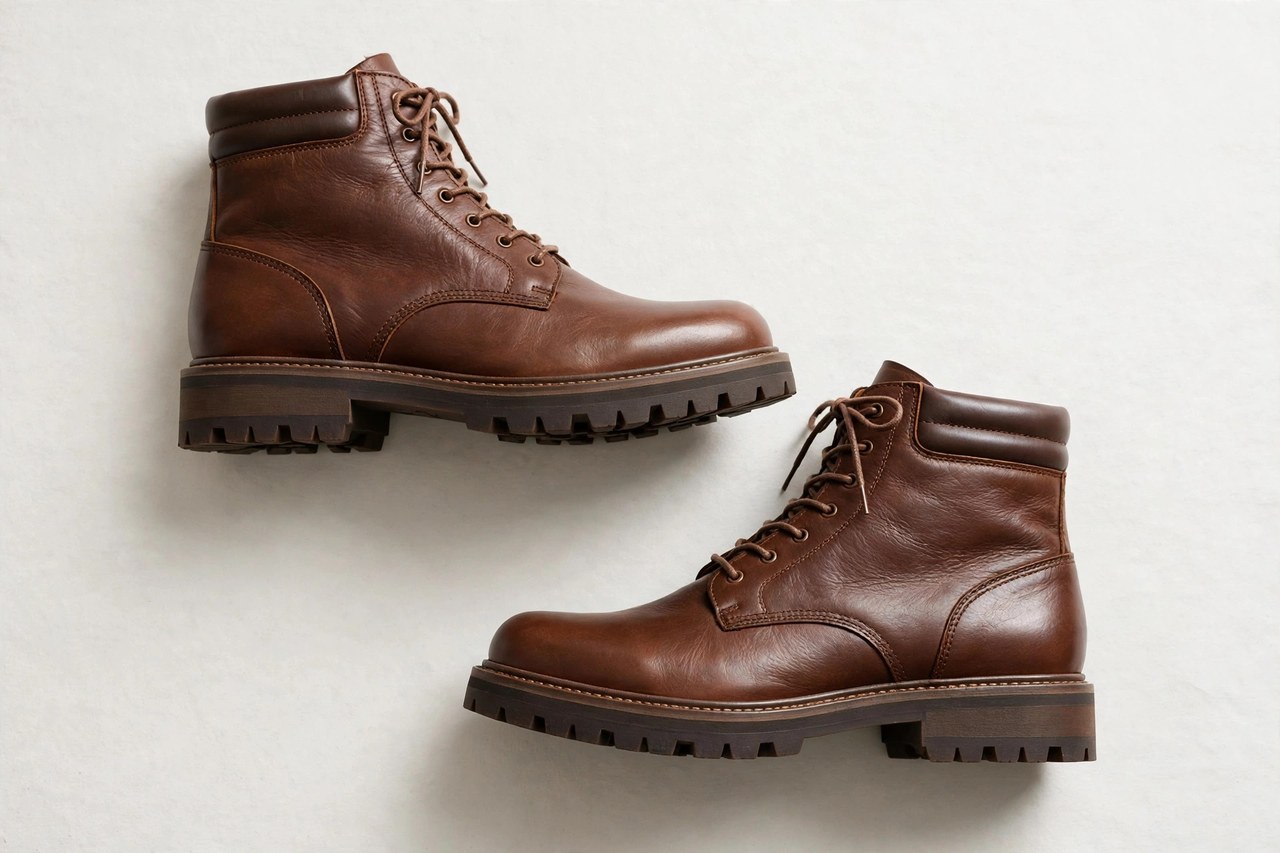
Men's boots are the footwear family that covers the ankle and commits to a purpose: work boots built around safety standards, hiking boots built around trails, dress and Chelsea boots built around polish, and winter boots built around insulation. No other category in the B letter spans so much ground - literally - and the buying skill is matching the boot's engineered purpose to your actual use, because a boot perfect for one job is usually mediocre at the others. This guide is built around the questions buyers actually ask: which style, which size, which fabric, and what will it look like after a year of real use - answered in order, with the trade-offs stated plainly.
Three classic styles get their own guides: the ring-and-strap harness boot, the low-heeled western roper boot, and the rubber-and-leather duck boot built for wet ground.
Styles and Construction
Work boots lead with standards: steel or composite safety toes rated to code, electrical hazard protection, slip-resistant lugged soles, and waterproof membranes for outdoor trades. Hiking boots divide into low, mid and high cuts with shanks and tread tuned to terrain. Dress boots - Chelsea, chukka, brogue and plain-toe derby boots - put a boot's coverage over a shoe's manners. For the dress boot most men reach for first, see our dedicated Chelsea boots guide. Winter boots add rated insulation and deep lug soles. Across all of them, construction decides value: a stitched Goodyear or Norwegian welt can be resoled for decades; a cemented sole is lighter, cheaper and finite.
Judge any pair by the same construction checklist: how the sole is attached (cemented soles are light and cheaper, stitched welts are repairable and dearer), what the lining does with moisture over a long day, and whether the insole is removable if you use your own supports. Weight matters more than most listings admit - a heavy pair taxes every step, while a well-balanced lighter pair disappears on the foot. Finally, check the outsole compound against your surfaces: hard rubber lasts, soft rubber grips, and the right answer is the one matched to where the shoes will actually walk, play or work.
Fit and Sizing
Boots fit differently from shoes: allow room for the socks the boot's purpose implies (thick for work and winter, midweight for hiking), keep the heel seated - some heel movement in a stiff new boot settles as the sole flexes in - and ensure the ankle collar does not bite. Lacing technique is part of fit: a heel-lock loop at the top eyelets cures most slip complaints. Break boots in progressively; a long first day in stiff boots is a self-inflicted injury.
Fit footwear at the end of the day, when feet are at their largest, wearing the socks you will actually use. There should be roughly a thumb's width - about half an inch - between your longest toe and the end of the shoe, the heel should hold without lifting out as you walk, and the widest part of your foot should sit in the widest part of the shoe. Sizes are not standardized between makers, so treat your measured length and width as the truth and the printed size as a starting guess; between sizes, the one that needs no breaking-in argument is usually right.
Wearing and Care
Rotation and trees matter more for boots than any other footwear: leather boots worn daily without rest die young from their own moisture. Brush after wear, condition on schedule rather than on looks, keep them away from radiators, and resole welted boots when the tread thins rather than after the midsole suffers. Waterproof membranes want the outer leather maintained too - a saturated outer defeats the membrane's breathing and your comfort with it.
Care is rotation first: never wear the same pair on consecutive days if you can help it, because twenty-four hours lets moisture leave the lining and cushioning recover its shape. Brush or wipe down after wear, use trees or stuffing to hold the shape while drying, and never dry footwear on direct heat, which cracks leather and warps adhesives. Condition leather on schedule rather than on appearance - by the time it looks thirsty it is already dry - and reproof water-resistant finishes when water stops beading on the surface.
How a boot is put together decides whether it can be resoled: start with the Goodyear welt and stitchdown construction.
Common Questions
What is the difference between a welted and a cemented boot?
A welted boot's sole is stitched to a leather strip (the welt) that joins it to the upper, so a cobbler can remove and replace the sole repeatedly - the boot can serve for decades. A cemented boot's sole is glued: lighter, cheaper, more flexible at first, but when the sole wears out the boot is finished. For a boot you will wear hard for years, welted construction is the economy.
How much room should boots have?
Enough for the socks of the boot's purpose plus a small margin - about a thumb's width at the toes with hiking or work socks on, less in dress boots worn with thin socks. The heel should feel seated rather than clamped; slight early movement in a stiff boot usually settles as the sole breaks in, but a boot that is loose in the store will be looser in a month.
When should boots be resoled?
When the tread is worn smooth at the ball or heel, or the sole's cushioning feels packed - before the wear reaches the welt or midsole, which turns a resole into a rebuild. Welted boots reward the timing: cared for, the uppers outlast several soles. Cemented boots cannot be resoled economically, which is part of their price logic.
More in Men's Clothes Guide B
What a Boot Is
A boot is a type of footwear and a specific type of shoe; most boots mainly cover the foot and the ankle, while some also cover part of the lower calf, and some extend up the leg as far as the knee or even the hip; most boots have a heel clearly distinguishable from the rest of the sole, even when the two are made of one piece. Traditionally made of leather or rubber, modern boots are made from a variety of materials, and boots are worn for their functionality — protecting the foot and leg from water, extreme cold, mud or hazards, or providing additional ankle support for strenuous activities with added traction.
Looking for Men's Clothing Stores?
This guide explains men's boots. To browse where to buy, visit our men's clothing store directory, where you can find retailers that carry them.