Men's Hiking Boots Guide
Men's hiking boots are footwear specifically designed for protecting the feet and ankles during outdoor walking activities such as hiking - the long, vigorous walk, usually on trails in the countryside, for which Canada and the United States prefer the word hiking over walking. They are one of the most important items of hiking gear, because their quality and durability can determine a hiker's ability to walk long distances without injury. A hiking boot is constructed to provide comfort over considerable distance on rough terrain: it protects the foot and the heel, gives ankle support, and is fairly stiff where a street shoe is soft. This guide is about choosing that stiffness, support and protection by the trails you actually walk.
Shop Men's Hiking Boots Now
Shop Men's Hiking Boots on Amazon Shop Men's Hiking Boots on eBayThe Amazon and eBay links on this page are affiliate links. If you make a purchase through them, Apparel Search may earn a commission.
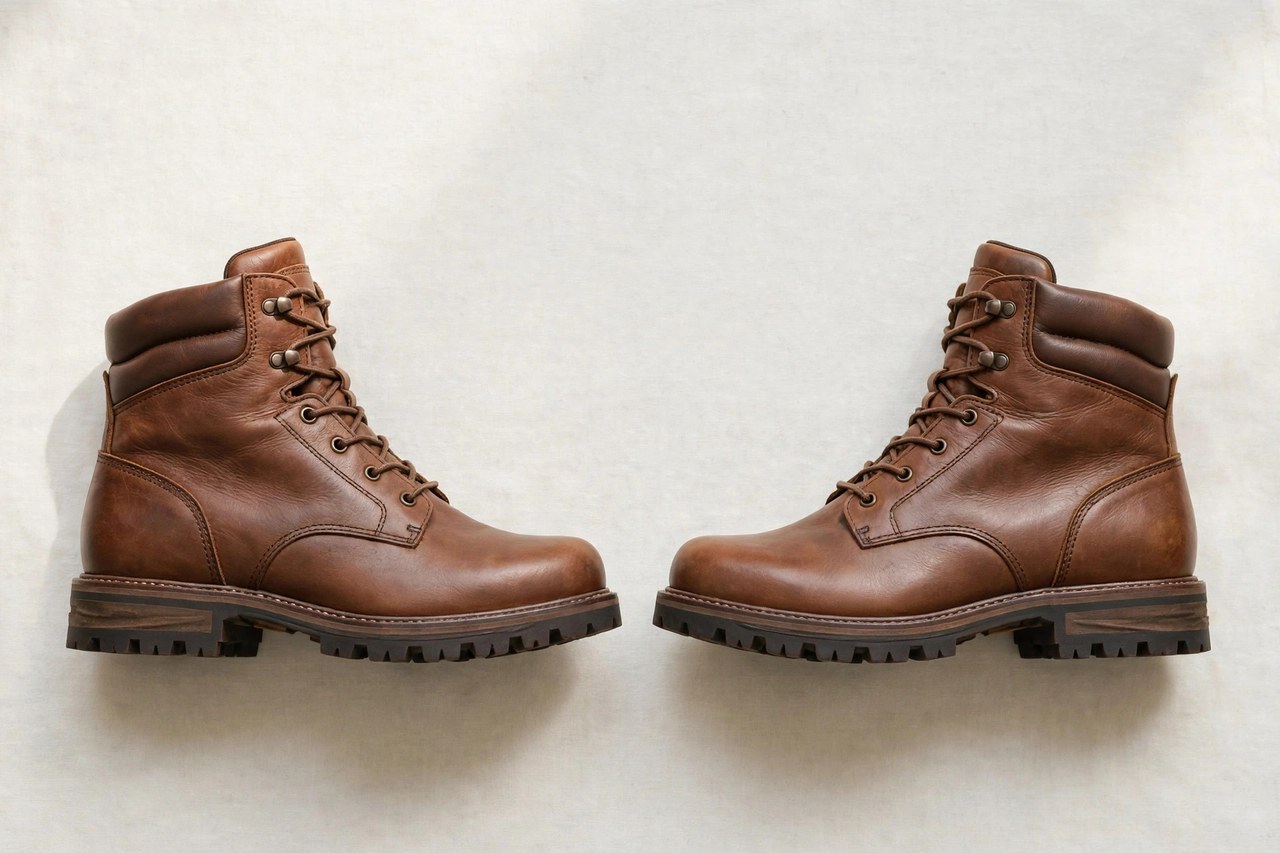
Men's hiking boots are footwear specifically designed for protecting the feet and ankles during outdoor walking activities such as hiking - the long, vigorous walk, usually on trails in the countryside, for which Canada and the United States prefer the word hiking over walking. They are one of the most important items of hiking gear, because their quality and durability can determine a hiker's ability to walk long distances without injury. A hiking boot is constructed to provide comfort over considerable distance on rough terrain: it protects the foot and the heel, gives ankle support, and is fairly stiff where a street shoe is soft. This guide is about choosing that stiffness, support and protection by the trails you actually walk. This guide covers the styles worth knowing, the fit points that decide comfort, the fabrics and construction that separate a good buy from a regret, and the simple care that makes the garment last.
Styles and Construction
The family divides by ambition. Trail shoes and light hikers are low or mid cut, flexible and light, for maintained paths and day loads. Midweight boots add ankle height, stiffer midsoles and deeper lugs for rough terrain and a loaded pack. Mountaineering and heavy backpacking boots are stiff enough for crampons and serious weight, and miserable overkill on a Sunday trail. Construction decides durability: full-grain leather uppers endure and mold to the foot; split leather with synthetic panels trades weight for some of that life; waterproof membranes keep streams and wet grass out while slowing drying when water gets in over the collar. Lugs should be deep and open enough to shed mud, and a boot's shank - the stiffening plate under the arch - is what your feet feel at mile ten.
Judge footwear by attachment and compound: cemented soles are light and affordable, stitched or welted constructions cost more and can be repaired, and the outsole rubber decides grip against longevity - soft compounds bite, hard compounds endure. Linings decide comfort over hours, removable insoles decide whether your own supports can come along, and honest weight decides whether the pair disappears on the foot or taxes every mile of the day.
Fit and Sizing
Fit a hiking boot for the descent, which is where boots are judged. Fit late in the day, in hiking socks, with a thumb's width beyond the longest toe: on a long downhill, feet slide forward, and toes that kiss the front in the shop will blacken by the valley. The heel must lock - lift in the shop becomes a blister on the trail - while the forefoot needs room for feet to swell over hours. Walk the shop's incline board both ways if it has one. Volume matters as much as length: low-volume feet in high-volume boots swim, and no lacing pattern fixes a mismatch of shape. Break boots in progressively, whatever the seller promises - a graded week of walks finds the hot spots while they are still near home.
Fit footwear late in the day in the socks you will actually wear, with roughly a thumb's width beyond the longest toe, the heel held without lift, and the foot's widest point meeting the shoe's widest point. Sizes are unstandardized between makers - trust your measured length and width over the printed number, and require no break-in argument: a shoe that needs excuses in the shop delivers them on the road.
Wearing and Care
Trail care keeps the support you paid for. Knock mud off after every hike and never let it dry caked on leather, which it desiccates; dry boots slowly at room temperature with insoles removed, never on a radiator, which cracks leather and kills glues. Condition leather when it begins to look thirsty, reproof waterproof finishes when water stops beading, and store boots uncompressed with their shape held. Resole stitched boots before the wear reaches the midsole, and retire any boot whose midsole has gone dead - the cushioning and shank support are the injury protection the boot exists for, and they fail invisibly before the upper shows it. The best-maintained boots are simply the ones still doing their job at year five.
Rotation is the first care rule: a day of rest between wears lets linings dry and cushioning rebound, and it doubles a rotation's life compared with daily wear of one pair. Clean after use, dry at room temperature away from radiators, hold shape with trees or paper, and condition leather on a schedule rather than when it looks thirsty. Reproof weather finishes when water stops beading, and resole stitched footwear before the wear reaches the welt.
The toughest traditional hiking boots are held together with a Norwegian welt or stitchdown construction - both chosen because they shed water and can be resoled.
For wet trails and mud rather than altitude, the rubber-bottomed duck boot is the simpler answer.
Common Questions
Why do hiking boots matter more than other hiking gear?
Because they are the interface between the hiker and every step of the terrain, and their quality and durability can determine a hiker's ability to walk long distances without injury. A pack can be adjusted, a layer shed, a route shortened - but a boot that blisters, soaks or collapses its support ends the hike it was bought for. Boots protect the feet and heel, support the ankle, and stay fairly stiff against rough ground; that combination, fitted correctly, is what the miles are walked on.
Should hiking boots be waterproof?
For wet climates, stream crossings and cold seasons, a waterproof membrane earns its place; for hot, dry trails it can be a liability, since a membrane also slows the boot's drying and breathes less than an open mesh upper. The honest rule is terrain and forecast: waterproof for the wet and cold, non-waterproof and quick-drying for desert and summer heat - and remember no membrane helps when water comes over the collar, which gaiters, not boots, are for.
How stiff should a hiking boot be?
As stiff as your load and terrain require, and no stiffer. Flex the boot by hand: a day-hiking boot bends at the ball with firm resistance; a backpacking boot resists harder and twists less; a mountaineering boot barely bends at all. Stiffness protects feet under weight and on rock, but an overly stiff boot on an easy trail makes the calf and ankle do the work the trail did not demand. Match the boot class to the hardest hike you regularly take, not the hardest you imagine.
More in Men's Clothes Guide H
Why the Boot Matters
Hiking is the preferred term, in Canada and the United States, for a long, vigorous walk, usually on trails (footpaths) in the countryside, while walking serves for shorter, particularly urban walks. Hiking boots or walking boots are footwear specifically designed for protecting the feet and ankles during outdoor walking activities such as hiking; they are one of the most important items of hiking gear, since their quality and durability can determine a hiker’s ability to walk long distances without injury. Hiking boots are constructed to provide comfort for walking considerable distance over rough terrain; boots that protect the hiker’s feet and heel are recommended; and hiking boots give ankle support and are fairly stiff. The photograph below shows a man hiking on the trail.
Photos

Looking for Men's Clothing Stores?
This guide explains men's hiking boots. To browse where to buy, visit our men's clothing store directory, where you can find retailers that carry them.