Men's Hunting Boots Guide
Men's hunting boots are boots - footwear covering the foot and ankle, some part of the lower calf, sometimes up to the knee or beyond - chosen for the hunt, where a variety of boots from insulated to high rubber are appropriate. The key is to stay quiet, comfortable and hidden as best possible. Terrain decides the boot before brand does: the environment in which you plan to hunt plays the deciding role, and a durable boot appropriate to very varied weather conditions is the standard the choice is judged by. A hunting boot that squeaks when walking, or flashes bright color, fails no matter how well it fits.
Shop Men's Hunting Boots Now
Shop Men's Hunting Boots on Amazon Shop Men's Hunting Boots on eBayThe Amazon and eBay links on this page are affiliate links. If you make a purchase through them, Apparel Search may earn a commission.
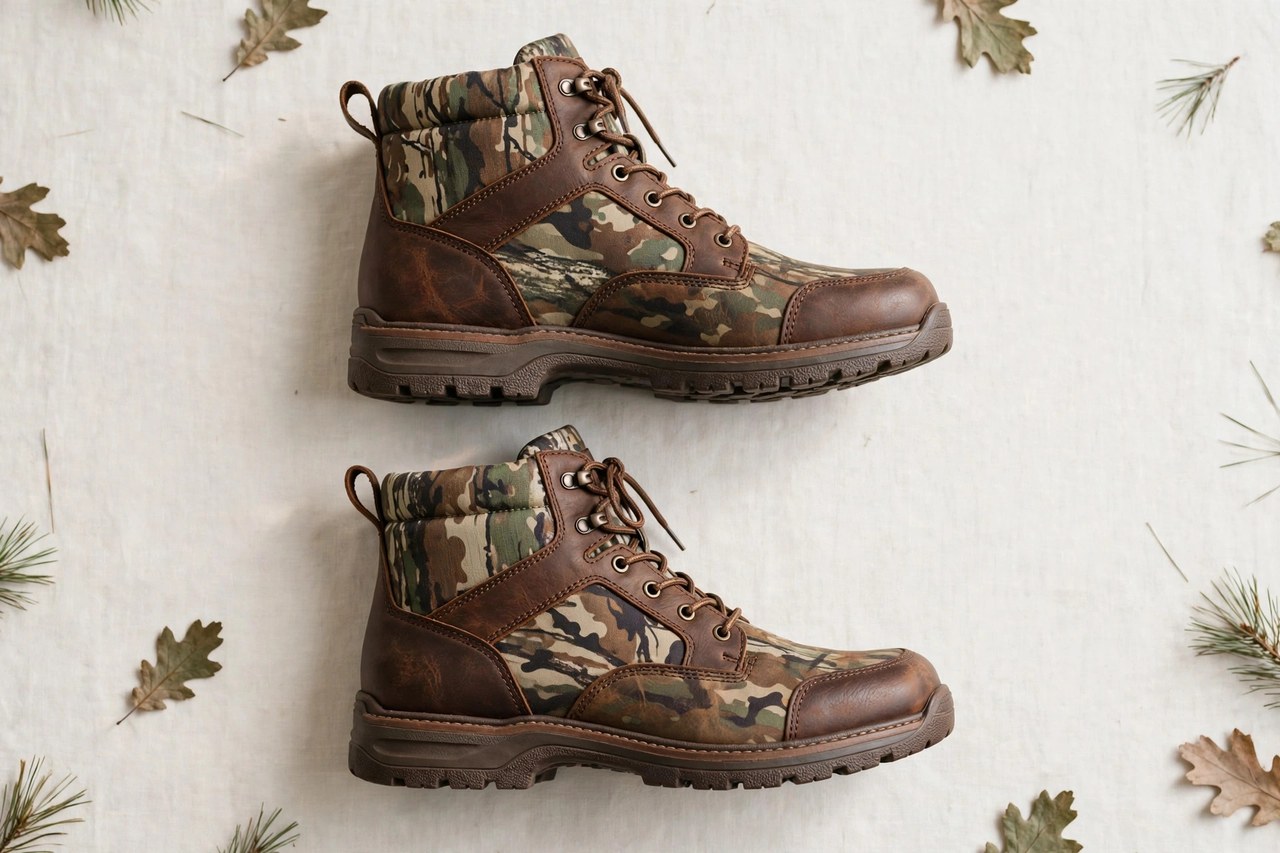
Men's hunting boots are boots - footwear covering the foot and ankle, some part of the lower calf, sometimes up to the knee or beyond - chosen for the hunt, where a variety of boots from insulated to high rubber are appropriate. The key is to stay quiet, comfortable and hidden as best possible. Terrain decides the boot before brand does: the environment in which you plan to hunt plays the deciding role, and a durable boot appropriate to very varied weather conditions is the standard the choice is judged by. A hunting boot that squeaks when walking, or flashes bright color, fails no matter how well it fits. This guide is built around the questions buyers actually ask: which style, which size, which fabric, and what will it look like after a year of real use - answered in order, with the trade-offs stated plainly.
Styles and Construction
The family sorts by ground and season. Upland and early-season boots are light leather field boots, quiet and flexible for miles of walking behind dogs. Insulated boots add grams of insulation by temperature rating for stand hunting, where the hunter sits still in the cold that walking hunters walk off. Rubber and neoprene boots - the high Wellington line - are for marsh, swamp and scent-conscious deer hunting, since rubber carries little odor and sheds water and mud completely. Mountain boots borrow the hiking boot's stiffness for steep, rocky country. Soles are quieter and softer than hiking lugs, chosen to feel ground rather than announce it; uppers wear camouflage or earth tones, muted as the whole wardrobe is muted.
Judge footwear by attachment and compound: cemented soles are light and affordable, stitched or welted constructions cost more and can be repaired, and the outsole rubber decides grip against longevity - soft compounds bite, hard compounds endure. Linings decide comfort over hours, removable insoles decide whether your own supports can come along, and honest weight decides whether the pair disappears on the foot or taxes every mile of the day.
Fit and Sizing
Fit a hunting boot for the hunt's two gaits: the miles and the motionless hour. In hiking socks or the boot socks of the season - insulated boots are fitted in the thick socks their insulation assumes - keep the thumb's width for the walking swell, the heel locked against the stalk's slow creep, and room in the calf for trouser legs to tuck. Stand-hunting boots want a size of air around the foot, because air is the insulation and a tight boot is a cold boot no matter its rating. Test for noise as you test for fit: flex, walk and pivot on the shop floor and listen - a boot that squeaks in the store will squeak in the woods, where the audience is listening far harder.
Fit footwear late in the day in the socks you will actually wear, with roughly a thumb's width beyond the longest toe, the heel held without lift, and the foot's widest point meeting the shoe's widest point. Sizes are unstandardized between makers - trust your measured length and width over the printed number, and require no break-in argument: a shoe that needs excuses in the shop delivers them on the road.
Wearing and Care
Hunting boot care protects three things: the leather, the waterproofing and the silence. Clean mud off after every hunt, dry slowly away from heat - a boot dryer on low is the one appliance this category genuinely earns - and condition leather before it dries stiff. Rubber boots wash clean and store out of sunlight, which perishes them; their scent advantage is kept by storing them outside household odors, with the rest of the hunting wardrobe. Check soles for the hardening and cracking that turn a quiet boot loud, and retire insulation that has compressed flat - a late-season boot lives or dies by loft. Kept dry, dark and mended, a hunting boot serves seasons; stored wet in a garage corner, it serves one.
Rotation is the first care rule: a day of rest between wears lets linings dry and cushioning rebound, and it doubles a rotation's life compared with daily wear of one pair. Clean after use, dry at room temperature away from radiators, hold shape with trees or paper, and condition leather on a schedule rather than when it looks thirsty. Reproof weather finishes when water stops beading, and resole stitched footwear before the wear reaches the welt.
Common Questions
How do hunting boots differ from hiking boots?
By what they are hiding from. Both protect foot and ankle over rough ground, but hunting boots prioritize quietness, concealment and scent: softer, quieter soles that do not squeak or crunch, camouflage or earth-tone uppers with nothing bright, rubber options that carry little odor, and insulation rated for motionless hours in a stand. Hiking boots - the linked guide - prioritize support and durability for distance. Many hunters in mountain country genuinely need both logics in one boot, and choose a muted, quiet hiking boot as the compromise.
How much insulation do hunting boots need?
It is set by activity and temperature, not by a bigger number. Insulation is rated in grams: light ratings (200-400g) serve active hunting in cool weather; mid ratings (600-800g) suit mixed walking and sitting in cold weather; heavy ratings (1000g and above) are for still-hunting and stands in severe cold - but only when fitted with air around the foot in proper boot socks. The walking hunter in an over-insulated boot sweeps his feet with sweat, then chills in them: match the rating to the stillest, coldest hour of your hunt, not the walk in.
Why do hunting boots squeak, and how do you stop it?
Squeaks come from friction - leather rubbing leather, a shank flexing against the midsole, or a wet insole shifting. Prevention is the shop test: flex and walk every candidate and reject the noisy pair, since field conditions amplify what the floor reveals. Existing squeaks are quieted by finding the source: conditioning dry leather, talc at the tongue and insole interfaces, and drying a boot that squeaks only when wet. A boot that cannot be silenced is retired to non-hunting work - in the woods, noise is the failure that matters.
More in Men's Clothes Guide H
Quiet, Comfortable, Hidden
A boot is a type of footwear and a specific type of shoe — most boots mainly cover the foot and the ankle, some also cover part of the lower calf, and some extend up the leg as far as the knee or even the hip. A variety of boots, from insulated to high rubber, are appropriate for hunting. The key is to stay quiet, comfortable, and hidden as best possible. It is important to have a durable boot that is also appropriate for very varied weather conditions, and taking the terrain into account when selecting a hunting boot is important — the environment in which you plan to hunt plays a role in the footwear you select. And one detail only a hunter would think to write down: when hunting, the wearer does not want their shoes to squeak when walking, or to be in bright colors.
Looking for Men's Clothing Stores?
This guide explains men's hunting boots. To browse where to buy, visit our men's clothing store directory, where you can find retailers that carry them.