Men's Hunting Clothing Guide
Men's hunting clothing is hunting apparel considered as materials and technology - and first, a cheerful confession: the words 'apparel', 'clothing' and 'clothes' are essentially the same thing, with possibly minor differences, and if you have visited our hunting apparel page you have had the outline of the lesson. This guide is the recap with the engineering left in. Hunting clothing should be made of quiet fabrics, comfortable styles and camouflage patterns - and behind those three adjectives lies the technology that decides a hunt: fiber science, waterproof membranes, insulation physics and scent control. Where the apparel guide builds the system and the clothes guide lists the garments, this page explains what the fabrics are doing.
Shop Men's Hunting Clothing Now
Shop Men's Hunting Clothing on Amazon Shop Men's Hunting Clothing on eBayThe Amazon and eBay links on this page are affiliate links. If you make a purchase through them, Apparel Search may earn a commission.
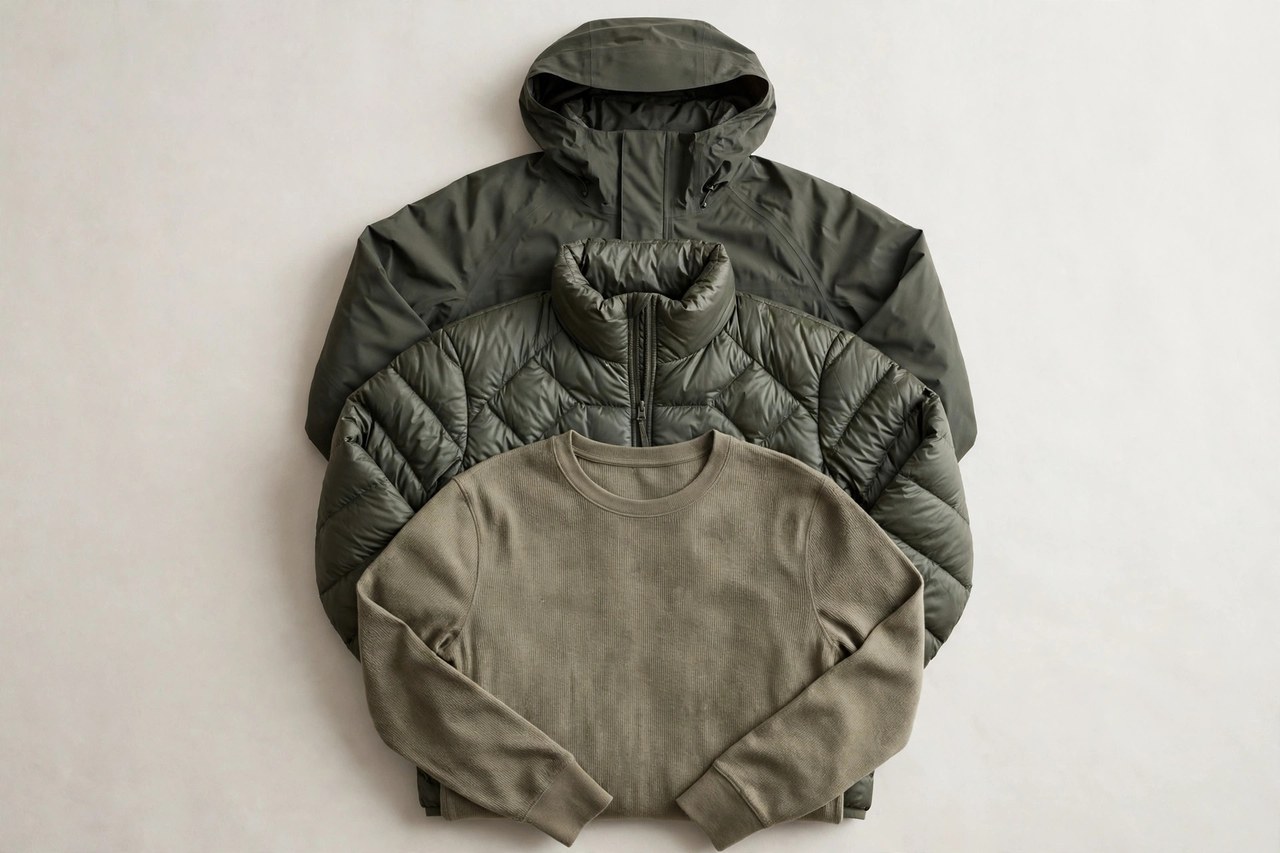
Men's hunting clothing is hunting apparel considered as materials and technology - and first, a cheerful confession: the words 'apparel', 'clothing' and 'clothes' are essentially the same thing, with possibly minor differences, and if you have visited our hunting apparel page you have had the outline of the lesson. This guide is the recap with the engineering left in. Hunting clothing should be made of quiet fabrics, comfortable styles and camouflage patterns - and behind those three adjectives lies the technology that decides a hunt: fiber science, waterproof membranes, insulation physics and scent control. Where the apparel guide builds the system and the clothes guide lists the garments, this page explains what the fabrics are doing. This guide covers the styles worth knowing, the fit points that decide comfort, the fabrics and construction that separate a good buy from a regret, and the simple care that makes the garment last.
Styles and Construction
Start with quietness, which is a fabric property before it is a behavior: brushed knits and microfiber faces move against brush without the swish of hard nylon, and face fabric is the first specification to check on any shell. Waterproofing divides into coatings that wear and membranes that endure, both rated by water column and breathability numbers that should be compared like-for-like; fully taped seams are what make the rating real at the joints. Insulation divides into down - supreme warmth-to-weight, helpless when wet - and synthetics that insulate damp, with loft as the number underneath all their marketing. Scent control is a spectrum of honesty: carbon and antimicrobial treatments reduce odor and are refreshed per the maker's instructions, but no treatment licenses skipping the wind. Finally the camouflage itself is printed technology, micro-patterns for close range and macro-patterns for distance, under the UV discipline described in the apparel guide.
Outerwear value hides below the surface: taped versus merely stitched seams, a zipper whose slider runs true under one hand, cuffs and hems that adjust to seal weather out, and a lining slippery enough to glide over the layers beneath. Shoulder build decides the hang over knitwear or a jacket, and pocket engineering decides whether hands and kit ride where your body expects them. Specify for the worst honest day, not the brochure day.
Fit and Sizing
Fit, in the technology view, is the fit of systems that must keep working stacked: each layer's cut must preserve the next layer's function. A base layer that bags loses its moisture contact; a mid layer compressed by a tight shell loses the loft that is its warmth - insulation thickness is literally the specification, so the shell's fit is judged with the thickest honest mid layer beneath it. Range-of-motion patterning, articulated knees and gussets are construction technologies, not style, and they are tested the same way: full rehearsal, layers on, listening for noise and feeling for the bind that cold makes worse. Sizes in hunting clothing run generous for layering by design; buy your measured size and trust the allowance the maker already built in.
Fit outerwear over the bulkiest layer it will honestly cover, and test the working range: arms forward as if driving, arms overhead, sitting with every closure fastened. The coat's shoulders should echo yours rather than extend past them, closures should meet without strain, and the hem must reach the coverage the garment exists to give. A coat fitted over a T-shirt alone belongs to a climate you may not live in.
Wearing and Care
Fabric care is technology maintenance. Technical detergents - not household scented ones - keep membranes and durable water-repellent finishes working; ordinary detergents clog and perfume them, and fabric softener is the enemy of wicking, loft and DWR alike. Reactivate DWR with gentle heat per the label, reproof when beading dies, and recharge scent-control treatments on their maker's schedule rather than assuming permanence. Dry insulation fully before sealed storage, because loft stored damp is loft lost. The hunting wardrobe is the most technically specified clothing most men own; its care is a maintenance schedule, and the guides linked below - apparel, clothes, boots and gloves - apply it piece by piece.
Hang outerwear on broad hangers that carry the shoulders, rest it between wears, and resist washing it often - spot-clean first, and wash by the maker's method with the detergent the fabric demands when a full clean is due. Refresh water-repellent finishes when rain stops beading, never store a coat dirty or compressed, and send leather and tailored pieces to professionals rather than experimenting at home.
Common Questions
Are 'hunting apparel', 'hunting clothes' and 'hunting clothing' different things?
Essentially, no - the words apparel, clothing and clothes mean the same thing, with possibly minor differences. This directory keeps a page for each because hunters search for each - and uses them to divide the subject without duplicating it: hunting apparel covers the layered system and its rules, hunting clothes the individual garments, and hunting clothing - this page - the fabrics and technologies: quiet faces, membranes, insulation and scent control.
What makes a fabric 'quiet' for hunting?
A soft, brushed or microfiber face that slides against vegetation and itself without the rasp of hard-finished nylon, plus construction that keeps hardware silent - covered zippers, no loose pulls or flaps. Quietness is testable: rub the fabric against itself and walk in the garment. If it swishes or ticks in the shop, it will be louder in the field, because cold stiffens coatings and still air carries small sounds a long way to ears far better than yours.
Does scent-control clothing really work?
Partly, and within limits the honest makers state. Carbon-based and antimicrobial treatments adsorb or suppress odor for a time and can be refreshed by the heat of a dryer, which genuinely extends a garment's stealth in calm, close conditions. No treatment defeats a wrong wind or replaces scent-free washing and sealed storage - human odor is continuous, and treatment is a reducer, not an eraser. Buy scent control as one layer of a discipline, never as a substitute for hunting the wind correctly.
More in Men's Clothes Guide H
A Cheerful Admission
Begin with the most honest admission in this letter: yes, the words “apparel”, “clothing” and “clothes” are essentially the same thing — possibly minor differences, but pretty much the same. Therefore, if you already visited our men’s hunting apparel page, you already had your lesson on hunting clothing. In short: clothing for hunting should be made of quiet fabrics, comfortable styles, and camouflage patterns. The fuller explanations live in the hunting apparel and hunting clothes guides, and in the fashion influence section’s hunting clothing coverage, linked below.
Looking for Men's Clothing Stores?
This guide explains men's hunting clothing. To browse where to buy, visit our men's clothing store directory, where you can find retailers that carry them.