Men's Hunting Apparel Guide
Men's hunting apparel is the complete clothing system worn for hunting - the practice of pursuing, tracking or taking game, distinguished in law from poaching - in which men usually wear some sort of camouflage clothing. Where an ordinary wardrobe is judged by looks, hunting apparel is judged by a harder panel: the quarry's eyes, ears and nose, and the weather where the hunt happens. This guide is the umbrella of the H section's hunting cluster: how the system layers from base to shell, what camouflage and blaze orange each do, and where the specialist guides - clothes, clothing, boots and gloves - take each piece further.
Shop Men's Hunting Apparel Now
Shop Men's Hunting Apparel on Amazon Shop Men's Hunting Apparel on eBayThe Amazon and eBay links on this page are affiliate links. If you make a purchase through them, Apparel Search may earn a commission.
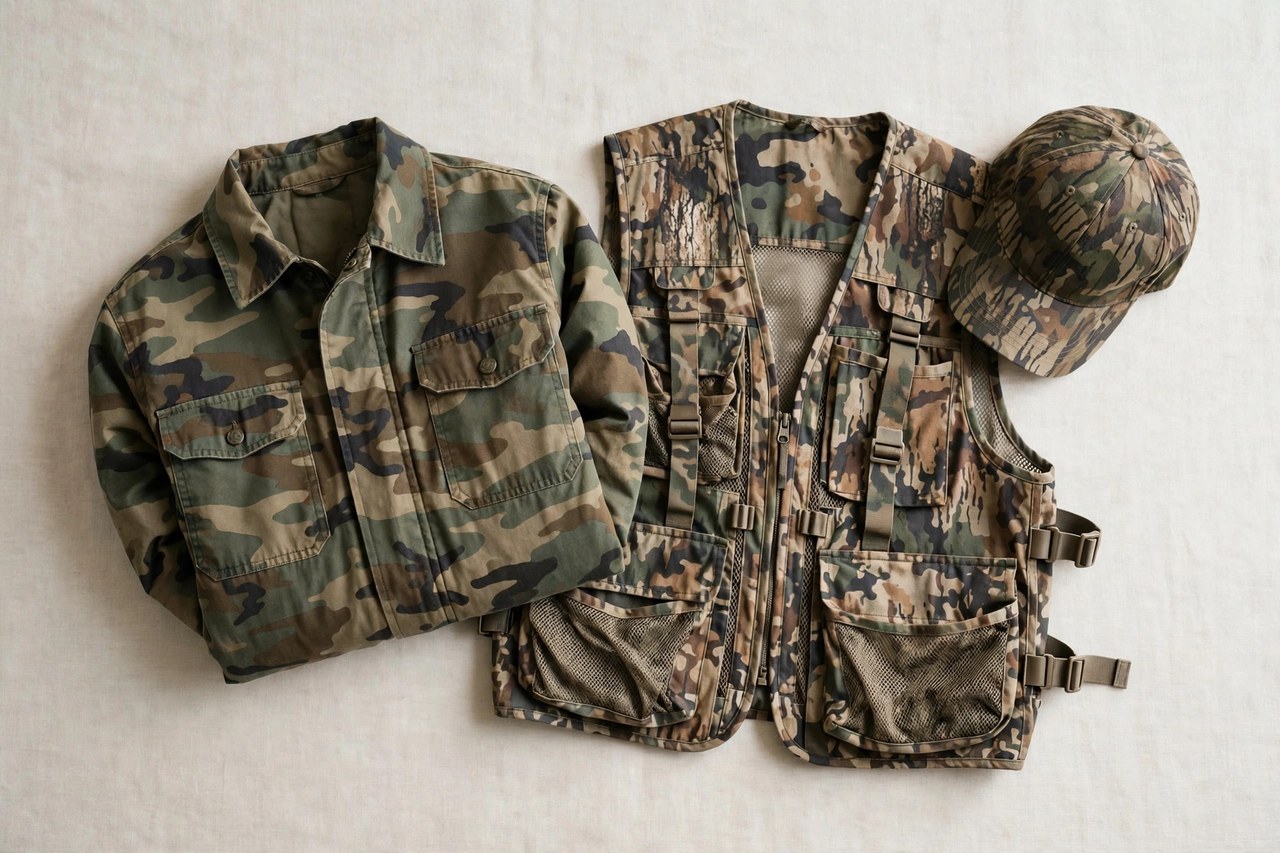
Men's hunting apparel is the complete clothing system worn for hunting - the practice of pursuing, tracking or taking game, distinguished in law from poaching - in which men usually wear some sort of camouflage clothing. Where an ordinary wardrobe is judged by looks, hunting apparel is judged by a harder panel: the quarry's eyes, ears and nose, and the weather where the hunt happens. This guide is the umbrella of the H section's hunting cluster: how the system layers from base to shell, what camouflage and blaze orange each do, and where the specialist guides - clothes, clothing, boots and gloves - take each piece further. This guide is built around the questions buyers actually ask: which style, which size, which fabric, and what will it look like after a year of real use - answered in order, with the trade-offs stated plainly.
Styles and Construction
Build the system in layers, because the hunt alternates exertion and stillness like nothing else in menswear. The base layer manages sweat in wool or synthetic - never cotton, which chills when wet. The mid layer insulates: fleece, down or synthetic fill sized to the season. The outer layer is the camouflage and the weather protection together: soft, quiet fabrics in a pattern matched to the terrain - open-country, woodland, marsh, snow - increasingly with waterproof membranes and scent-control treatments. Blaze orange overlays it where law or safety requires visibility to other hunters: the paradox of the wardrobe is that it must hide the wearer from game, which sees orange as a muted tone, while announcing him to humans. Vests, gaiters, hats and the gloves and boots of their own guides complete the system by species and season, from upland bird fields to late-season stands.
Outerwear value hides below the surface: taped versus merely stitched seams, a zipper whose slider runs true under one hand, cuffs and hems that adjust to seal weather out, and a lining slippery enough to glide over the layers beneath. Shoulder build decides the hang over knitwear or a jacket, and pocket engineering decides whether hands and kit ride where your body expects them. Specify for the worst honest day, not the brochure day.
Fit and Sizing
Hunting apparel fit is working fit with a weapon and weather in mind. Layers must stack without binding at the shoulder, because the garment is raised, aimed and held in; outer layers are cut with room for the insulation beneath and for the sitting and crouching a hunt actually consists of. Lengths are judged by stillness: a jacket that rides up when seated leaves a cold, visible gap at the waist. Test any system by the full rehearsal - layers on, pack on, sitting, kneeling, shouldering - in the shop or at home, because a hunt is the worst fitting room in clothing. Silent movement is a fit property too: fabric that swishes against brush at a walk will not quiet down in the field, whatever the label promises.
Fit outerwear over the bulkiest layer it will honestly cover, and test the working range: arms forward as if driving, arms overhead, sitting with every closure fastened. The coat's shoulders should echo yours rather than extend past them, closures should meet without strain, and the hem must reach the coverage the garment exists to give. A coat fitted over a T-shirt alone belongs to a climate you may not live in.
Wearing and Care
Care keeps the camouflage honest and the nose fooled. Wash hunting apparel in scent-free detergent without UV brighteners - brighteners make fabrics glow in the blue-rich vision of deer-family game, undoing the camouflage in the spectrum that matters - and store it sealed from household smells, separately from everyday laundry. Refresh water-repellent finishes when rain stops beading, repair tears before they become flaps that move and catch light, and keep blaze orange pieces clean: their safety value is their visibility, and a mud-dimmed vest is a compromised one. Stored clean, sealed and mended, a hunting wardrobe is ready at the season's first legal light rather than the night before it.
Hang outerwear on broad hangers that carry the shoulders, rest it between wears, and resist washing it often - spot-clean first, and wash by the maker's method with the detergent the fabric demands when a full clean is due. Refresh water-repellent finishes when rain stops beading, never store a coat dirty or compressed, and send leather and tailored pieces to professionals rather than experimenting at home.
Common Questions
What should a men's hunting apparel system include?
Three layers plus the extremities. A moisture-managing base layer in wool or synthetic (not cotton), an insulating mid layer matched to the season, and a quiet camouflage outer layer with weather protection suited to the forecast, patterned for your terrain. Over or within it, blaze orange as your jurisdiction requires; and then the specialists - boots, gloves and headwear - each covered by their own guides in this section. The system is built for the hunt's rhythm: walking warm, then sitting still and cold.
Why do hunters wear camouflage and blaze orange at the same time?
Because they address two different audiences. Camouflage hides the hunter from game, breaking up the human outline against terrain. Blaze orange protects the hunter from other hunters - and deer-family game perceives orange as a dull, muted tone, so a solid orange vest does not betray the wearer to them the way it announces him to human eyes. Many jurisdictions require a minimum of visible orange; where they do, the law and the biology agree.
Why must hunting clothes be washed in special detergent?
Two reasons, both about being detected. Standard detergents carry perfumes that game animals smell at remarkable distances, and UV brighteners that make fabric fluoresce in the blue-heavy vision of deer and similar game - freshly laundered hunting clothes can literally glow to the animal you are hiding from. Scent-free, brightener-free detergent, followed by storage sealed away from household odors, keeps the camouflage working in every spectrum the quarry uses.
More in Men's Clothes Guide H
Apparel for the Hunt
Hunting is the practice of killing or trapping any animal, or pursuing or tracking it with the intent of doing so — done by humans for food, recreation, to remove predators dangerous to humans or domestic animals, or for trade — and lawful hunting is distinguished from poaching, the illegal killing, trapping or capture of the hunted species. Men usually wear some sort of camouflage clothing when hunting. The wardrobe includes men’s camouflage hunting clothes, hunting boots, hunting clothes, hunting gloves, blaze orange hunting clothing, camo hunting clothes and upland hunting apparel.
Looking for Men's Clothing Stores?
This guide explains men's hunting apparel. To browse where to buy, visit our men's clothing store directory, where you can find retailers that carry them.