Men's Camouflage Hunting Clothes Guide
Camouflage hunting clothes are the concealment system itself: garments whose patterns are engineered against how game animals actually see - limited color vision, acute motion detection, sensitivity to outline and to ultraviolet - rather than against human eyes. Where the camo hunting clothes page of this guide treats the shopping system, this page treats the science: how patterns work, why terrain matching matters more than brand, and where concealment fails.
Shop Men's Camouflage Hunting Clothes Now
Shop Men's Camouflage Hunting Clothes on Amazon Shop Men's Camouflage Hunting Clothes on eBayThe Amazon and eBay links on this page are affiliate links. If you make a purchase through them, Apparel Search may earn a commission.
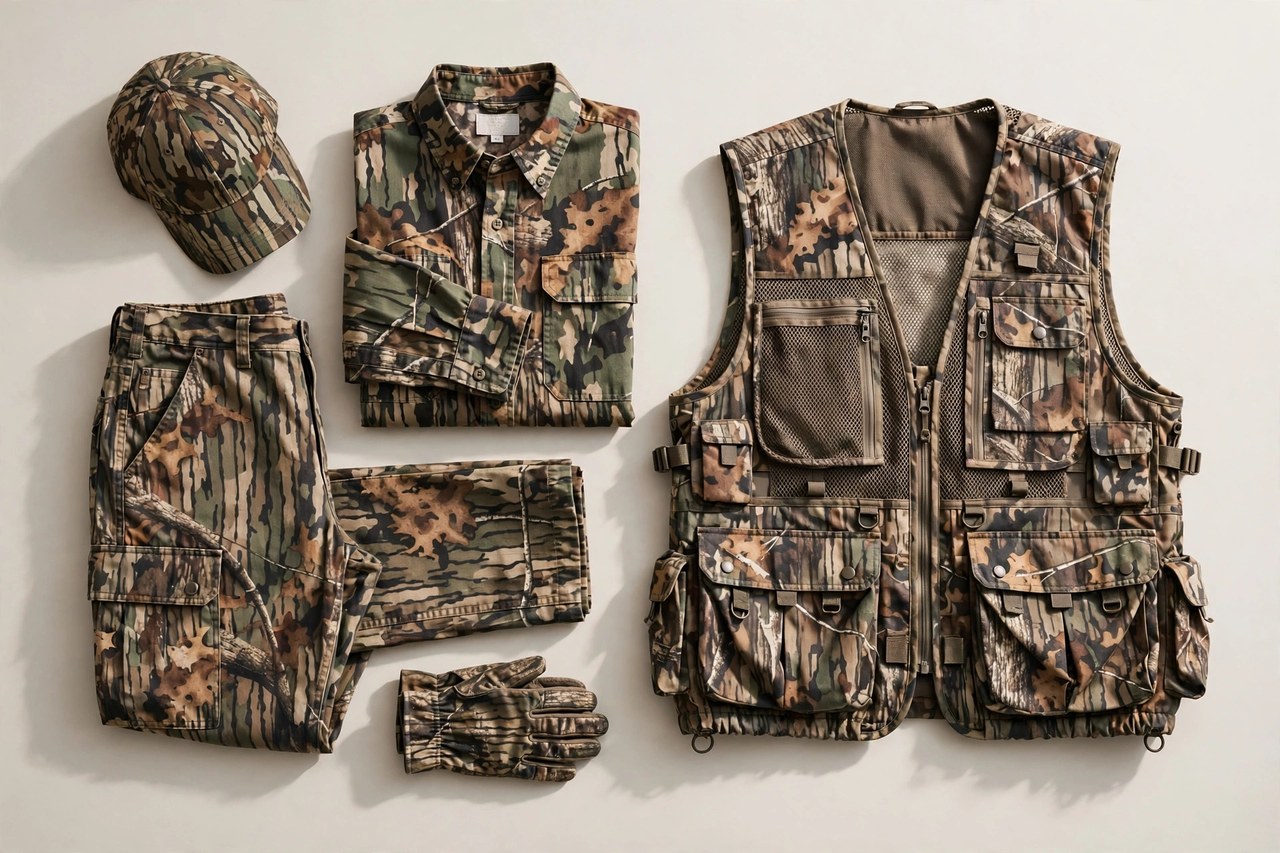
Camouflage hunting clothes are the concealment system itself: garments whose patterns are engineered against how game animals actually see - limited color vision, acute motion detection, sensitivity to outline and to ultraviolet - rather than against human eyes. Where the camo hunting clothes page of this guide treats the shopping system, this page treats the science: how patterns work, why terrain matching matters more than brand, and where concealment fails. This guide covers the styles worth knowing, the fit points that decide comfort, the fabrics and construction that separate a good buy from a regret, and the simple care that makes the garment last.
Styles and Construction
A working pattern does three jobs: it matches the background's tones, it breaks the body's outline with disruptive patches that cross the shoulders, arms and legs, and it carries depth - shadow and highlight - so the wearer reads as vegetation rather than as a flat cutout. Pattern families are terrain answers: timber, marsh grass, open country, desert, snow. The newest prints are photographed from real habitat and reproduced at scale; the oldest truth still governs them all - a motionless hunter in a mediocre pattern out-hides a moving hunter in a perfect one.
The durable buying order is job, specification, budget - in that sequence. Decide what the garment must do, translate that into fiber, weight, construction and size numbers, and only then shop price. Read labels as specifications, inspect the garment inside out where finishing is unposed, and prefer the maker who publishes measurements to the one who publishes adjectives. A garment that matches your measurements, climate and laundry will be worn; one that misses any of the three becomes expensive storage.
Fit and Sizing
Fit is concealment too: clothes that bind make you fidget, and fidgeting is movement, and movement is what game detects first. Size for the seated, layered reality of a hunt, keep cuffs and collars adjustable so nothing flaps, and choose matte, quiet face fabrics - a shiny or swishing shell betrays position by sight and sound before the pattern is ever tested. Gloves and a face covering complete the outline-breaking at the two places skin shines.
Measure yourself once a year and keep the numbers - chest, waist, inseam, foot, head - because bodies drift gradually while size habits never do. Shop from measurements, try garments under real conditions (over layers, in your own shoes, late in the day for footwear), and be honest about alterations: lengths and small waist changes tailor beautifully; shoulders, rises and patterns are the garment you bought forever.
Wearing and Care
Keep the system's invisibility intact in the wash: scent-free, brightener-free detergent, no fabric softener on waterproof shells, and storage sealed away from fuel, cooking and household smells. Patch rips with matching fabric where possible - a pale repair patch is a small flag - and retire pieces whose print has faded several shades lighter than its surroundings.
Five minutes when a garment comes off - shake it out, hang or fold it correctly, note the stain and the loose button - prevents most of the damage later blamed on quality. Keep a small kit where the clothes live: brush, lint roller, conditioner suited to your leathers, black, navy and grey thread. Clothing rarely dies at once; it fades by small neglects, and small attentions reverse the process at the same pace.
Common Questions
What colors do deer actually see?
Deer are dichromats: they see blues and yellows well - blues exceptionally, including near-ultraviolet - but distinguish reds and oranges poorly, which is why blaze orange reads as a dull tone to them while remaining glaring to humans. Blue clothing, especially blue denim brightened with UV-brightened detergent, is among the most visible things you can wear in the woods.
Is an expensive photographic pattern worth it?
Only after the basics: habitat match, tonal value, outline disruption and, above all, stillness. A photographic print in the wrong tones loses to a plain disruptive pattern in the right ones. Spend first on the garment system - quiet, weatherproof, correctly fitted - and let the pattern be the correct family for your ground.
Does camouflage work for all hunting?
For stationary hunting of sighted game - deer, turkey, waterfowl - it is close to essential. For upland bird hunting behind dogs, where blaze orange is required and the birds are flushed at close range, camo matters far less. Turkey hunters, facing the sharpest color vision in the woods, are the strictest concealment dressers of all.
More in Men's Clothes Guide C
More to Explore on Apparel Search
Looking for Men's Clothing Stores?
This guide explains men's camouflage hunting clothes. To browse where to buy, visit our men's clothing store directory, where you can find retailers that carry them.