Men's Hunting Clothes Guide
Men's hunting clothes are the individual garments of the hunt - the pants, shirts, vests and jackets a man selects for his next trip - where, as with most activities, selecting the proper clothing for such an adventure is important. The most common element in clothes designed for hunting is the fabric pattern: most hunters wear some sort of camouflage print design, which helps them blend into the surrounding environment. But this guide argues the second element matters as much: quietness. In addition to blending in visually, it is important for men who are hunting to be as quiet as possible, and certain fabrics that make loud noise when walking are typically not a good choice. Garment by garment, this is the hunting wardrobe as a shopping list.
Shop Men's Hunting Clothes Now
Shop Men's Hunting Clothes on Amazon Shop Men's Hunting Clothes on eBayThe Amazon and eBay links on this page are affiliate links. If you make a purchase through them, Apparel Search may earn a commission.
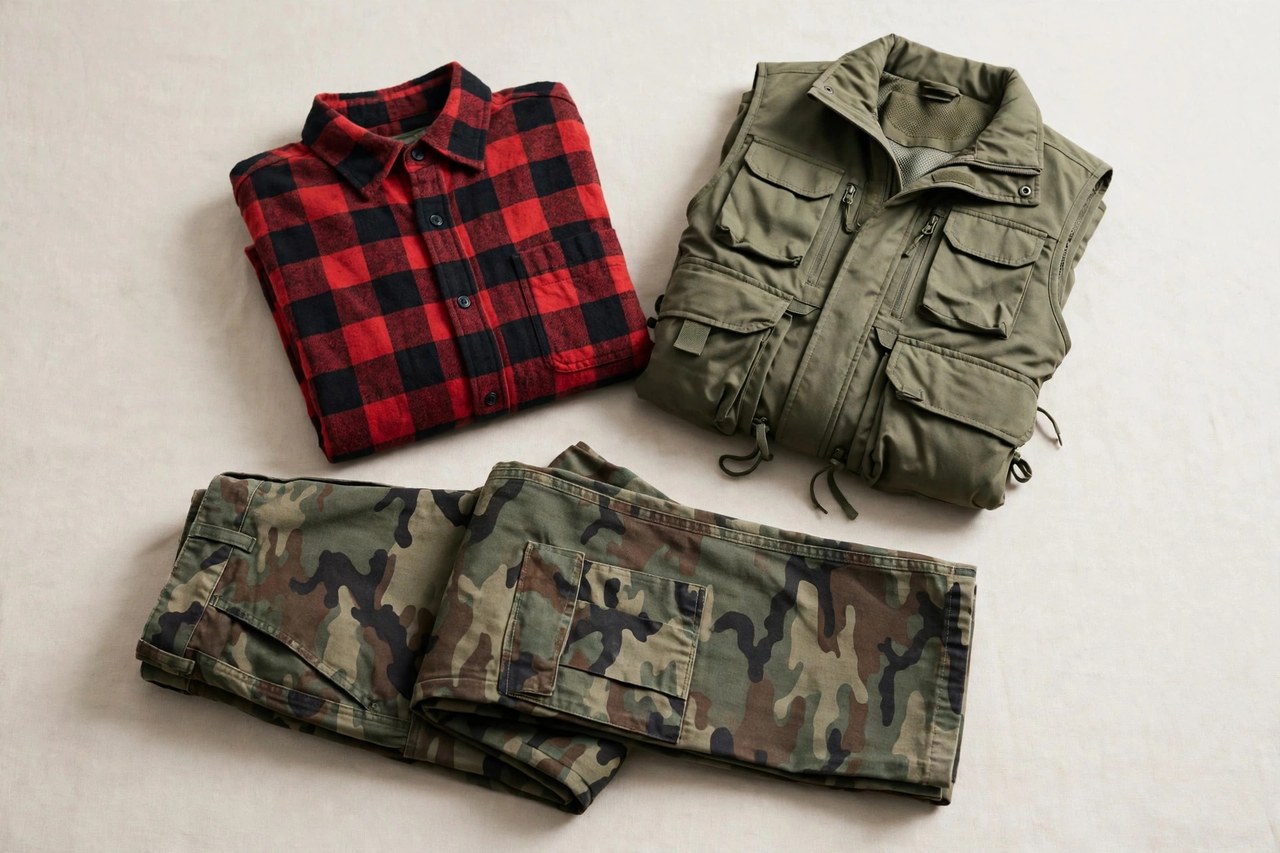
Men's hunting clothes are the individual garments of the hunt - the pants, shirts, vests and jackets a man selects for his next trip - where, as with most activities, selecting the proper clothing for such an adventure is important. The most common element in clothes designed for hunting is the fabric pattern: most hunters wear some sort of camouflage print design, which helps them blend into the surrounding environment. But this guide argues the second element matters as much: quietness. In addition to blending in visually, it is important for men who are hunting to be as quiet as possible, and certain fabrics that make loud noise when walking are typically not a good choice. Garment by garment, this is the hunting wardrobe as a shopping list. This guide covers the styles worth knowing, the fit points that decide comfort, the fabrics and construction that separate a good buy from a regret, and the simple care that makes the garment last.
Styles and Construction
Take the garments in order of dressing. Hunting pants and bibs are the workhorses: brush pants with faced fronts for briar country, soft-shell pants for cold, rain pants for wet - all in camouflage or earth tone, all cut to climb and kneel in silence. Shirts and flannel layers carry the mid-ground, quiet by nature, patterned or plain. The hunting vest - especially the upland vest with its game bag, shell loops and blaze panels - is the category's most specialized garment, a carrying system disguised as clothing. Jackets gather the weather decisions. Camouflage patterns themselves are a specification, not a print: match the pattern family to the terrain and season - timber, open grassland, marsh reeds, snow - because the right pattern in the wrong woods is just an expensive solid. Every garment must also reckon with weather and temperature, so the set is bought as a range, not a uniform.
Outerwear value hides below the surface: taped versus merely stitched seams, a zipper whose slider runs true under one hand, cuffs and hems that adjust to seal weather out, and a lining slippery enough to glide over the layers beneath. Shoulder build decides the hang over knitwear or a jacket, and pocket engineering decides whether hands and kit ride where your body expects them. Specify for the worst honest day, not the brochure day.
Fit and Sizing
Fit hunting clothes for movement and layering, garment by garment. Pants need a rise and knee that let you step over logs and kneel without the waistband diving, and a leg that meets the boot without a noisy overlap of loose cloth. Vests fit over the jacket they will actually top, with the game bag hanging where a hand reaches naturally. Jackets fit over the season's insulation with shoulders free to swing and mount. The through-line is silence under motion: in the fitting room, walk, crouch and reach while listening to the clothes themselves. A garment that rustles a warning at every stride is the wrong garment at any price, in any pattern - being very quiet, in addition to looking the part, is this category's fitting standard.
Fit outerwear over the bulkiest layer it will honestly cover, and test the working range: arms forward as if driving, arms overhead, sitting with every closure fastened. The coat's shoulders should echo yours rather than extend past them, closures should meet without strain, and the hem must reach the coverage the garment exists to give. A coat fitted over a T-shirt alone belongs to a climate you may not live in.
Wearing and Care
Care for hunting clothes is the detergent discipline of the apparel guide applied garment by garment: scent-free, brightener-free washing, sealed storage away from household smells, and repairs made with the same silence in mind - a flapping patched pocket is a noise waiting for wind. Brush pants and vests are checked for the thorn damage that becomes next season's tear. Blaze panels are kept bright and clean. Retire a garment whose face fabric has worn shiny or whose waterproofing has failed beyond reproofing - hunting clothes age out by detection, not by appearance, and the woods grade them more honestly than the mirror does.
Hang outerwear on broad hangers that carry the shoulders, rest it between wears, and resist washing it often - spot-clean first, and wash by the maker's method with the detergent the fabric demands when a full clean is due. Refresh water-repellent finishes when rain stops beading, never store a coat dirty or compressed, and send leather and tailored pieces to professionals rather than experimenting at home.
Common Questions
What camouflage pattern should men's hunting clothes use?
The one that matches the terrain and season where you hunt. Camouflage works by breaking the human outline into the shapes and tones of its background: woodland patterns for timber, open and grassland patterns for fields and prairie, reed and marsh patterns for waterfowl country, white for snow. The most common element in hunting clothes generally is the camouflage print - but a pattern mismatched to its ground silhouettes the wearer instead of hiding him. Many hunters own two sets: early-season greens and late-season browns.
Why is quietness so important in hunting clothes?
Because game animals hear far better than they see, and clothing noise - a stiff shell swishing against brush, a zipper pull ticking, loose cloth flapping - announces a hunter at distances where camouflage is still working visually. That is why certain fabrics that make loud noise when walking are typically not a good choice, and why hunting clothes favor brushed, soft-faced fabrics. Test clothes by moving in them: the garment should be silent at a walk, a crouch and a reach, or it is outerwear, not hunting clothes.
What is a hunting or upland vest for?
Carrying, in the field's own layout. An upland vest combines a rear game bag for birds, shell loops and pockets placed for a shooting hand, and usually blaze orange panels for visibility and legal compliance, worn over shirt or jacket. Other hunting vests simplify to warmth and pockets. Fit one over the layers it will top, loaded as it will be carried - a vest is fitted by its working weight, like a pack, not by its empty hang in the shop.
More in Men's Clothes Guide H
Blend In, and Be Quiet
Two arguments organize this guide. First, pattern: as with most activities, selecting the proper clothing for such an adventure is important, and the most common element in regard to clothes designed for hunting is the fabric pattern — most hunters will wear some sort of camouflage print design, and this helps them blend into the surrounding environment. Second, silence: in addition to blending in visually, it is important for men who are hunting to be as quiet as possible, and therefore certain fabrics that make loud noise when walking are typically not a good choice. Around those two sits the practical frame: consider the environment and weather conditions when selecting clothing, and aim to remain at a good temperature and stay comfortable. The closing advice: whatever sort of clothing you have selected for your next hunt is probably a good choice — but don’t forget to also be very quiet, in addition to looking stylish in the woods.
More to Explore on Apparel Search
Looking for Men's Clothing Stores?
This guide explains men's hunting clothes. To browse where to buy, visit our men's clothing store directory, where you can find retailers that carry them.