Men's Blaze Orange Hunting Clothes Guide
Men's blaze orange hunting clothes are the safety layer of the hunt: garments in the fluorescent orange - also called hunter orange or safety orange - that the law requires hunters to wear in most jurisdictions during firearm seasons, so that other hunters can see a person instantly against any natural background. The color works because nothing in the woods is that orange, and because deer see it very differently from the humans it is meant to warn.
Shop Men's Blaze Orange Hunting Clothes Now
Shop Men's Blaze Orange Hunting Clothes on Amazon Shop Men's Blaze Orange Hunting Clothes on eBayThe Amazon and eBay links on this page are affiliate links. If you make a purchase through them, Apparel Search may earn a commission.
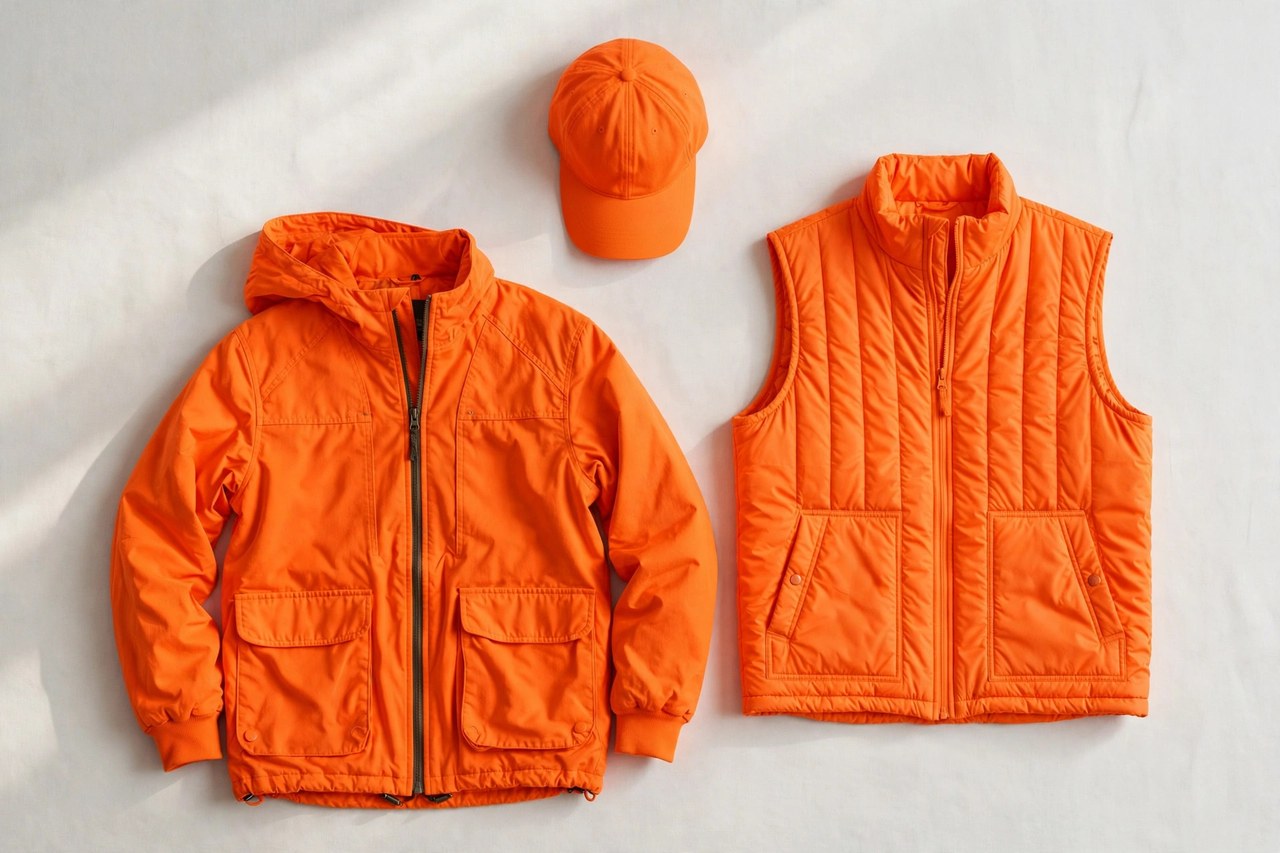
Men's blaze orange hunting clothes are the safety layer of the hunt: garments in the fluorescent orange - also called hunter orange or safety orange - that the law requires hunters to wear in most jurisdictions during firearm seasons, so that other hunters can see a person instantly against any natural background. The color works because nothing in the woods is that orange, and because deer see it very differently from the humans it is meant to warn. This guide covers the styles worth knowing, the fit points that decide comfort, the fabrics and construction that separate a good buy from a regret, and the simple care that makes the garment last.
Styles and Construction
The wardrobe spans orange hats and caps (the minimum on many regulations), vests worn over camouflage or plain outerwear, and full orange jackets, coats and coveralls for the coldest seasons and the strictest states. Requirements differ sharply by state, season and quarry - some demand a solid orange garment above the waist, others a minimum number of square inches, others orange only during specific gun seasons, with archery seasons often exempt. The garment choice starts from your own regulation book, not from a catalog.
Outerwear earns its price in the details you cannot see in a photograph: whether seams are taped or merely stitched, whether the zipper is a reputable make that runs without catching, whether cuffs and hems adjust to seal out weather, and whether the lining lets the garment slide over layers instead of gripping them. Shoulder construction decides how a coat hangs over a sweater or a suit jacket, and pocket placement decides whether your hands rest naturally or hover. Buy for the coldest, wettest day the garment will honestly meet, not the mildest.
Fit and Sizing
Buy blaze pieces to layer: a vest sized over your bulkiest cold-weather coat is the flexible core of the system, since the coat beneath changes with the weather while the legal layer stays constant. Check that orange panels are genuinely fluorescent and unfaded - sun and washing dull the fluorescence that makes the color work, and a washed-out vest can fail both the law's intent and its letter. Fit follows ordinary outerwear rules with the over-layer allowance built in.
Fit outerwear over the bulkiest layer it will honestly cover - a sweater for a casual jacket, a suit jacket for an overcoat - and test the full range: arms forward as if driving, arms raised, sitting with the garment closed. The shoulders of the coat should echo your own shoulders rather than extend past them, the closure should meet without strain across the chest, and the hem should reach the coverage the garment exists for. A coat that fits only over a T-shirt is a coat for a climate you may not live in.
Wearing and Care
Wash blaze orange separately the first times - the dye is assertive - and avoid optical-brightener detergents sold for camouflage scent control confusion aside, the practical rule is simple: keep the orange bright. Inspect pieces each season against a new item; fluorescence fades gradually enough that you will not notice it going. Retire a dulled vest to dog-walking and roadside duty, where bright is still useful.
Outerwear care begins with hanging it properly - broad hangers that support the shoulders - and resting it between wears so insulation and shape recover. Most pieces need washing far less often than owners think; spot-clean first, and when a full wash comes, use the maker's instructions and a technical or gentle detergent as the fabric demands. Refresh water-repellent finishes when rain stops beading, store the garment clean and uncompressed, and have leather and tailored pieces professionally cleaned rather than experimenting at home.
Common Questions
Why blaze orange, when deer hunting is about not being seen?
Because the audience for the orange is other hunters, not deer. Deer see the blue-ultraviolet end of the spectrum keenly but perceive oranges and reds as dull greys and browns, especially in broken patterns - so a hunter can be highly visible to people and effectively camouflaged to deer at the same time. That asymmetry is the entire reason the color was chosen.
How much blaze orange do you have to wear?
It depends entirely on your state, season and quarry - there is no national rule. Common requirements are a solid orange vest or jacket above the waist, a specified number of square inches visible from all sides, or an orange hat as a minimum during certain seasons. Read the current regulation book for your hunt every year; requirements change and 'I thought' is not a defense.
Does blaze orange fade?
Yes - ultraviolet light and repeated washing dull the fluorescent pigments that make hunter orange perform, and the change is gradual enough to miss. Compare your vest against a new one each season in daylight. A faded garment still looks orange indoors but has lost the fluorescence that carries at distance in the woods.
More in Men's Clothes Guide B
Stay Visible
It is important to stay visible when around other people with weapons, so put on blaze orange before heading out into the woods. “Hunter” orange — fluorescent or international orange — is worn by hunters to increase their visibility and reduce their potential for being mistaken for game, and high-visibility clothing is the recommendation when hunting in groups. The legal requirements vary by state and season; the core advice does not vary at all.
Looking for Men's Clothing Stores?
This guide explains men's blaze orange hunting clothes. To browse where to buy, visit our men's clothing store directory, where you can find retailers that carry them.