Men's Big and Tall Coats Guide
Big and tall coats are overcoats and heavy coats cut on the extended-size system: big sizes that carry a full chest and midsection without shortening the body, and tall sizes that add the sleeve and coat length a long frame needs to keep the hem at the knee rather than the thigh. A coat is the most architectural garment a man owns, and in extended sizes its proportions - lapel width, button stance, pocket placement - must be graded with the body, not just enlarged.
Shop Men's Big and Tall Coats Now
Shop Men's Big and Tall Coats on Amazon Shop Men's Big and Tall Coats on eBayThe Amazon and eBay links on this page are affiliate links. If you make a purchase through them, Apparel Search may earn a commission.
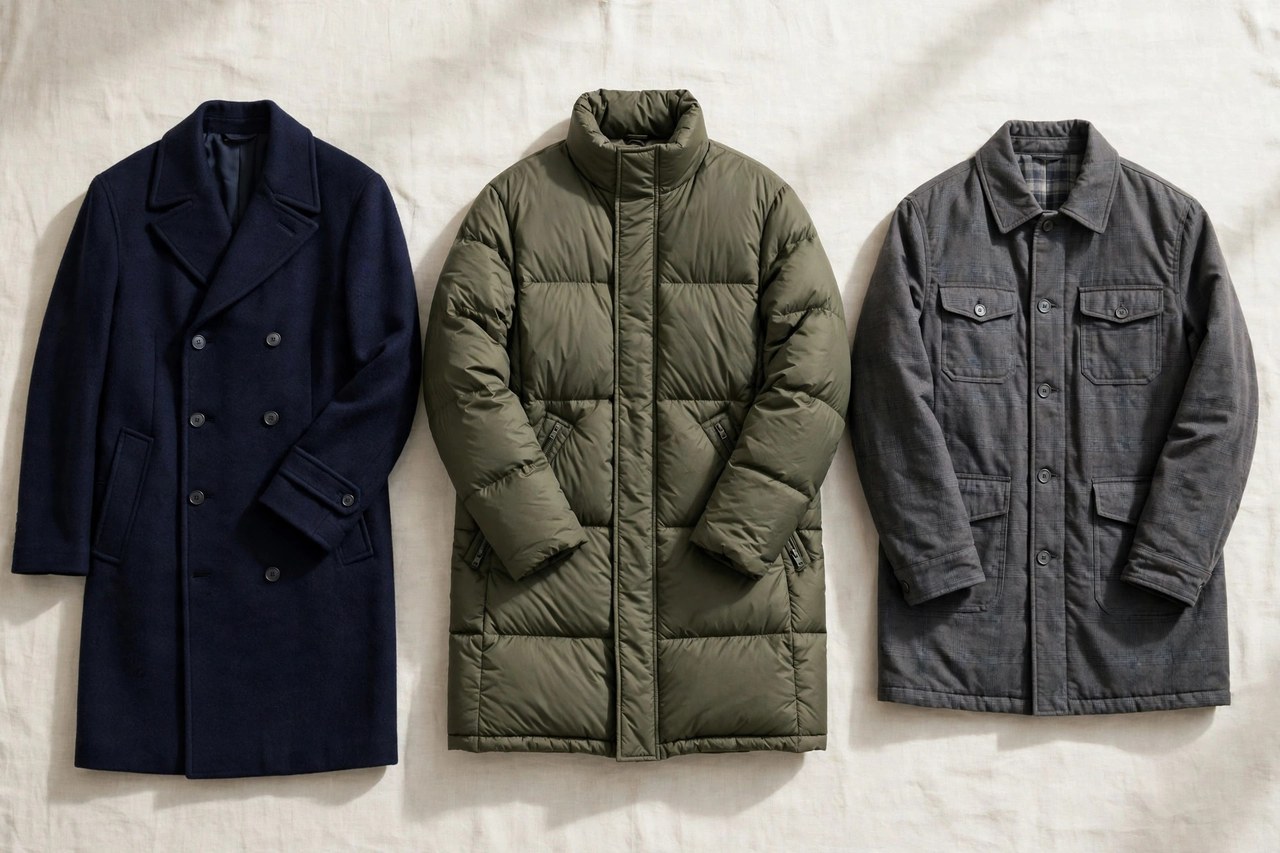
Big and tall coats are overcoats and heavy coats cut on the extended-size system: big sizes that carry a full chest and midsection without shortening the body, and tall sizes that add the sleeve and coat length a long frame needs to keep the hem at the knee rather than the thigh. A coat is the most architectural garment a man owns, and in extended sizes its proportions - lapel width, button stance, pocket placement - must be graded with the body, not just enlarged.
Big and tall sizing answers two different bodies with two different ranges: big sizes (1X through 6X in most lines) add circumference - chest, waist, seat and thigh - at regular lengths, while tall sizes (LT through 4XLT) add length - sleeves, body, rise and inseam - at a given circumference. Many men need one, some need both, and buying the wrong axis is the classic big-and-tall mistake: a big size bought for length drowns the shoulders, and a tall size bought for girth strains at every closure. Measure both axes - circumference where the garment closes, and length where it must reach - and order from the maker's own chart, because an X in one brand is a rumor in another.
Sizing for Bigger and Taller Frames
Measure for a coat over what it will cover: chest taken over the suit jacket or sweater you will wear beneath, sleeve from center back neck to wrist with the arm slightly bent, and body length judged against your knee. Tall coats typically add two inches of sleeve and body over regular; big sizes add chest and waist while keeping length honest. The fitting test is driving posture: arms forward, coat closed, no strain across the back and no lapels standing away from the chest.
Proportions are the second half of the system. A garment simply scaled up in every dimension fits nobody: proper big-and-tall patterns widen the shoulder and chest without dropping the armhole to the waist, add rise so a waistband sits where trousers are meant to sit, and grade pockets, collars and cuffs up modestly rather than comically. When a tall or big version looks like a regular garment photographed through a magnifier, that is usually better than it sounds - restraint in grading is what keeps a 3X shirt reading as a shirt and not as a tent with buttons.
Fabric and Construction
Wool and wool-blend cloth in a weight matched to your winter is the classic coat fabric, with melton and twill weaves shedding weather best; technical shells serve the wettest climates. In extended sizes, cloth quality matters more, not less - a larger coat uses more fabric under more stress at the button and pockets, so canvas interlinings, reinforced button attachments and well-set sleeves separate a decade coat from a two-season one. Shoulder construction should echo your own shoulder line rather than extending past it.
Outerwear earns its price in the details you cannot see in a photograph: whether seams are taped or merely stitched, whether the zipper is a reputable make that runs without catching, whether cuffs and hems adjust to seal out weather, and whether the lining lets the garment slide over layers instead of gripping them. Shoulder construction decides how a coat hangs over a sweater or a suit jacket, and pocket placement decides whether your hands rest naturally or hover. Buy for the coldest, wettest day the garment will honestly meet, not the mildest.
Wearing and Care
Care for coats in extended sizes follows the same rules as any quality garment, with two additions: the extra fabric weight makes hangers work harder, so fold heavy knits and use broad hangers for tailored pieces; and alterations budget matters more, because a hem or sleeve adjustment is often the difference between an extended size that fits and one that merely covers.
Outerwear care begins with hanging it properly - broad hangers that support the shoulders - and resting it between wears so insulation and shape recover. Most pieces need washing far less often than owners think; spot-clean first, and when a full wash comes, use the maker's instructions and a technical or gentle detergent as the fabric demands. Refresh water-repellent finishes when rain stops beading, store the garment clean and uncompressed, and have leather and tailored pieces professionally cleaned rather than experimenting at home.
Common Questions
Should a big and tall coat be sized up for layering?
Not by instinct - measure over the layer instead. Big and tall coats are already patterned with an over-layer allowance in the chest, so your measured size, taken over a jacket or heavy sweater, is the right one. Sizing up beyond that buys a coat whose shoulders and length are wrong, which no layer underneath will fix.
What length should a tall man's overcoat be?
The classic rule is hem at or just below the knee, which on a tall frame means ordering the tall size rather than accepting a regular length that ends mid-thigh. A hem that reaches the knee balances a long leg and keeps the coat's weather job intact; shorter car-coat lengths are a deliberate style, not a sizing compromise.
Why do buttons strain on big-size coats?
Usually a grading fault or the wrong size axis: the coat was bought for chest while the midsection needed the room, or the pattern widened without repositioning the button stance. A correct big pattern carries ease through the waist and places buttons to suit. Strain at the button on a new coat is a return reason, not a break-in stage.
More Big and Tall Guides
Background
Coats in extended sizes are part of the Big and Tall collection. The links below lead to big and tall clothing stores and onward through the collection’s other categories, and this guide covers the garment’s extended sizing, fabrics, fit and care, written for big and tall men.
More to Explore on Apparel Search
Looking for Men's Clothing Stores?
This guide explains men's big and tall coats and their sizing. To browse where to buy, visit our men's clothing store directory, where you can find retailers that carry extended sizes.