Men's Coats Guide
Men's coats are the outerwear system: garments worn over everything else, against weather - overcoats and topcoats for dress, parkas and puffers for deep cold, trench and rain coats for wet, pea coats and duffles from naval tradition, car coats and field coats for work and travel. A coat is the most public garment a man owns, the first thing seen for half the year, and the one whose buying discipline repays the most study.
Shop Men's Coats Now
Shop Men's Coats on Amazon Shop Men's Coats on eBayThe Amazon and eBay links on this page are affiliate links. If you make a purchase through them, Apparel Search may earn a commission.
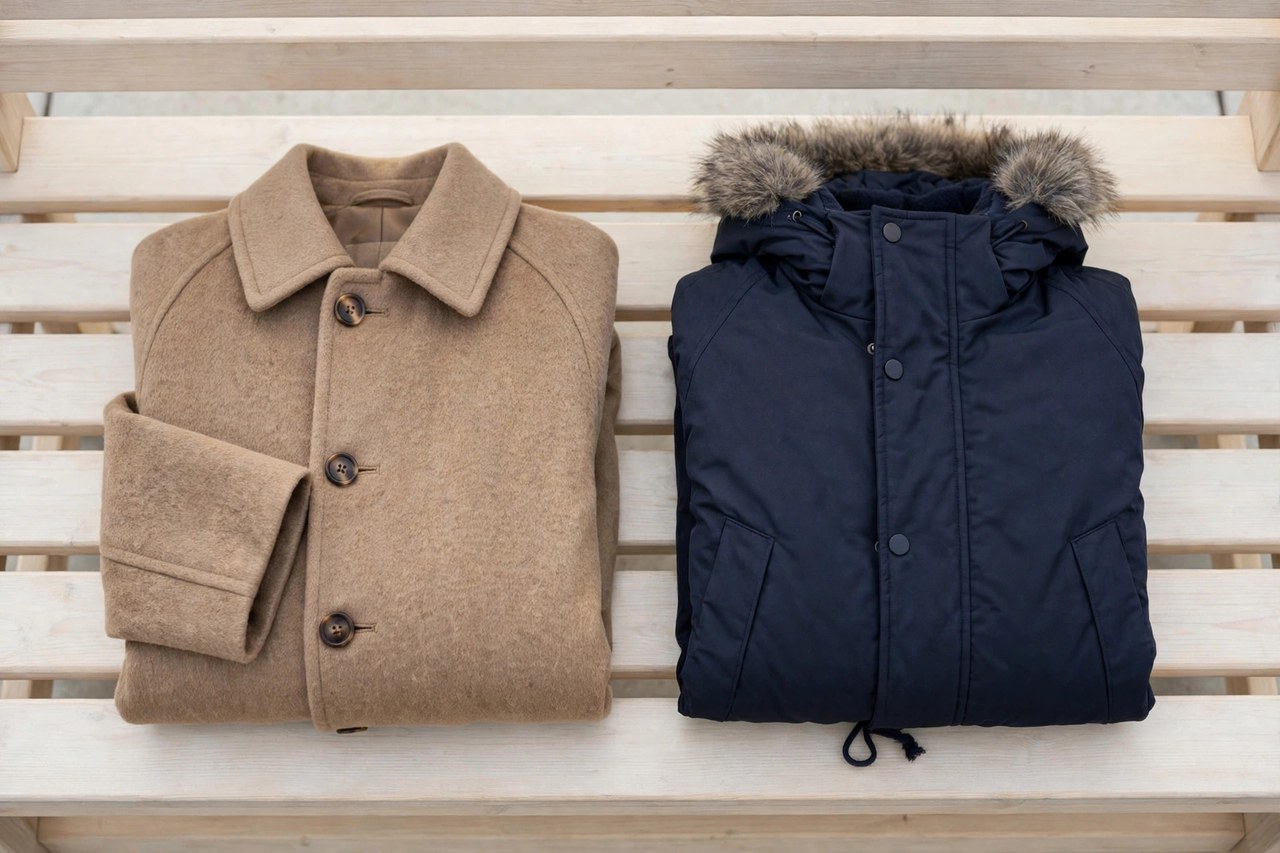
Men's coats are the outerwear system: garments worn over everything else, against weather - overcoats and topcoats for dress, parkas and puffers for deep cold, trench and rain coats for wet, pea coats and duffles from naval tradition, car coats and field coats for work and travel. A coat is the most public garment a man owns, the first thing seen for half the year, and the one whose buying discipline repays the most study. This guide covers the styles worth knowing, the fit points that decide comfort, the fabrics and construction that separate a good buy from a regret, and the simple care that makes the garment last.
Styles and Construction
Divide the wardrobe by weather job. Dress coats (wool, cashmere and blends - the cashmere versions have their own pages in this letter) cover tailoring from autumn to spring. Insulated coats divide into down, whose warmth-to-weight still leads, and synthetics, which keep insulating when wet and cost less. Rain coats divide into the tailored trench tradition and technical shells. One coat rarely does all three jobs; most men need a dress coat and a weather coat, and the man who buys one coat to do everything owns a compromise he wears daily.
Outerwear value hides below the surface: taped versus merely stitched seams, a zipper whose slider runs true under one hand, cuffs and hems that adjust to seal weather out, and a lining slippery enough to glide over the layers beneath. Shoulder build decides the hang over knitwear or a jacket, and pocket engineering decides whether hands and kit ride where your body expects them. Specify for the worst honest day, not the brochure day.
Fit and Sizing
Fit a coat over its real underlayer - suit jacket for a dress coat, sweater for a casual one - with the closure meeting without strain, shoulders echoing your own, sleeves covering the shirt cuff by a small margin, and length matched to purpose: knee-length for dress warmth, mid-thigh for car and commute practicality. Test the driving position and the seated position with the coat closed; coats are worn sitting almost as much as standing.
Fit outerwear over the bulkiest layer it will honestly cover, and test the working range: arms forward as if driving, arms overhead, sitting with every closure fastened. The coat's shoulders should echo yours rather than extend past them, closures should meet without strain, and the hem must reach the coverage the garment exists to give. A coat fitted over a T-shirt alone belongs to a climate you may not live in.
Wearing and Care
Hang coats on broad hangers, rest them between wears, brush wool after use, and clean at season's end before storage - moths and stains both prefer a coat put away dirty. Refresh water-repellent finishes when rain stops beading, store down uncompressed so its loft survives, and have leather and tailored pieces professionally cleaned. A good coat, kept this way, is a decade garment.
Hang outerwear on broad hangers that carry the shoulders, rest it between wears, and resist washing it often - spot-clean first, and wash by the maker's method with the detergent the fabric demands when a full clean is due. Refresh water-repellent finishes when rain stops beading, never store a coat dirty or compressed, and send leather and tailored pieces to professionals rather than experimenting at home.
Common Questions
How many coats does a man need?
Two covers most climates honestly: a dress coat (wool or a blend, knee-length) for tailoring and occasions, and a weather coat (insulated parka or technical shell system) for the worst days. Colder climates add a true deep-winter parka or split the weather role between a rain coat and a puffer; milder ones may merge the roles into a single lined trench or car coat.
Down or synthetic insulation?
Down wins warmth per weight and packs smallest, but loses insulation when soaked and costs more; quality down is rated by fill power. Synthetic insulation keeps working damp, dries faster, and suits wet climates and budgets. Choose by your weather: dry cold favors down, wet cold favors synthetic - and a waterproof shell over either changes the math less than the label suggests.
How long should an overcoat be?
Traditionally to the knee or just below for full dress warmth; modern cuts often end just above the knee, which suits driving and contemporary proportions. Shorter than mid-thigh, a dress coat stops covering the suit jacket it exists to protect. Let your height and your commute arbitrate: taller men carry longer coats, drivers prefer shorter.
More in Men's Clothes Guide C
Coats vs. Jackets
One distinction matters throughout: the “Coats vs. Jackets” reference separates the coat — longer, worn over everything, built against weather — from the jacket that shares its closet. The family’s members run from cashmere coats to down coats.
More to Explore on Apparel Search
Looking for Men's Clothing Stores?
This guide explains men's coats. To browse where to buy, visit our men's clothing store directory, where you can find retailers that carry them.