Men's Outerwear Guide
Outerwear is clothing designed to be worn outside other garments - clothing worn outdoors, as opposed to underwear. When we think of outerwear we most often think of jackets and coats, and the category is wide: leather jackets, hoodies, rain coats, ponchos and pea coats, anoraks, blazers, dusters and windbreakers, parkas and overcoats, in fabrics from wool and leather to denim and cotton. This guide is the map of that whole territory - what each family is for, how the layers are meant to stack - while its biggest members, overcoats among them, get their own deep guides elsewhere in this letter.
Shop Men's Outerwear Now
Shop Men's Outerwear on Amazon Shop Men's Outerwear on eBayThe Amazon and eBay links on this page are affiliate links. If you make a purchase through them, Apparel Search may earn a commission.
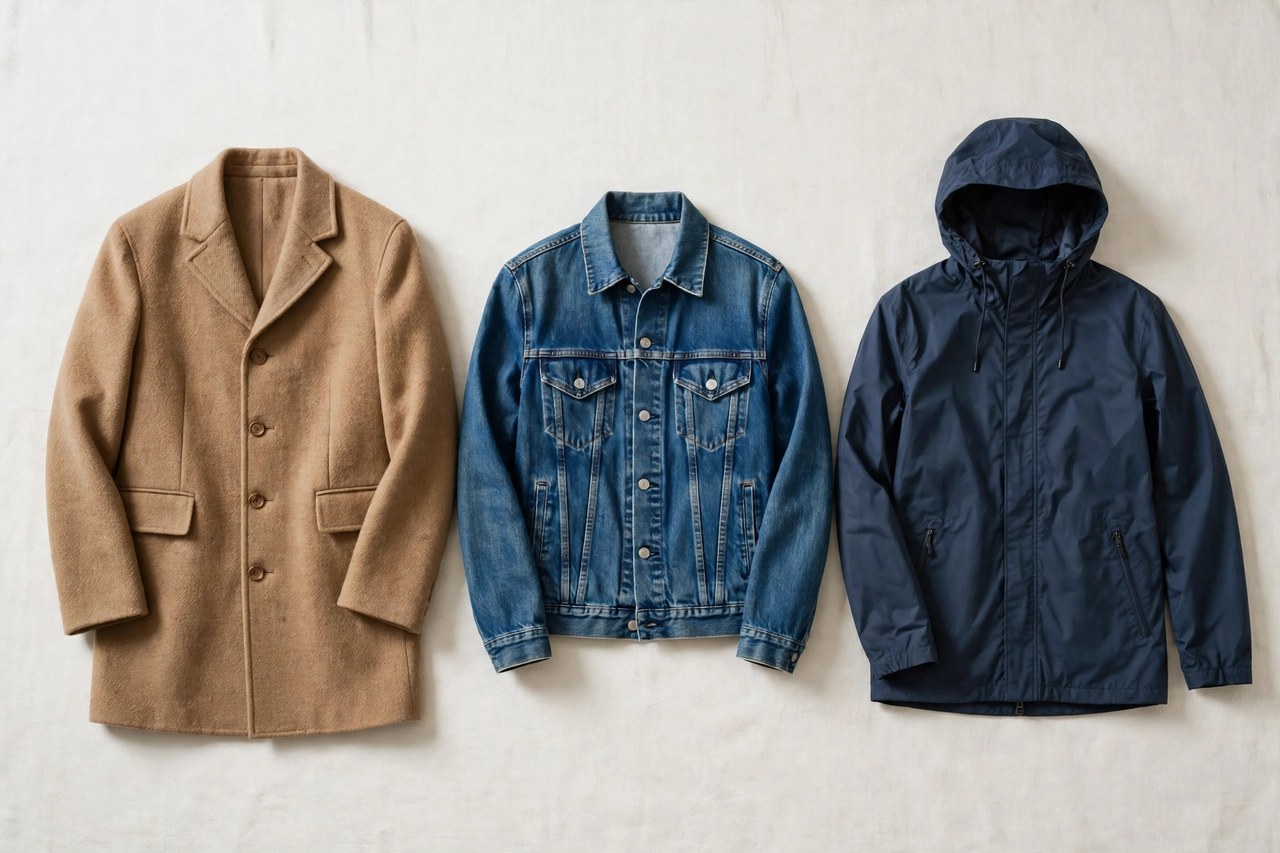
Outerwear is clothing designed to be worn outside other garments - clothing worn outdoors, as opposed to underwear. When we think of outerwear we most often think of jackets and coats, and the category is wide: leather jackets, hoodies, rain coats, ponchos and pea coats, anoraks, blazers, dusters and windbreakers, parkas and overcoats, in fabrics from wool and leather to denim and cotton. This guide is the map of that whole territory - what each family is for, how the layers are meant to stack - while its biggest members, overcoats among them, get their own deep guides elsewhere in this letter. This guide covers the styles worth knowing, the fit points that decide comfort, the fabrics and construction that separate a good buy from a regret, and the simple care that makes the garment last.
Armor, Warmth and the Jacket Middle
Sort outerwear by the job of the outermost layer. Weather armor comes first: rain jackets and ponchos, windbreakers and anoraks, built around waterproof or windproof shells and sealed closures. Warmth comes second: parkas, pea coats and overcoats, insulated or heavy-clothed pieces whose length is part of their heating system. Third is the vast middle of jackets worn as much for style as shelter - leather jackets, denim jackets and hooded jackets, alongside the coats and jackets guides in C and J. Our overcoats guide in this letter takes the long tailored end of the family apart in detail, and our outdoor apparel guide takes the technical end, built for pursuits rather than pavements. The fabrics follow the jobs: wool and cashmere blends for tailored warmth, leather for abrasion and wind, denim and cotton for three-season work, and coated synthetics where rain is the honest enemy.
Outerwear value hides below the surface: taped versus merely stitched seams, a zipper whose slider runs true under one hand, cuffs and hems that adjust to seal weather out, and a lining slippery enough to glide over the layers beneath. Shoulder build decides the hang over knitwear or a jacket, and pocket engineering decides whether hands and kit ride where your body expects them. Specify for the worst honest day, not the brochure day.
Fit Over the Honest Layer
Fit outerwear over what it will honestly cover, and test it moving. A winter coat fitted over a T-shirt in September will strain over the sweater it meets in January, so shop in or simulate the bulkiest layer the piece must swallow. Shoulders should echo your own rather than extend past them; closures - buttons, zips, toggles, belts - should meet without strain when you sit and when you reach forward as if driving. Length is coverage: a jacket that ends at the waist sheds weather onto your thighs, a coat that ends below the knee keeps it off them, and the right answer is the climate's, not the mirror's. Sleeves should cover the wrist bone with arms forward, and gloves should meet them without a bare gap.
Fit outerwear over the bulkiest layer it will honestly cover, and test the working range: arms forward as if driving, arms overhead, sitting with every closure fastened. The coat's shoulders should echo yours rather than extend past them, closures should meet without strain, and the hem must reach the coverage the garment exists to give. A coat fitted over a T-shirt alone belongs to a climate you may not live in.
Hang Broad, Wash Rarely
Outerwear care is mostly storage and restraint. Hang coats and jackets on broad hangers that carry their shoulders, rest them a day between wears, and brush wool and leather down after use rather than washing on a schedule - most outerwear needs cleaning far less often than its owners fear, and every wash costs a technical finish or a tailored shape something. Refresh water-repellent finishes when water stops beading, reproof rain gear by its maker's method, and keep leather conditioned and away from radiators. Never store a coat dirty or compressed for the summer: moths find the dirty wool, and insulation stored crushed comes back flat. A mid-season inspection - buttons, zip sliders, pocket corners, hem - turns winter's surprises into autumn's ten-minute repairs.
Hang outerwear on broad hangers that carry the shoulders, rest it between wears, and resist washing it often - spot-clean first, and wash by the maker's method with the detergent the fabric demands when a full clean is due. Refresh water-repellent finishes when rain stops beading, never store a coat dirty or compressed, and send leather and tailored pieces to professionals rather than experimenting at home.
Common Questions
What is outerwear, exactly?
Clothing designed to be worn outside other garments - clothing worn outdoors, as opposed to underwear. In practice the category means the outermost layer: jackets and coats first of all, including leather jackets, hoodies, rain coats, ponchos, pea coats, anoraks, blazers, dusters, windbreakers, parkas and overcoats, made in fabrics such as wool, leather, denim and cotton for protection from cold, rain and snow, or simply worn for style.
What is the difference between the outerwear, outdoor apparel and overcoats guides?
Scope. This outerwear guide maps the whole outermost-layer category - every coat and jacket family and the jobs they do. The outdoor apparel guide in this letter covers clothing as a technical system for pursuits such as hiking, fishing and skiing, layers and all. The overcoats guide covers one family in depth: the long tailored coat worn as the outermost garment, and how it differs from the shorter, lighter topcoat.
How should a man's outerwear fit over layers?
Over the bulkiest layer it will honestly cover. Try coats on over a sweater or jacket, not a T-shirt, and test the working range: arms forward as if driving, arms overhead, sitting with every closure fastened. The shoulders should match yours, closures should meet without strain, sleeves should still cover the wrist bone with arms forward, and the hem should reach the coverage the garment exists to give - waist length sheds weather, below-knee length stops it.
More in Men's Clothes Guide O
Worn Outside Other Garments
Outerwear is clothing worn outdoors — or, defined more precisely, “clothing designed to be worn outside other garments”, as opposed to underwear. When we think of outerwear, we most often think of jackets and coats: many categories such as leather jackets, hoodies, rain coats, ponchos and pea coats, anorak, blazers, dusters and wind breakers fit the category, worn over other garments for protection from cold weather, rain and snow, or just to be worn for style. Commonly worn men’s outerwear includes men’s coats, leather jackets, hooded jackets, denim jackets, over coats, rain jackets and parkas, and the fabrics used in making outerwear are wool, leather, denim, cotton, etc.
Looking for Men's Clothing Stores?
This guide explains men's outerwear. To browse where to buy, visit our men's clothing store directory, where you can find retailers that carry them.