Men's Raincoats Guide
A men's raincoat - traditionally a slicker - is a waterproof or water-resistant coat worn to protect the body from rain. Styles include the anorak, the mackintosh, oilskin, ponchos and the trench coat, and 'rain jacket' usually means the waist-length version of the same idea. This guide takes the coat itself: the fabrics and coatings that shed water, the classic patterns, and how a raincoat should fit over everything from a T-shirt to a suit.
Shop Men's Raincoats Now
Shop Men's Raincoats on Amazon Shop Men's Raincoats on eBayThe Amazon and eBay links on this page are affiliate links. If you make a purchase through them, Apparel Search may earn a commission.
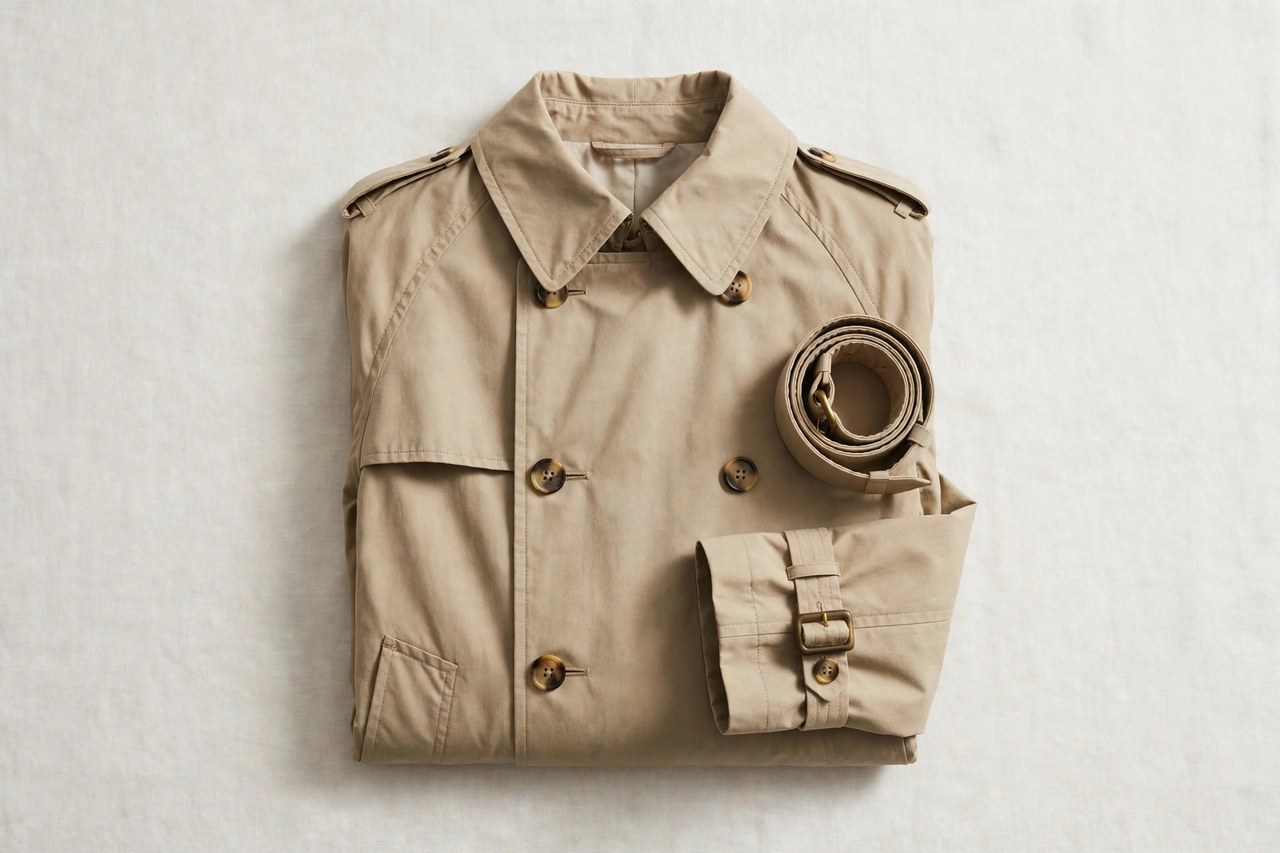
A men's raincoat - traditionally a slicker - is a waterproof or water-resistant coat worn to protect the body from rain. Styles include the anorak, the mackintosh, oilskin, ponchos and the trench coat, and 'rain jacket' usually means the waist-length version of the same idea. This guide takes the coat itself: the fabrics and coatings that shed water, the classic patterns, and how a raincoat should fit over everything from a T-shirt to a suit. This guide covers the styles worth knowing, the fit points that decide comfort, the fabrics and construction that separate a good buy from a regret, and the simple care that makes the garment last.
Styles and Fabrics: Macs, Trenches, Oilskin and Modern Shells
Raincoat fabrics divide by method. Rubberized cotton is the original mackintosh technology - cloth proofed with rubber, fully waterproof and traditional, but heavy and not breathable. Modern shells use woven synthetics or cotton blends with a durable water-repellent (DWR) finish, taped or sealed seams and, in better coats, a waterproof-breathable membrane; oilskin - cotton densely woven and treated with oils and waxes - remains the rugged, re-proofable option. Style follows the same split: the trench coat (double-breasted, belted, born in the First World War trenches) dresses up; the single-breasted mac is the minimal city coat; the slicker and the poncho are pure function. Whatever the style, audit the seams (taped beats merely stitched), the closure (a storm placket over the zip or buttons), and cuffs and hem that can be cinched against driven rain.
Outerwear value hides below the surface: taped versus merely stitched seams, a zipper whose slider runs true under one hand, cuffs and hems that adjust to seal weather out, and a lining slippery enough to glide over the layers beneath. Shoulder build decides the hang over knitwear or a jacket, and pocket engineering decides whether hands and kit ride where your body expects them. Specify for the worst honest day, not the brochure day.
Fit and Sizing
Fit a raincoat over the bulkiest layer it will honestly cover - for most men, a suit jacket or a heavy sweater - and fasten every closure while sitting and reaching. The coat's shoulders should echo yours, the body should close without strain over layers, and length should reach at least mid-thigh for real protection; a knee-length coat keeps trousers dry in a way no waist-length jacket can. Sleeves should cover your shirt cuffs with arms extended. If you will wear it mainly over tailoring, size for the jacket beneath, not for the T-shirt you tried it on in.
Fit outerwear over the bulkiest layer it will honestly cover, and test the working range: arms forward as if driving, arms overhead, sitting with every closure fastened. The coat's shoulders should echo yours rather than extend past them, closures should meet without strain, and the hem must reach the coverage the garment exists to give. A coat fitted over a T-shirt alone belongs to a climate you may not live in.
Wearing and Care
Hang a raincoat on a broad hanger and let it dry fully before it goes back in the closet; most rain shells need washing rarely - spot-clean first, then wash by the maker's method when a full clean is due. Refresh the DWR finish when rain stops beading on the surface (wash-in or spray-on reproofing restores it), re-wax oilskin when it dries out, and never store any raincoat dirty or compressed. Store rubberized and vintage coats away from heat, which perishes the proofing.
Hang outerwear on broad hangers that carry the shoulders, rest it between wears, and resist washing it often - spot-clean first, and wash by the maker's method with the detergent the fabric demands when a full clean is due. Refresh water-repellent finishes when rain stops beading, never store a coat dirty or compressed, and send leather and tailored pieces to professionals rather than experimenting at home.
Common Questions
What is the difference between a raincoat and a rain jacket?
Length, mostly - 'rain jacket' is the term used for waist-length raincoats. A raincoat proper reaches mid-thigh or the knee and protects trousers as well as the torso, which is why it is the commuter and tailoring choice; a rain jacket is lighter and more athletic, and pairs naturally with rain pants. Both can be waterproof or merely water-resistant - read the seam construction, not the name, to know which you are getting.
Are mackintosh, trench and oilskin all raincoats?
Yes - three classic members of the family. The mackintosh is rubberized cotton, fully waterproof and traditional; the trench coat is the belted, double-breasted military pattern, usually in proofed gabardine or a modern shell; oilskin is cotton treated with oils and waxes, rugged and re-proofable at home. They differ in weight, breathability and formality, not in purpose.
How do I keep a raincoat waterproof over time?
Care for the finish, not just the cloth. Let the coat dry fully on a broad hanger after wear, spot-clean rather than washing often, and when rain stops beading on the surface, reproof: wash-in or spray-on DWR for modern shells, wax for oilskin. Sealed seams and storm plackets do the structural work, so check them each season - a lifted seam tape or a worn cuff lets in more water than tired fabric ever will.
More in Men's Clothes Guide R
The Raincoat Family
A raincoat or slicker is a waterproof or water-resistant coat worn to protect the body from rain, and the term rain jacket is sometimes used to refer to raincoats that are waist length. The family of styles includes the anorak, mackintosh, oilskin, ponchos and trench coats. See also our coat and trench coat guides, the rainwear manufacturers directory, and our fashion influence section’s raincoat page. Whatever type of coat you are wearing, we hope it keeps you warm and dry when the rain arrives.
Looking for Men's Clothing Stores?
This guide explains men's raincoats. To browse where to buy, visit our men's clothing store directory, where you can find retailers that carry them.