Men's Ponchos Guide
A poncho is the simplest rain garment ever made: a single sheet of waterproof cloth with a hole - usually hooded - for the head, covering torso, arms and pack in one drape. Born in the Andes, standardized by armies, and carried by hikers, festival-goers, stadium crowds and motorcyclists' emergency kits, the poncho survives because it does three jobs no jacket matches: it goes on over everything in seconds, it ventilates like a tent while shedding like a roof, and it packs to the size of a paperback. This guide covers the cloths, cuts and honest limits of the design.
Shop Men's Ponchos Now
Shop Men's Ponchos on Amazon Shop Men's Ponchos on eBayThe Amazon and eBay links on this page are affiliate links. If you make a purchase through them, Apparel Search may earn a commission.
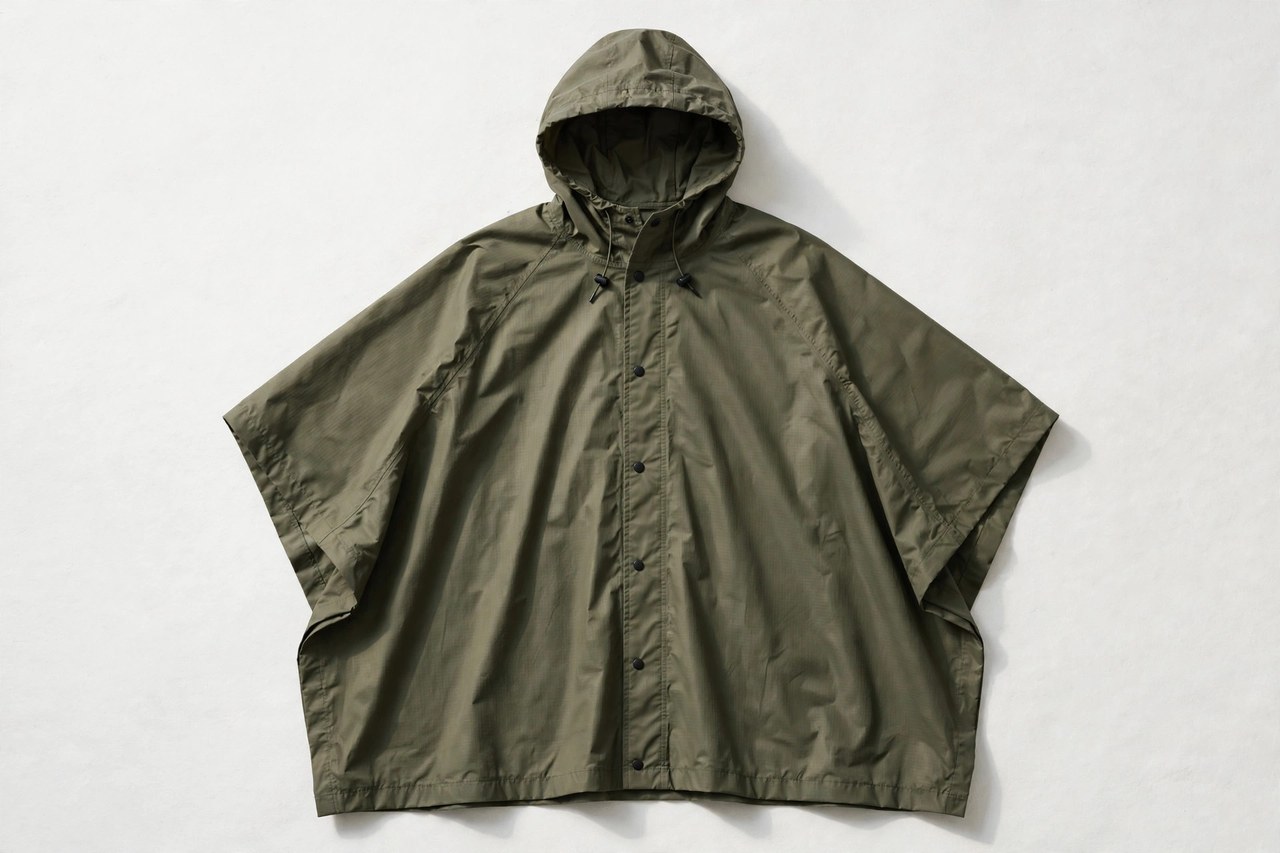
A poncho is the simplest rain garment ever made: a single sheet of waterproof cloth with a hole - usually hooded - for the head, covering torso, arms and pack in one drape. Born in the Andes, standardized by armies, and carried by hikers, festival-goers, stadium crowds and motorcyclists' emergency kits, the poncho survives because it does three jobs no jacket matches: it goes on over everything in seconds, it ventilates like a tent while shedding like a roof, and it packs to the size of a paperback. This guide covers the cloths, cuts and honest limits of the design. This guide covers the styles worth knowing, the fit points that decide comfort, the fabrics and construction that separate a good buy from a regret, and the simple care that makes the garment last.
Film, Coated Cloth and Wool
Poncho cloths divide by duty. Disposable and event ponchos are thin plastic film - one storm, one game, no regrets - and belong in gloveboxes and daypacks as insurance, not gear. Reusable rain ponchos are coated nylon or polyester, seam-taped at the better end, with snap sides that convert the drape into sleeves of a sort and a hood that actually turns with the head. Traditional wool and woven ponchos - the Andean original and its fashion descendants - trade waterproofing for warmth and style: heavy, handsome, shower-resistant rather than storm-proof. Military-pattern ponchos add the system's cleverness: grommets and snaps that let two ponchos become a shelter, or one become a groundsheet, liner or lean-to. Judge any poncho by its hood first - a hood that does not adjust or turn with you blinds you at crossings - then by length, then by whether its snaps and seams look like they intend to survive being sat on.
Outerwear value hides below the surface: taped versus merely stitched seams, a zipper whose slider runs true under one hand, cuffs and hems that adjust to seal weather out, and a lining slippery enough to glide over the layers beneath. Shoulder build decides the hang over knitwear or a jacket, and pocket engineering decides whether hands and kit ride where your body expects them. Specify for the worst honest day, not the brochure day.
Coverage and Clearance
Fit on a poncho is coverage and clearance. Length should reach at least the knees in front and back - longer for stationary duty like watching or fishing, shorter and snap-sided for cycling or work where the drape could catch. The drape must cover what it is protecting: a poncho worn over a backpack - the hiker's classic use - needs the extra volume cut or an extended back panel, and a poncho that only just covers you standing will ride up and expose your thighs seated, which is when rain gear earns its keep. Arm clearance matters when the day is more than walking: side snaps let you close the garment for warmth or open it to work. Test any new poncho by putting it on over your bulkiest honest layer, pack included, and walking a flight of stairs - a design that fights stairs will fight the day.
Fit outerwear over the bulkiest layer it will honestly cover, and test the working range: arms forward as if driving, arms overhead, sitting with every closure fastened. The coat's shoulders should echo yours rather than extend past them, closures should meet without strain, and the hem must reach the coverage the garment exists to give. A coat fitted over a T-shirt alone belongs to a climate you may not live in.
A Tent's Honest Limits
Ponchos ask almost nothing: shake, hang, dry, fold. Coated fabrics last longest stored dry and loose rather than compressed in their pouch for a year, which cracks coatings at the folds - air a stored poncho each season and refold on different lines. Wash coated cloth rarely, with cool water and no softener, and reproof when water stops beading on the shoulders. Wool ponchos follow wool's rules: brush, rest, protect from moths. The honest limit to respect is wind: a poncho in a gale becomes a sail, and driving sideways rain enters at the open sides - which is why ponchos complement rather than replace a rain jacket in serious weather plans. As emergency and warm-rain gear, nothing in this letter's outerwear family does more per ounce or per dollar.
Hang outerwear on broad hangers that carry the shoulders, rest it between wears, and resist washing it often - spot-clean first, and wash by the maker's method with the detergent the fabric demands when a full clean is due. Refresh water-repellent finishes when rain stops beading, never store a coat dirty or compressed, and send leather and tailored pieces to professionals rather than experimenting at home.
Common Questions
What are the advantages of a poncho over a rain jacket?
Speed, coverage and air. A poncho goes on over any clothing and over a backpack in seconds, covers to the knees like a small tent, ventilates freely so you do not steam inside it during warm rain, doubles as a groundsheet or shelter in its military patterns, and packs smaller than any jacket. Its weaknesses are wind - it billows and admits sideways rain - and a workman's need for free arms, which is why serious kits often carry both: jacket for weather, poncho for everything else.
How long should a rain poncho be?
At least to the knees, front and back, when worn over your bulkiest layer and pack. Longer - mid-calf - suits stationary use such as fishing, spectating and camp duty. Shorter or snap-sided cuts suit cycling and active work, where a long drape can catch. The seated test is the honest one: sit down in it, because a poncho that barely covers standing will expose your thighs the moment you sit, exactly when you want its shelter most.
Can a poncho be used as a shelter?
The military-pattern ones can, by design: grommeted corners and side snaps let a poncho pitch as a lean-to or fly, pair with a second poncho into a small tent, or serve as groundsheet and pack cover. Recreational ponchos vary - some include the grommets and reinforced corners, fashion and event ponchos do not. If shelter use matters, buy the pattern that advertises it and practice the pitch at home; a poncho shelter improvised for the first time in actual rain teaches the lesson too late.
More in Men's Clothes Guide P
From Our Original Guide: A Blanket With a Head Opening
Our original ponchos page defined the garment by its simplicity, and this guide keeps the definition. A poncho is an outer garment designed to keep the body warm, often with a similar appearance to a woolen fabric blanket; in its simplest form the poncho is essentially a single large sheet of fabric with an opening in the center for the head, and often it has a hood. One sheet, one opening — the whole design, from which every poncho in this guide descends. Its links to the raincoats guide and the poncho definition are carried in this page’s lists below.
Looking for Men's Clothing Stores?
This guide explains men's ponchos. To browse where to buy, visit our men's clothing store directory, where you can find retailers that carry them.