Men's Rain Boots Guide
Men's rain boots are waterproof boots built to keep feet dry in wet weather, wet ground and outright mud. Rain is liquid water condensed from atmospheric vapor and precipitated to earth, and when it falls, footwear gets wet - so smart people wear boots intended for the rain. A boot covers the foot and ankle and often part of the lower calf, sometimes rising to the knee; rain boots add a waterproof build, traditionally rubber and today also PVC and waterproofed leather, so the protection rises as high as the puddles do.
Shop Men's Rain Boots Now
Shop Men's Rain Boots on Amazon Shop Men's Rain Boots on eBayThe Amazon and eBay links on this page are affiliate links. If you make a purchase through them, Apparel Search may earn a commission.
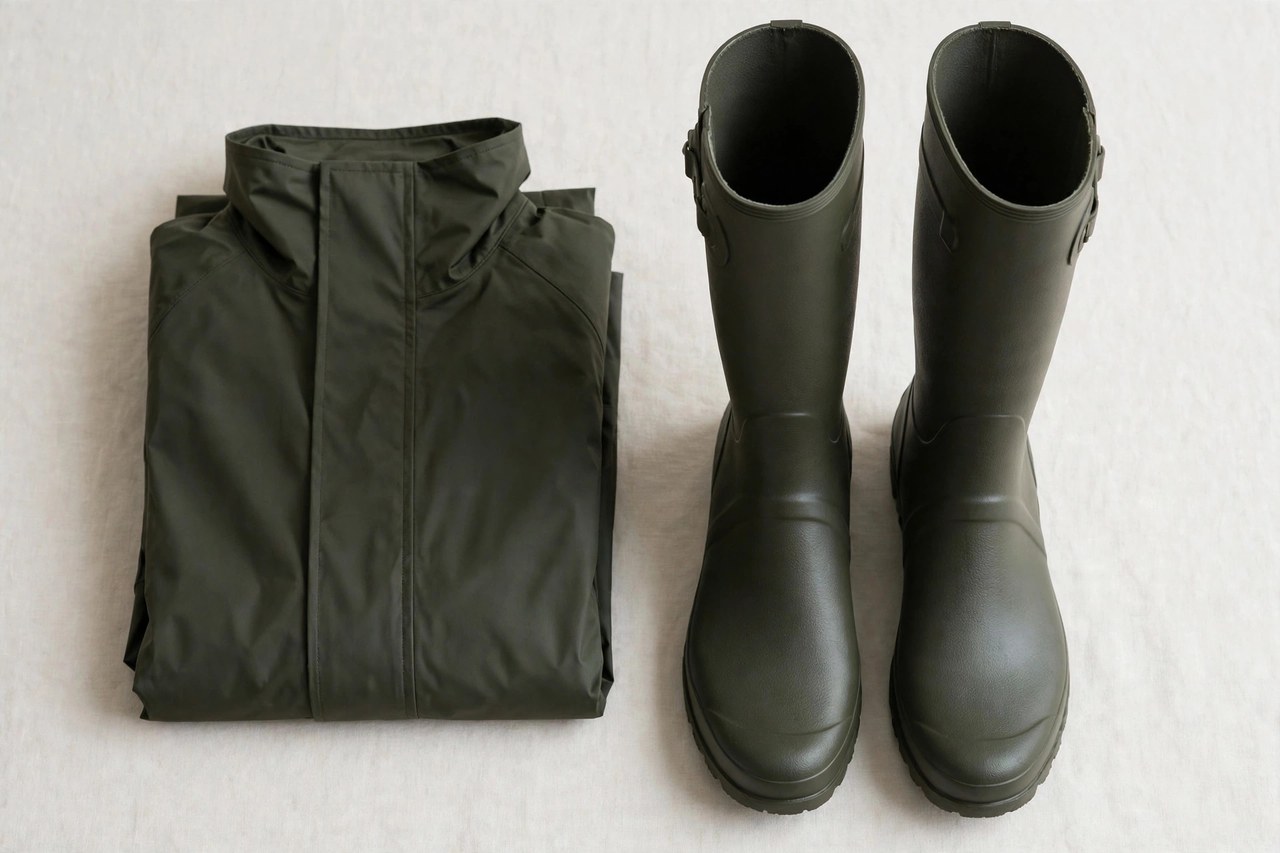
Men's rain boots are waterproof boots built to keep feet dry in wet weather, wet ground and outright mud. Rain is liquid water condensed from atmospheric vapor and precipitated to earth, and when it falls, footwear gets wet - so smart people wear boots intended for the rain. A boot covers the foot and ankle and often part of the lower calf, sometimes rising to the knee; rain boots add a waterproof build, traditionally rubber and today also PVC and waterproofed leather, so the protection rises as high as the puddles do. This guide covers the styles worth knowing, the fit points that decide comfort, the fabrics and construction that separate a good buy from a regret, and the simple care that makes the garment last.
Styles and Construction: Wellingtons, Chelseas and Work Boots
Construction decides whether a rain boot is genuinely waterproof or merely hopeful. The classic Wellington pattern - descended, as our rainwear guide notes, from leather Hessian boots - is molded or vulcanized rubber (or PVC) with no stitched seams below the ankle for water to enter; better pairs add a gusseted or adjustable calf, a quick-dry lining, and a lugged outsole whose tread sheds mud instead of packing with it. Chelsea-style rain boots trade height for easy on-off and a cleaner look under trousers, while insulated and neoprene-lined versions serve cold rain and farm or site work. Judge the shaft opening (it should hug the calf or adjust, or rain runs straight in), the sole's flex and grip on wet pavement, and whether the lining can dry overnight - a boot that stays damp inside fails its one job.
Judge footwear by attachment and compound: cemented soles are light and affordable, stitched or welted constructions cost more and can be repaired, and the outsole rubber decides grip against longevity - soft compounds bite, hard compounds endure. Linings decide comfort over hours, removable insoles decide whether your own supports can come along, and honest weight decides whether the pair disappears on the foot or taxes every mile of the day.
Fit and Sizing
Fit rain boots with the socks you will wear in them and a little room to spare: rubber does not stretch or break in, so the size you try is the size you keep. You want roughly a thumb's width past the toes, a heel that does not slop excessively (a thick sock or insole can tune a roomy fit), and a calf opening that admits your leg plus trouser fabric without binding. Height is a fit decision too - mid-calf for city commuting, knee height for mud, fields and flooded paths. Walk on a hard floor and bend the forefoot; a rain boot should flex at the toes, not halfway down the arch.
Fit footwear late in the day in the socks you will actually wear, with roughly a thumb's width beyond the longest toe, the heel held without lift, and the foot's widest point meeting the shoe's widest point. Sizes are unstandardized between makers - trust your measured length and width over the printed number, and require no break-in argument: a shoe that needs excuses in the shop delivers them on the road.
Wearing and Care
Rinse mud off after use and let rain boots dry upright at room temperature, away from radiators and direct sun, which crack rubber over time. Store them standing - stuffed or on boot trees - rather than folded at the ankle, condition natural rubber occasionally, and check the tread and the shaft seams each season. A pair kept clean and upright will shrug off years of wet weather; a pair left muddy in a garage corner ages in one winter.
Rotation is the first care rule: a day of rest between wears lets linings dry and cushioning rebound, and it doubles a rotation's life compared with daily wear of one pair. Clean after use, dry at room temperature away from radiators, hold shape with trees or paper, and condition leather on a schedule rather than when it looks thirsty. Reproof weather finishes when water stops beading, and resole stitched footwear before the wear reaches the welt.
The most famous waterproof boot of all is a hybrid: duck boots pair a molded rubber foot with a leather upper, and they handle slush and mud differently from the all-rubber boots above.
Serious wet-weather boots are often stitched, not glued - see Norwegian welt and stitchdown construction.
Common Questions
What is the difference between rain boots and regular boots?
Waterproofing and height. A rain boot is built so water cannot enter - molded or vulcanized rubber or PVC, or waterproofed leather, with no vulnerable stitched seams low on the boot - and it usually rises higher up the calf than a regular boot, because its job is to keep both rain and standing water out. A regular leather boot may resist a shower but will soak through in sustained rain or deep puddles.
How tall should men's rain boots be?
Match the height to the water. Chelsea and ankle rain boots handle city rain and wet pavements; mid-calf boots cover most commuting and garden work; knee-high Wellingtons are the choice for mud, fields, flooding and site work. Remember the top opening matters as much as the height - a tall boot with a wide, loose shaft funnels rain straight inside, so look for a snug or adjustable calf.
Do rain boots stretch or break in?
Rubber and PVC rain boots essentially do not stretch, which is why fit at purchase is final: buy with your real socks on, a thumb's width past the toes, and tune a slightly roomy heel with a thicker sock or an insole rather than expecting the boot to give. Waterproofed leather rain boots ease a little like other leather boots, but the waterproof membrane, not the leather, is doing the weather work.
More in Men's Clothes Guide R
Why Rain Boots Exist
Rain is liquid water in the form of droplets that have condensed from atmospheric water vapor and then precipitated — become heavy enough to fall under gravity to the earth — and when this occurs, our clothing and footwear tend to get wet, so smart people wear rainwear to protect against the elements. In footwear, that means boots intended for wearing in the rain. A boot covers the foot and the ankle, while some also cover part of the lower calf and others extend up the leg as far as the knee or even the hip; most boots have a heel clearly distinguishable from the rest of the sole, and they are traditionally made of leather or rubber. Rain boots are typically waterproof — made water-resistant so they remain relatively unaffected by water and resist its ingress under specified conditions. Further reading on this page includes our yellow rain boots guide and the L.L.Bean duck boot story on our blog.
More to Explore on Apparel Search
- Men's Boots
- Men's Shoes
- Men's Shoes Guide
- Men's Footwear
- Footwear News
- Shoe Definition
- Footwear Definition
- Footwear Definition List
- Men's Shoe Wholesalers
- Men's Shoe Stores
- Where to Buy Shoes
- Shopping For Shoes
- L.L. Bean Duck Boots
- men's waterproof shoes
- Why do people where yellow rain boots?
- Men's Clothes Guide H-P
- Men's Clothes Guide Q-Z
Looking for Men's Clothing Stores?
This guide explains men's rain boots. To browse where to buy, visit our men's clothing store directory, where you can find retailers that carry them.