Men's Yellow Rain Boots Guide
Men's yellow rain boots are waterproof boots in the most visible color there is — chosen so drivers see you crossing the street in the rain, and so wet days get a little cheer.
Shop Men's Yellow Rain Boots Now
Shop Men's Yellow Rain Boots on Amazon Shop Men's Yellow Rain Boots on eBayThe Amazon and eBay links on this page are affiliate links. If you make a purchase through them, Apparel Search may earn a commission.
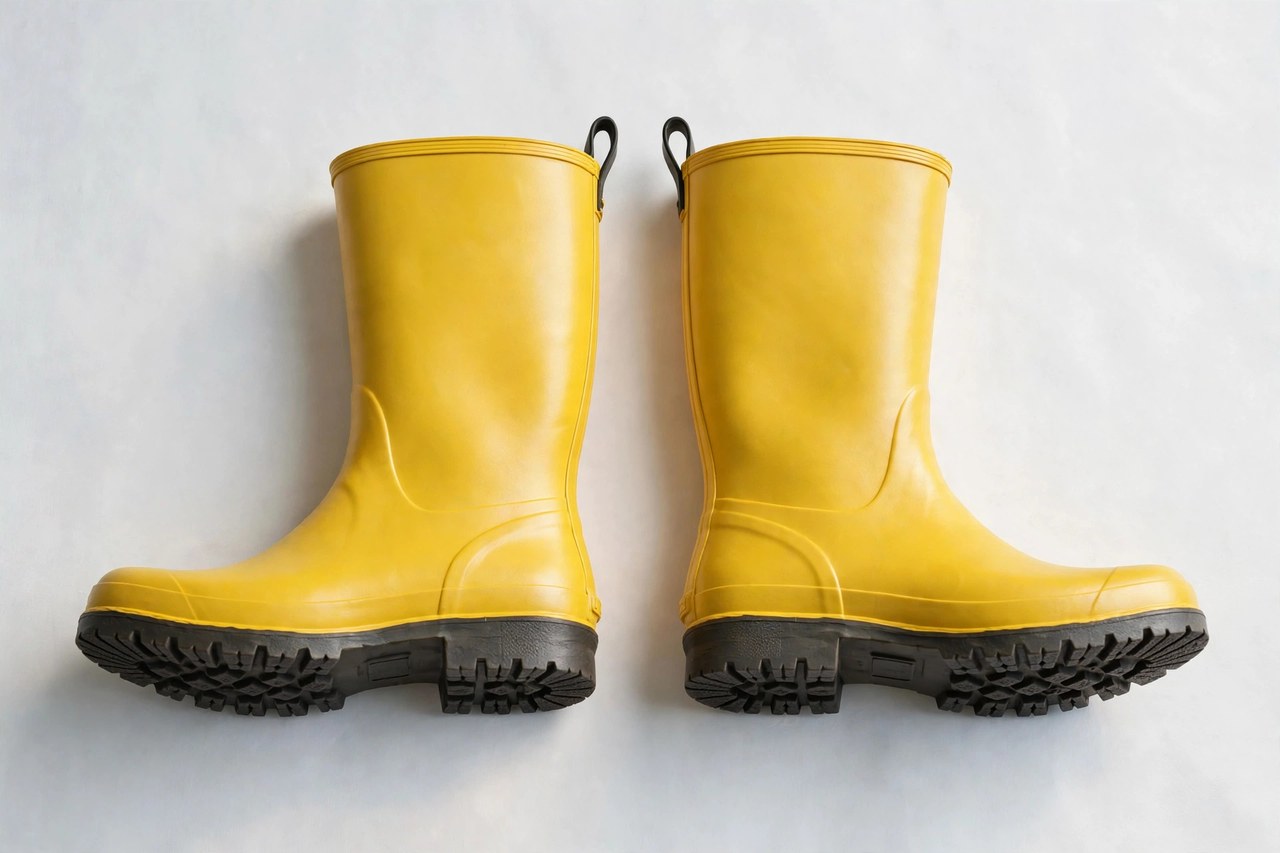
Why yellow rain boots? Our original guide answered without hesitating: a better chance that we will see you when you are crossing the street in the rain. Safety is an important element of rainwear, and yellow is the safety color — which makes the classic yellow rain boot a rare thing in menswear, a garment whose brightest fashion choice is also its most practical one.
Make a fashion splash with rain boots in various shapes, sizes and materials — but if visibility is the point, make sure you are selecting a perfect vibrant yellow for the color. You are welcome to mix in yellow with interesting patterns and other colors that will make the rainy season a little more bearable, as long as yellow is your primary color of choice. This guide covers why the color works, and how to choose the boot underneath it.
Yellow: The Color That Gets Seen
Yellow is the most visible color from a distance, so it is often used for objects that need to be seen — and a person walking in the rain is an excellent example of something that needs to be seen by automobile drivers. Rain shortens sight lines, dims headlights and turns streets reflective; a saturated yellow boot moving at ankle height reads through all of it.
The authorities agree by standard. The Occupational Safety and Health Administration (OSHA) uses Pantone 116, a yellow hue, as its standard color implying 'general warning,' while the Federal Highway Administration similarly uses yellow to communicate warning or caution on highway signage. Yellow boots say, in the original guide's words, 'pay attention to me and drive carefully around me.' Some people add that yellow is the color most associated with optimism and pleasure — so maybe yellow boots will bring you great pleasure along with the dry feet.
Choosing a Genuinely Waterproof Boot
Color gets you seen; construction keeps you dry. A rain boot's waterproofing lives in its build: a one-piece molded or vulcanized rubber boot has no seams to leak, while stitched or cemented constructions need sealed seams to earn the word waterproof. Natural rubber flexes comfortably and stays supple in cold rain; PVC is lighter and cheaper but stiffer; neoprene-insulated boots add warmth for winter rain and slush.
Height is the second decision. Ankle-height rain shoes handle wet pavements and commutes; mid-calf boots handle puddles, wet grass and market-garden mud; knee boots are for genuinely flooded ground and work in standing water. Match the height to the deepest water you honestly expect — every extra inch is weight you carry all day for the one puddle that needed it.
Sole, Fit and Lining
Wet grip comes from the sole: look for deep lugs or a siped tread that channels water away, and a heel breast that holds on wet steps and ladders. A smooth fashion sole on a yellow boot is a slide waiting for a rainy staircase. If the boots will double for yard or site work, check whether the model adds a safety toe or electrical-hazard rating — most fashion rain boots carry neither.
Fit with the socks you will actually wear: rain boots are usually unlined or thinly lined, so winter use means thick socks and a half-size of room. A gusseted or adjustable calf suits wider legs, and a kick-off heel ridge matters more than it sounds at the end of a muddy day. Linings divide into quick-dry jersey for mild weather and insulated builds for cold rain — buy the lining for your climate, not the catalog photo's.
Yellow Boots in the Rainwear System
Boots are the foundation of staying dry, not the whole system. The general rain boots guide in the R section covers the color-neutral market in full, the rainwear guide works the system head to toe, and the raincoats guide covers the coat that keeps the rain your boots shed from simply running down into them. A yellow boot under a good coat is the complete pedestrian answer: seen by drivers, dry at every layer.
Care is simple and worth it: rinse mud off before it dries, store boots upright and out of direct sunlight — ultraviolet ages rubber — and condition natural rubber if it blooms or dries. Kept that way, a pair of yellow rain boots lasts for years of rainy seasons, staying exactly as visible as the day they arrived.
Common Questions
Why are rain boots so often yellow?
Because yellow is the most visible color from a distance, and a person walking in the rain needs to be seen by drivers. Safety standards use the same logic: OSHA uses Pantone 116 yellow as its standard color for 'general warning,' and the Federal Highway Administration uses yellow for warning and caution on highway signage. The color is also associated with optimism, which does not hurt on a wet day.
What makes a rain boot genuinely waterproof?
Its construction. One-piece molded or vulcanized rubber boots have no seams to leak; stitched or cemented boots need sealed seams. Beyond that, judge the sole (deep lugs or siping for wet grip), the height (ankle for pavements, mid-calf for puddles and mud, knee height for standing water), and the lining (quick-dry jersey for mild weather, insulation for cold rain).
How should men's rain boots fit?
Fit them with the socks you will actually wear - most rain boots are unlined or thinly lined, so winter wear needs thick socks and a little extra room. Look for a gusset or adjustable strap if you have wider calves, a heel ridge to kick the boots off, and enough ankle flex for walking distance. Buy the height for the deepest water you honestly expect.
More in Men's Clothes Guide Y
Yellow rain boots complete the Y letter, gathered with every other Y topic on the hub:
Looking for Men's Clothing Stores?
This guide helps you choose men's yellow rain boots. To browse where to buy, visit our men's clothing store directory, where you can find retailers that carry them.