Men's Rainwear Guide
Men's rainwear is the umbrella category: every garment, footwear style and accessory designed to keep a man dry in the rain. It is a general category including various types of clothing, footwear and accessories used when it is raining, and the pieces form a system: raincoats over clothing or water-repellent clothing itself, a rain jacket combined with rain pants to make a rain suit, and the Wellington boot as the popular footwear for rainy days. This guide treats rainwear as that system, and explains how the pieces work together.
Shop Men's Rainwear Now
Shop Men's Rainwear on Amazon Shop Men's Rainwear on eBayThe Amazon and eBay links on this page are affiliate links. If you make a purchase through them, Apparel Search may earn a commission.
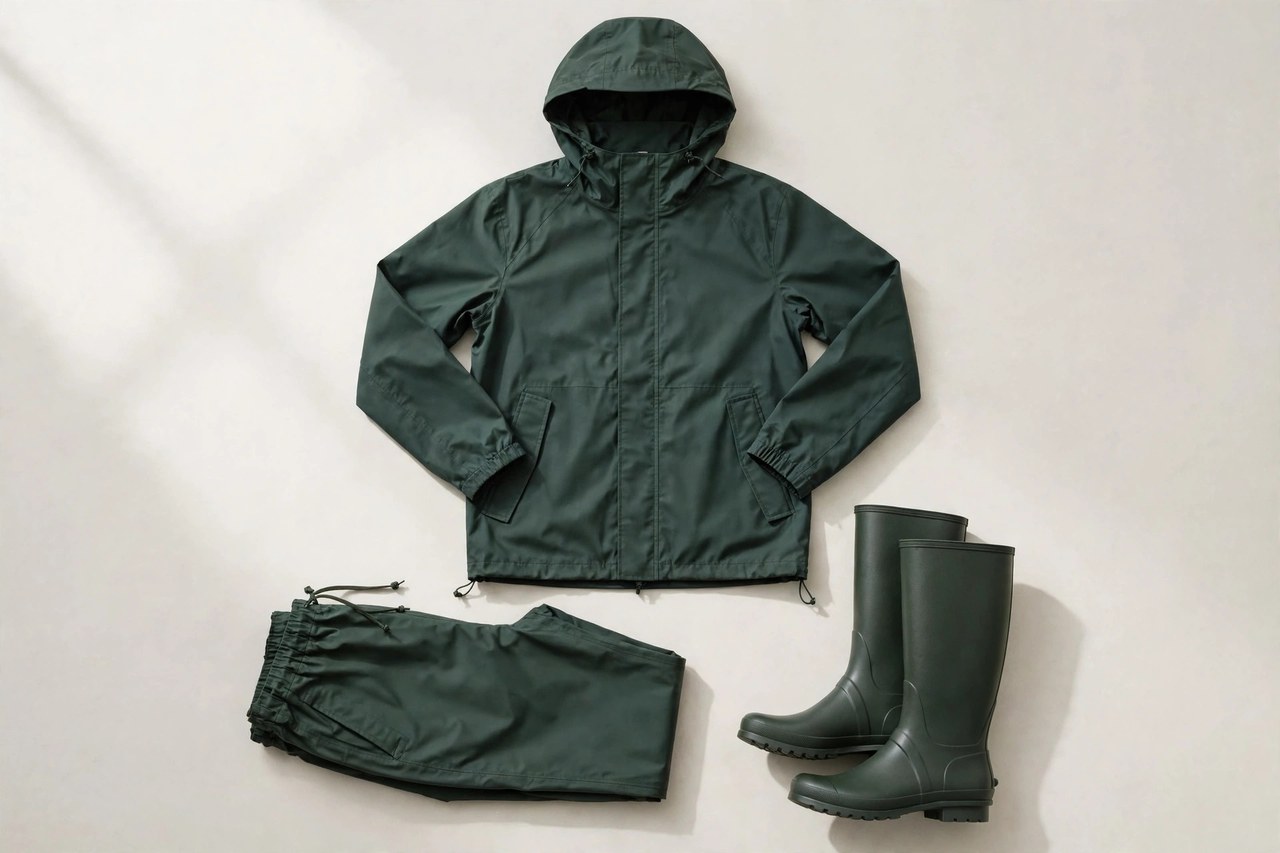
Men's rainwear is the umbrella category: every garment, footwear style and accessory designed to keep a man dry in the rain. It is a general category including various types of clothing, footwear and accessories used when it is raining, and the pieces form a system: raincoats over clothing or water-repellent clothing itself, a rain jacket combined with rain pants to make a rain suit, and the Wellington boot as the popular footwear for rainy days. This guide treats rainwear as that system, and explains how the pieces work together. This guide is built around the questions buyers actually ask: which style, which size, which fabric, and what will it look like after a year of real use - answered in order, with the trade-offs stated plainly.
The Rainwear System: Shells, Suits and Breathability
A rainwear system has three working parts. The shell layer sheds water: fully waterproof pieces use coated fabrics or membranes with taped seams, while water-repellent pieces rely on a DWR finish that handles showers but eventually wets through - know which you own. Breathability is the second specification: waterproof-breathable membranes and venting (pit zips, back capes) let sweat escape, and our terminology section's guide to breathable fabrics explains the trade-off. The third part is coverage: a jacket alone leaves trousers soaked, so serious rainwear adds rain pants or overtrousers, a hood or hat that sheds water away from the collar, and waterproof footwear - the rubber or PVC Wellington this category made famous. Judge any piece by its seams and closures first; fabric claims come second.
Outerwear value hides below the surface: taped versus merely stitched seams, a zipper whose slider runs true under one hand, cuffs and hems that adjust to seal weather out, and a lining slippery enough to glide over the layers beneath. Shoulder build decides the hang over knitwear or a jacket, and pocket engineering decides whether hands and kit ride where your body expects them. Specify for the worst honest day, not the brochure day.
Fit and Sizing
Fit rainwear as a system, over the clothes it will cover, and move in it: arms forward and overhead, sitting, climbing a step. A shell needs ease for a mid-layer without billowing - excess fabric flaps, catches wind and wears at the folds - and rain pants need a rise that survives sitting and a leg that covers the boot top when you stride, or water runs into the boot. Hoods should turn with your head and cinch without blocking side vision. Try the full combination you will actually wear, because the interfaces - jacket hem over pants, pants over boots - are where systems leak.
Fit outerwear over the bulkiest layer it will honestly cover, and test the working range: arms forward as if driving, arms overhead, sitting with every closure fastened. The coat's shoulders should echo yours rather than extend past them, closures should meet without strain, and the hem must reach the coverage the garment exists to give. A coat fitted over a T-shirt alone belongs to a climate you may not live in.
Wearing and Care
Dry the whole system after use - hang jacket and pants separately in moving air - and wash shells by the maker's method when dirt dulls the finish, since grime defeats DWR before age does. Reproof when water stops beading, store pieces clean, dry and uncompressed, and keep boots upright and rinsed. Rainwear fails by neglect more than by wear: a clean, reproofed five-year-old shell routinely outsheds a dirty new one.
Hang outerwear on broad hangers that carry the shoulders, rest it between wears, and resist washing it often - spot-clean first, and wash by the maker's method with the detergent the fabric demands when a full clean is due. Refresh water-repellent finishes when rain stops beading, never store a coat dirty or compressed, and send leather and tailored pieces to professionals rather than experimenting at home.
Common Questions
What counts as rainwear?
Everything worn to keep rain off: raincoats and rain jackets, rain pants and full rain suits, waterproof boots such as Wellingtons, and accessories like waterproof hats and gloves. Rainwear is the general category of clothing, footwear and accessories used when it is raining, and the pieces are designed to work as a system, which is why this guide covers the set rather than any single garment.
Waterproof or water-resistant - which rainwear do I need?
Match the rating to the exposure. Water-resistant (usually a DWR finish on woven fabric) handles showers and short walks, then gradually wets through. Fully waterproof rainwear - coated fabric or a membrane, with taped or sealed seams - is what sustained rain, work outdoors and long commutes demand. Check the seams before the label claims: an untaped seam leaks through any fabric, however waterproof.
Why do I get wet from the inside in good rainwear?
Usually condensation, not leakage. A waterproof shell traps body moisture; in cool rain the sweat condenses on the inside and feels exactly like a leak. Waterproof-breathable membranes, pit zips and cape vents reduce it, and pacing layers - venting before you overheat - prevents most of it. If the wetness appears first at seams or in driving rain at closures, that is a real leak; if it builds with exertion everywhere, it is condensation.
More in Men's Clothes Guide R
Rainwear as a Category
Rainwear is a general category which includes various types of clothing, footwear, and accessories that are used when it is raining — because rain is liquid water that drops from the sky in the form of droplets, and it is generally a good idea to keep those droplets from soaking your clothing. The system: raincoats worn over clothing, or clothing that is itself water repellent; a rain jacket combined with a pair of rain pants to make a rain suit; and, for footwear, the Wellington boot — a type of boot based upon leather Hessian boots, waterproof and most often made from rubber or polyvinyl chloride (PVC), a halogenated polymer, usually worn in wet or muddy conditions. See also the rainwear manufacturers directory and our terminology guide to breathable fabrics.
Looking for Men's Clothing Stores?
This guide explains men's rainwear. To browse where to buy, visit our men's clothing store directory, where you can find retailers that carry them.