Men's Waterproof Shoes Guide
Men's waterproof shoes are low-cut shoes built to keep feet dry in rain, wet grass and slush without the height and weight of a boot. They serve commuters, dog walkers, travelers and anyone whose day crosses wet ground in ordinary clothes - dry feet in shoe form, rather than in hiking form.
Shop Men's Waterproof Shoes Now
Shop Men's Waterproof Shoes on Amazon Shop Men's Waterproof Shoes on eBayThe Amazon and eBay links on this page are affiliate links. If you make a purchase through them, Apparel Search may earn a commission.
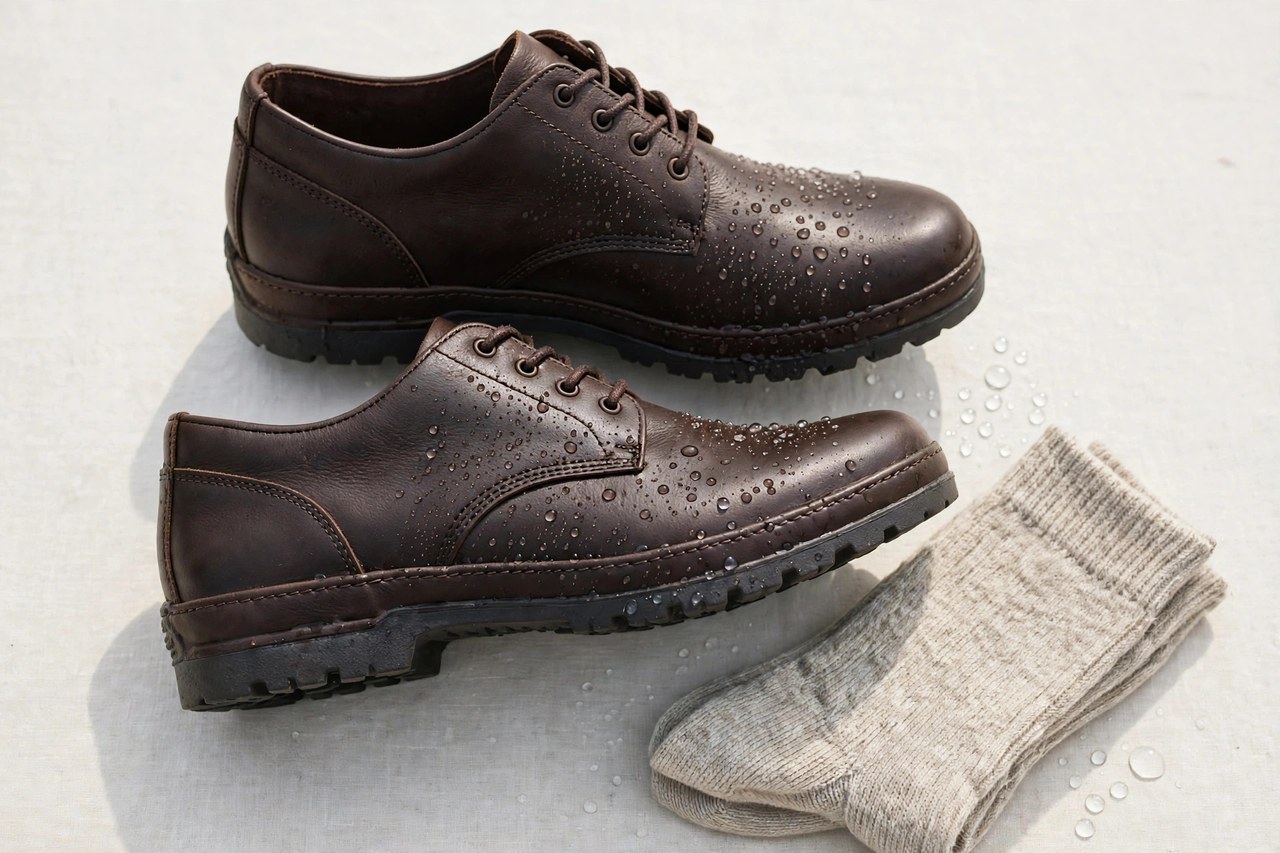
Men's waterproof shoes are low-cut shoes built to keep feet dry in rain, wet grass and slush without the height and weight of a boot. They serve commuters, dog walkers, travelers and anyone whose day crosses wet ground in ordinary clothes - dry feet in shoe form, rather than in hiking form. This guide covers the styles worth knowing, the fit points that decide comfort, the fabrics and construction that separate a good buy from a regret, and the simple care that makes the garment last.
Styles and Construction
Waterproofing works one of two ways: a membrane bootie laminated inside the shoe, which blocks water while letting some vapor escape, or treated leather and sealed seams that shed water at the surface. Membranes are the more reliable barrier; surface treatments need refreshing. Check where water actually enters - the tongue gusset. A bellows tongue stitched to the upper stops water lapping over the laces, while a loose tongue lets it straight in. Outsoles should be rubber with real tread for wet pavement, and linings should wick, because a shoe that keeps rain out but traps sweat still ends the day damp.
Judge footwear by attachment and compound: cemented soles are light and affordable, stitched or welted constructions cost more and can be repaired, and the outsole rubber decides grip against longevity - soft compounds bite, hard compounds endure. Linings decide comfort over hours, removable insoles decide whether your own supports can come along, and honest weight decides whether the pair disappears on the foot or taxes every mile of the day.
Fit and Sizing
Fit waterproof shoes exactly like walking shoes - thumb's width at the toes, heel held, forefoot free - because the membrane layer makes them less stretchy than unlined shoes: what pinches in the shop will pinch forever. Try them with the socks you will wear in the wet season, which are usually thicker than summer socks. If you will add waterproof trousers, check the shoe's collar height against trouser length so runoff falls outside, not inside.
Fit footwear late in the day in the socks you will actually wear, with roughly a thumb's width beyond the longest toe, the heel held without lift, and the foot's widest point meeting the shoe's widest point. Sizes are unstandardized between makers - trust your measured length and width over the printed number, and require no break-in argument: a shoe that needs excuses in the shop delivers them on the road.
Wearing and Care
Rinse off salt and mud, which degrade both leather and membranes, and dry at room temperature with insoles removed - radiators and direct heat crack leather and delaminate membranes. Reproof surface treatments when water stops beading, use membrane-safe cleaners rather than waxes that clog lined shoes, and rotate pairs in persistently wet weeks so each dries fully between wears.
Rotation is the first care rule: a day of rest between wears lets linings dry and cushioning rebound, and it doubles a rotation's life compared with daily wear of one pair. Clean after use, dry at room temperature away from radiators, hold shape with trees or paper, and condition leather on a schedule rather than when it looks thirsty. Reproof weather finishes when water stops beading, and resole stitched footwear before the wear reaches the welt.
Common Questions
Waterproof or water-resistant - what is the difference?
Water-resistant shoes shed light rain and splashes through treated surfaces, and eventually wet through. Waterproof shoes use a membrane or sealed construction to block water for sustained wet use. For daily rain and wet ground, choose true waterproofing; for occasional showers, resistance is enough.
Why do my feet still feel damp in waterproof shoes?
Usually sweat, not leaks: membranes breathe slowly, so hard walking in warm weather builds internal moisture. Merino walking socks, a drier second pair for the afternoon, and unlined shoes on dry days all help. Check the tongue gusset for a genuine leak first.
Can waterproof shoes handle winter slush and salt?
Yes, provided the tread grips on wet, cold surfaces and you rinse salt off regularly - salt dries leather and corrodes eyelets. For deep snow you still need the height of a boot; waterproof shoes are for wet ground, not drifts.
More in Men's Clothes Guide W
Background
Waterproof shoes are essential equipment for any wet-weather adventurer. But what does this mean and where can we find such amazing shoes? Keep in mind water proof shoes do not have to look ugly and out of style. Waterproof means impervious to water. Impervious means, "not allowing fluid to pass through". A shoe is an item of footwear intended to protect and comfort the human foot while the wearer is doing various activities. In regard to footwear, the goal of waterproofing a shoe is to keep water out. Waterproofing is the process of making an object or structure waterproof or water-resistant, so that it remains relatively unaffected by water or resisting the ingress of water under specified conditions. Similar water relevant terms you may hear or read when investigating footwear: Watertight - closely sealed, fastened, or fitted so that no water enters or passes through. Water-repellent - not easily penetrated by water, especially as a result of being treated for such a purpose with a surface coating.
More to Explore on Apparel Search
- Men's Shoes
- Men's Boots
- Men's Shoes Guide
- Men's Style Shoes
- Shoe Definition
- Footwear Definition
- Footwear Definition List
- Men's Shoe Wholesalers
- Men's Shoe Stores
- Where to Buy Shoes
- Shopping For Shoes
- men's rain boots
- men's rainwear
- about rain boots
- about Timberland
- about The North Face
- Men's Clothes Guide H-P
- Men's Clothes Guide Q-Z
- awesome winter boots
References & Further Reading
Looking for Men's Clothing Stores?
This guide explains men's waterproof shoes. To browse where to buy, visit our men's clothing store directory, where you can find retailers that carry them.