Men's Walking Shoes Guide
Men's walking shoes are low-cut, cushioned shoes engineered for fitness walking, travel and all-day comfort on pavement and paths. Unlike running shoes, which are built for forward impact at speed, a walking shoe supports a heel-to-toe rolling stride, with a flexible forefoot, a stable heel and uppers designed to be lived in for hours rather than raced in for minutes.
Shop Men's Walking Shoes Now
Shop Men's Walking Shoes on Amazon Shop Men's Walking Shoes on eBayThe Amazon and eBay links on this page are affiliate links. If you make a purchase through them, Apparel Search may earn a commission.
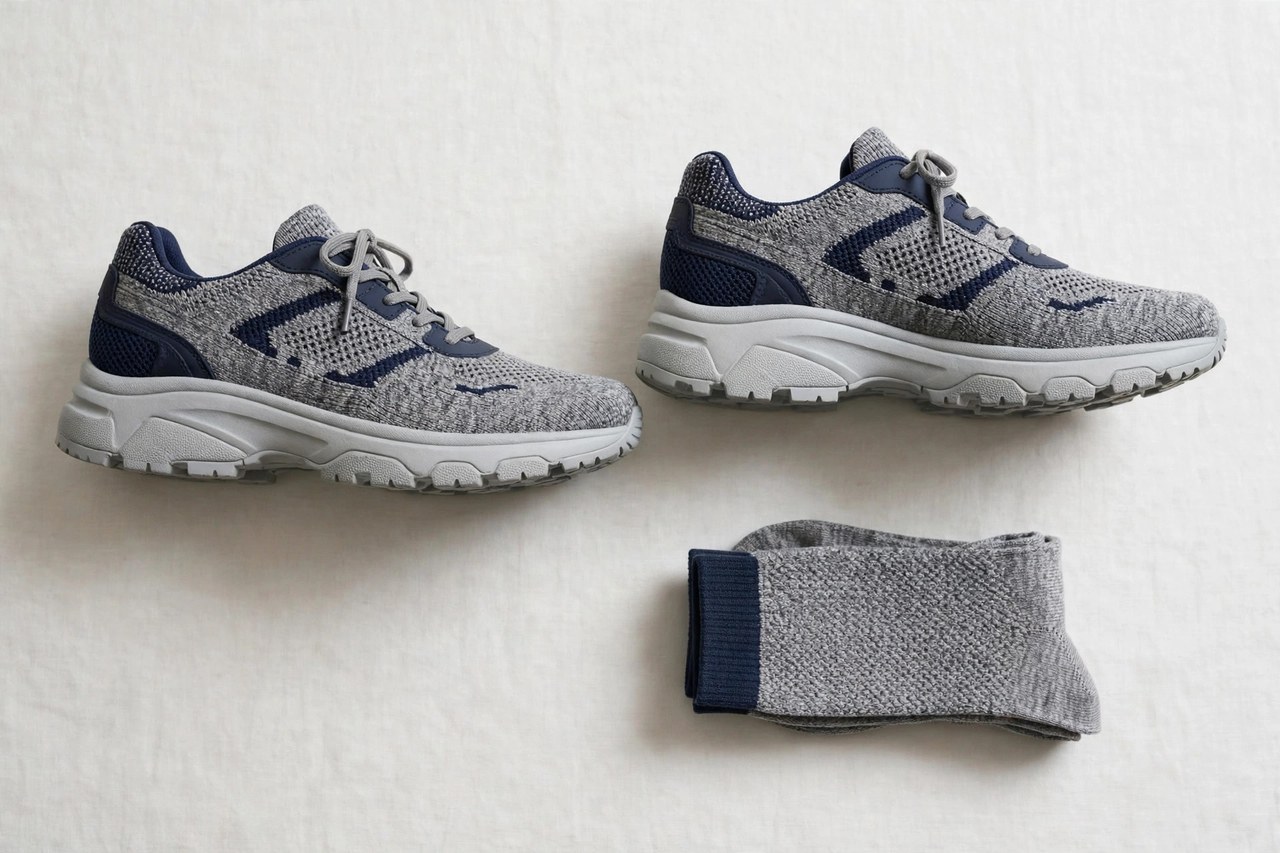
Men's walking shoes are low-cut, cushioned shoes engineered for fitness walking, travel and all-day comfort on pavement and paths. Unlike running shoes, which are built for forward impact at speed, a walking shoe supports a heel-to-toe rolling stride, with a flexible forefoot, a stable heel and uppers designed to be lived in for hours rather than raced in for minutes. This guide covers the styles worth knowing, the fit points that decide comfort, the fabrics and construction that separate a good buy from a regret, and the simple care that makes the garment last.
Styles and Construction
Look for a beveled heel that starts the stride smoothly, a forefoot that flexes where your foot bends, and cushioning that feels supportive rather than marshmallow-soft - very soft foams tire walking feet over distance. Uppers range from ventilated mesh for summer to leather for structure, durability and smarter looks that work with trousers. A slightly rockered sole helps the stride roll; removable insoles let you add your own supports; and a durable rubber outsole with shallow tread grips pavement better than deep trail lugs, which wear fast on concrete.
Judge footwear by attachment and compound: cemented soles are light and affordable, stitched or welted constructions cost more and can be repaired, and the outsole rubber decides grip against longevity - soft compounds bite, hard compounds endure. Linings decide comfort over hours, removable insoles decide whether your own supports can come along, and honest weight decides whether the pair disappears on the foot or taxes every mile of the day.
Fit and Sizing
Walkers should fit shoes late in the day, in walking socks, with a thumb's width beyond the longest toe and no heel slip when striding briskly. The widest part of your foot should meet the widest part of the shoe - if the upper bulges over the sole edge, you need a wider fitting, not a bigger size. Walk the shop floor at pace and test a slope if one is available; a walking shoe should feel right immediately, with no break-in bargain.
Fit footwear late in the day in the socks you will actually wear, with roughly a thumb's width beyond the longest toe, the heel held without lift, and the foot's widest point meeting the shoe's widest point. Sizes are unstandardized between makers - trust your measured length and width over the printed number, and require no break-in argument: a shoe that needs excuses in the shop delivers them on the road.
Wearing and Care
Rotate two pairs if you walk daily - foam needs a day to rebound and linings need to dry. Brush or wash uppers by the maker's guidance, air-dry away from radiators, and replace insoles when they pack flat. Walking shoes are done when the midsole feels dead, the heel counter collapses, or the outsole wears smooth at the heel strike; most walkers get roughly 300 to 500 miles before cushioning fades noticeably.
Rotation is the first care rule: a day of rest between wears lets linings dry and cushioning rebound, and it doubles a rotation's life compared with daily wear of one pair. Clean after use, dry at room temperature away from radiators, hold shape with trees or paper, and condition leather on a schedule rather than when it looks thirsty. Reproof weather finishes when water stops beading, and resole stitched footwear before the wear reaches the welt.
Common Questions
Can I just walk in running shoes instead?
You can, and many people do, but running shoes are built with higher heel stacks and stiffer forefoots for impact at pace. A walking shoe's beveled heel and flexible forefoot suit the slower rolling stride better, especially over several miles a day.
How long should a pair of walking shoes last?
Expect around 300 to 500 miles of regular walking before the cushioning loses its spring, even if the uppers still look fine. Track mileage roughly, and replace the pair when aches appear that a newer pair does not cause.
Are leather or mesh walking shoes better for travel?
Mesh packs lighter and dries faster, but leather looks smarter with trousers, shrugs off showers and lasts longer. For one-pair travel in mixed weather, a leather or leather-trimmed shoe is usually the more versatile single choice.
More in Men's Clothes Guide W
Background
Walking shoes are your most important item of walking gear. Well, a good pair of socks are extremely important as well. Things to consider when selecting a walking shoe. Where are you walking? Yes, that is important. If you are walking on pavement, you may want to a different style of footwear than if you are walking in the woods. Figure out where you will be doing the majority of walking and the style in which you walk. Do you walk slow and casual or are you an aggressive speed walker? The best shoe for you is the one that fits "you" the best. In addition to fitting your foot, it must fit your lifestyle. Consider the following issues when choosing a shoe. Flexibility and support - Flexible: You must be able to bend and twist the shoes. When you take a walking step, your foot will flex as you roll through a step from heel to toe.
Looking for Men's Clothing Stores?
This guide explains men's walking shoes. To browse where to buy, visit our men's clothing store directory, where you can find retailers that carry them.