Men's Walking Boots Guide
Men's walking boots are ankle-height footwear built for long distances on paths, trails and uneven ground: a supportive upper, a cushioned midsole, a grippy lugged outsole and enough structure to protect the ankle and forefoot mile after mile. They sit between a trainer and a full mountaineering boot, and for most walkers they are the pair that handles everything from dog walks to hill days.
Shop Men's Walking Boots Now
Shop Men's Walking Boots on Amazon Shop Men's Walking Boots on eBayThe Amazon and eBay links on this page are affiliate links. If you make a purchase through them, Apparel Search may earn a commission.
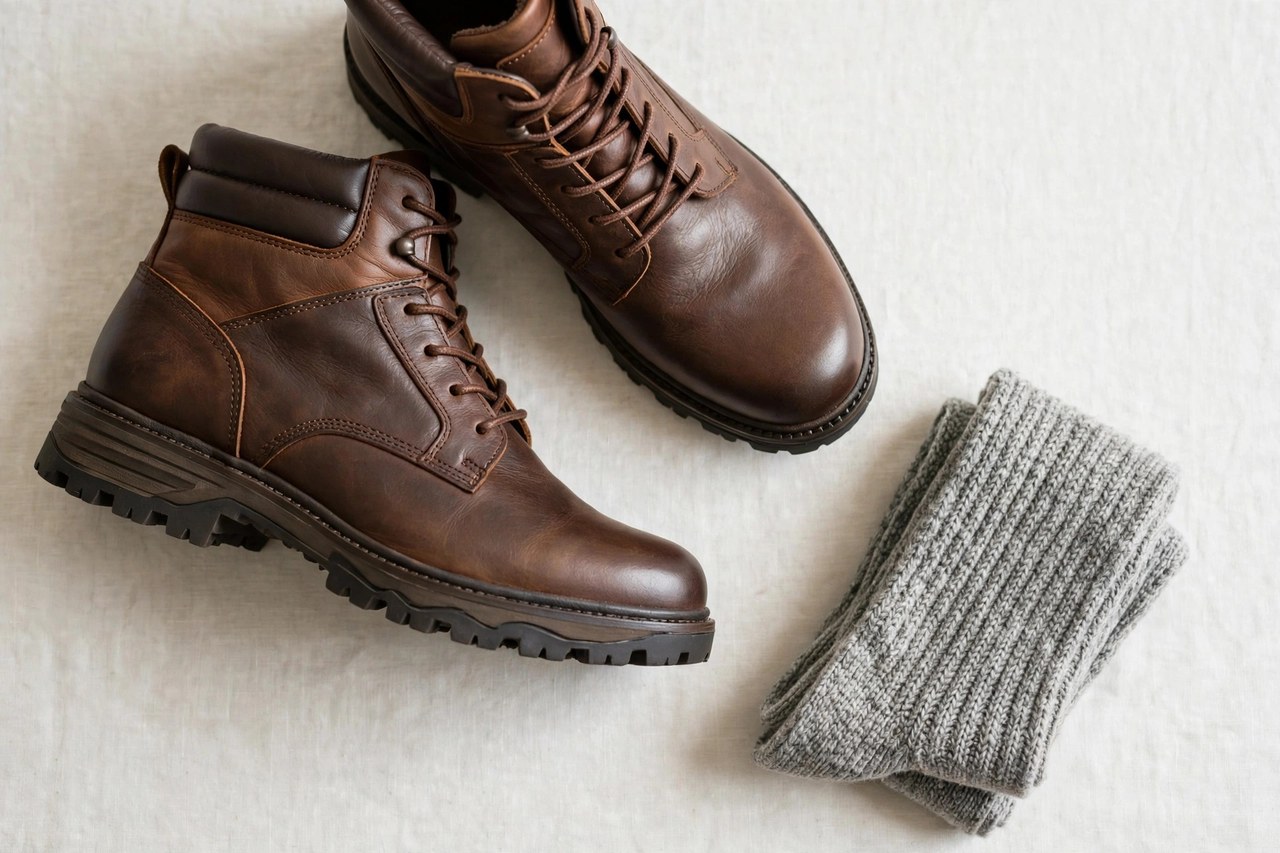
Men's walking boots are ankle-height footwear built for long distances on paths, trails and uneven ground: a supportive upper, a cushioned midsole, a grippy lugged outsole and enough structure to protect the ankle and forefoot mile after mile. They sit between a trainer and a full mountaineering boot, and for most walkers they are the pair that handles everything from dog walks to hill days. This guide is built around the questions buyers actually ask: which style, which size, which fabric, and what will it look like after a year of real use - answered in order, with the trade-offs stated plainly.
Styles and Construction
Uppers come in full-grain leather, which molds to the foot and resists abrasion, nubuck and suede for a softer finish, and modern synthetics with mesh for lightness. A waterproof membrane keeps rain and wet grass out but adds warmth, so choose it for wet climates rather than by default. Midsoles in EVA cushion, PU lasts longer under load, and a nylon or composite shank steadies the boot on rocky ground. Check the toe box for wiggle room, the heel counter for firmness, and the lacing hardware for metal eyelets that will not tear out.
Judge footwear by attachment and compound: cemented soles are light and affordable, stitched or welted constructions cost more and can be repaired, and the outsole rubber decides grip against longevity - soft compounds bite, hard compounds endure. Linings decide comfort over hours, removable insoles decide whether your own supports can come along, and honest weight decides whether the pair disappears on the foot or taxes every mile of the day.
Fit and Sizing
Fit walking boots in the afternoon with your walking socks: roughly a thumb's width beyond the longest toe so descents do not jam your toes, a heel that stays planted when you walk downhill, and no pressure across the forefoot. Width matters as much as length on long days because feet swell; many brands offer wide lasts. Boots should feel secure immediately - leather softens, but a boot that hurts in the shop rarely argues its way out of it on the trail.
Fit footwear late in the day in the socks you will actually wear, with roughly a thumb's width beyond the longest toe, the heel held without lift, and the foot's widest point meeting the shoe's widest point. Sizes are unstandardized between makers - trust your measured length and width over the printed number, and require no break-in argument: a shoe that needs excuses in the shop delivers them on the road.
Wearing and Care
Brush off mud after walks, remove the insoles and air the boots at room temperature, and never force-dry leather by a radiator, which cracks it. Condition leather uppers when they start looking dry, reproof waterproof finishes when water stops beading, and clean membrane boots with products that will not clog the lining. Rotate with a second pair on multi-day trips, store loosely laced with trees or paper, and resole welted boots before wear reaches the midsole.
Rotation is the first care rule: a day of rest between wears lets linings dry and cushioning rebound, and it doubles a rotation's life compared with daily wear of one pair. Clean after use, dry at room temperature away from radiators, hold shape with trees or paper, and condition leather on a schedule rather than when it looks thirsty. Reproof weather finishes when water stops beading, and resole stitched footwear before the wear reaches the welt.
Common Questions
Are walking boots better than walking shoes for long distances?
On rough, wet or uneven ground, yes: the ankle support, stiffer sole and protection of a boot earn their weight. On dry, even paths many walkers prefer the lightness of a walking shoe. Match the footwear to the terrain you actually walk most weeks, not the hardest walk of the year.
Do walking boots need breaking in?
Modern boots with cushioned midsoles need only a few short walks to settle, but leather boots benefit from gradually increasing distances before a long day. Any hotspot on a short walk becomes a blister on a long one, so build up and adjust socks and lacing first.
Should I choose a waterproof membrane or plain leather?
Choose a membrane if your walking is regularly wet - rain, marshy paths, stream crossings. In dry or hot conditions plain leather or mesh vents better and dries faster once wet. A membrane that is wet inside from sweat dries slowly, so climate decides.
More in Men's Clothes Guide W
From Our Original Guide
Our original guide preserved the following account, which this rebuild keeps: Men's Walking Boots guide about Men's Walking Boots Men's Walking Boots Directory and Information Regarding Men's Walking Boots presented by Apparel Search men's Boots Walking Shoes men's Footwear men's Shoes men's Shoes Guide Men's Clothes Clothes Footwear News Shoe Definition To be honest, you most likely don't want to be in the market for purchasing walking boots. This may mean that you or someone you know may have an injury. Walking boots for foot and ankle injuries, ankle sprain, ball of foot pain, tendonitis, toe or foot fracture, heel pain, more. A c ontrolled a nkle m otion walking boot, or CAM boot , also sometimes called a below knee walking boot, is an orthopedic device prescribed for the treatment and stabilization of severe sprains, fractures, and tendon or ligament tears in the ankle or foot. In situations where ankle motion but not weight is to be limited, it may be used in place of a cast. Unfortunately this type of boot is NOT for long walks. They are not
More to Explore on Apparel Search
Looking for Men's Clothing Stores?
This guide explains men's walking boots. To browse where to buy, visit our men's clothing store directory, where you can find retailers that carry them.