Men's Trench Coats Guide
A men's trench coat is the belted, double-breasted raincoat developed for officers in the First World War trenches and never improved out of its essentials: an epauletted, storm-flapped, D-ring-belted coat in water-resistant cotton gabardine, cut to be worn over a uniform then - and over a suit or knitwear now. Every detail that looks like style began as function, which is why the trench has outlasted a century of fashion without changing its mind.
Shop Men's Trench Coats Now
Shop Men's Trench Coats on Amazon Shop Men's Trench Coats on eBayThe Amazon and eBay links on this page are affiliate links. If you make a purchase through them, Apparel Search may earn a commission.
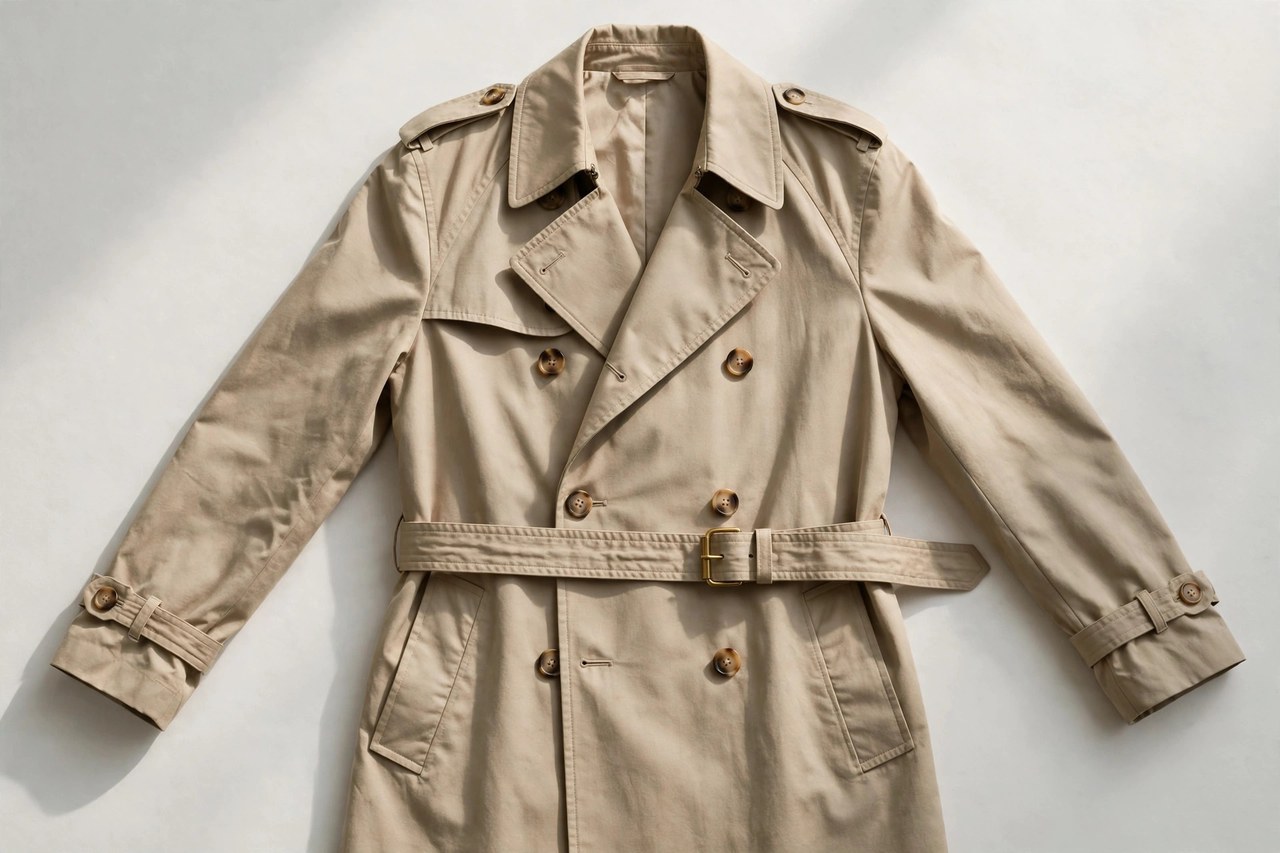
A men's trench coat is the belted, double-breasted raincoat developed for officers in the First World War trenches and never improved out of its essentials: an epauletted, storm-flapped, D-ring-belted coat in water-resistant cotton gabardine, cut to be worn over a uniform then - and over a suit or knitwear now. Every detail that looks like style began as function, which is why the trench has outlasted a century of fashion without changing its mind. This guide is built around the questions buyers actually ask: which style, which size, which fabric, and what will it look like after a year of real use - answered in order, with the trade-offs stated plainly.
Styles and Construction
Gabardine is the trench's founding fabric: a tightly woven cotton (Burberry's 1879 invention) that sheds showers by weave density rather than coating, breathes as synthetics do not, and ages into softness. Modern trenches add cotton-blend and technical shells with membranes for heavier rain - more waterproof, less breathable, a fair trade in a wet climate. The anatomy is a checklist: storm flap (gun flap) over the right chest, raglan or set-in sleeves with wrist straps, a throat latch, a back yoke and vent, epaulettes, and a belt with D-rings that once held equipment. A removable wool or check lining converts the coat across seasons; horn or horn-effect buttons and a buckle that is leather-covered on better coats complete the build.
Outerwear value hides below the surface: taped versus merely stitched seams, a zipper whose slider runs true under one hand, cuffs and hems that adjust to seal weather out, and a lining slippery enough to glide over the layers beneath. Shoulder build decides the hang over knitwear or a jacket, and pocket engineering decides whether hands and kit ride where your body expects them. Specify for the worst honest day, not the brochure day.
Fit and Sizing
Fit a trench over the bulkiest layer it must cover - usually a suit jacket - with the shoulders echoing yours and the chest closing without strain when belted. Length is the classic decision: the traditional coat ends below the knee, modern cuts at or above it; below-knee reads formal and protects trousers in real rain, shorter reads contemporary and drives more easily. Sleeves should cover a jacket cuff by half an inch, and the belt should actually be worn buckled or knotted - a trench's silhouette is made by its belt.
Fit outerwear over the bulkiest layer it will honestly cover, and test the working range: arms forward as if driving, arms overhead, sitting with every closure fastened. The coat's shoulders should echo yours rather than extend past them, closures should meet without strain, and the hem must reach the coverage the garment exists to give. A coat fitted over a T-shirt alone belongs to a climate you may not live in.
Wearing and Care
Hang a trench on a broad hanger, rest it between wears, and brush rain and city dust off before storage. Gabardine can be reproofed when water stops beading; wash or clean strictly by the maker's method, since coatings and membranes each have their own rules. Store the coat clean, unbelted-loose or belted at the buckle's first hole, out of plastic - cotton needs air - and the coat will serve for the decades its design promises.
Hang outerwear on broad hangers that carry the shoulders, rest it between wears, and resist washing it often - spot-clean first, and wash by the maker's method with the detergent the fabric demands when a full clean is due. Refresh water-repellent finishes when rain stops beading, never store a coat dirty or compressed, and send leather and tailored pieces to professionals rather than experimenting at home.
Common Questions
Is a trench coat actually waterproof?
Classic gabardine is water-resistant, not waterproof: its dense weave sheds showers and light rain and breathes beautifully, but a downpour eventually wets through. Membrane-lined modern trenches are genuinely waterproof at some cost to breathability and drape. Choose by your rain: the gabardine original suits most city use; committed wet climates justify the technical version.
How long should a men's trench coat be?
Traditionally below the knee - the length that keeps trouser legs dry and reads most formal. Knee-length is the versatile modern standard, and above-knee cuts are fashion trenches that drive and move easily but protect less. Taller men carry the long coat best; for most, just below the knee is the proportion that looks intentional with suits and knitwear alike.
What color trench coat is most versatile?
The classic khaki/stone gabardine is the icon and pairs with everything from suits to jeans, showing city dirt honestly but not excessively. Navy is the quieter, more formal alternative that hides grime better; black reads urban and severe. If one coat must do everything, stone or navy - decided by whether your wardrobe runs warmer or cooler in tone.
More in Men's Clothes Guide T
Background and History
This type of garment is a loose, belted, double-breasted raincoat in a military style. A trench coat which is some times spelled as trenchcoat is a raincoat made of waterproof heavy-duty material. Typically cotton gabardine drill, or leather, or poplin. It generally has a removable insulated lining, raglan sleeves, and the classic versions come in various lengths ranging from just above the ankles to above the knee. A typical trench coat is a ten-buttoned, double-breasted long coat made with tan, black, khaki, or beige fabric. Trench coats often have cuff straps, raglan sleeves, shoulder straps and a belt. The trench coat was typically worn as a windbreaker or as a rain jacket, and not for protection from the cold in winter or snowy conditions Do you know where the name came from? Army officers wore this type of coat and it was adapted during World War I for use in the "trenches". Trench warfare is a type of land warfare using occupied fighting lines consisting largely of trenches, in which
Looking for Men's Clothing Stores?
This guide explains men's trench coats. To browse where to buy, visit our men's clothing store directory, where you can find retailers that carry them.