Men's Trousers Guide
Men's trousers are the tailored half of the wardrobe: leg garments cut from woven cloth with a constructed waistband, fly front, belt loops and finished hems - as distinct from jeans, chinos worn casually, and athletic pants. The trouser family spans suit trousers, flannels, dress twills and formal trousers, and its variations are systematic: rise, pleats, leg shape and break combine into every silhouette from high-rise pleated classics to flat-front slim cuts.
Shop Men's Trousers Now
Shop Men's Trousers on Amazon Shop Men's Trousers on eBayThe Amazon and eBay links on this page are affiliate links. If you make a purchase through them, Apparel Search may earn a commission.
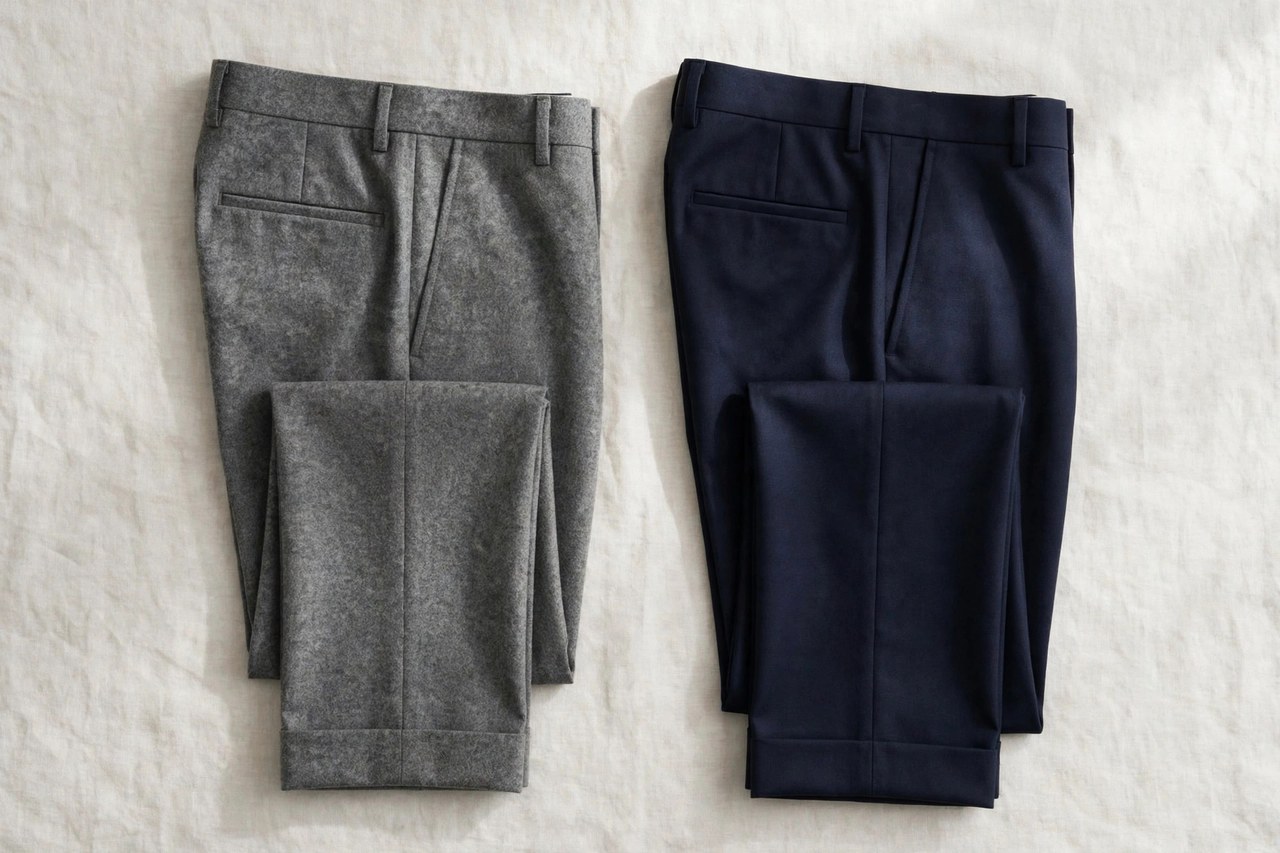
Men's trousers are the tailored half of the wardrobe: leg garments cut from woven cloth with a constructed waistband, fly front, belt loops and finished hems - as distinct from jeans, chinos worn casually, and athletic pants. The trouser family spans suit trousers, flannels, dress twills and formal trousers, and its variations are systematic: rise, pleats, leg shape and break combine into every silhouette from high-rise pleated classics to flat-front slim cuts. This guide is built around the questions buyers actually ask: which style, which size, which fabric, and what will it look like after a year of real use - answered in order, with the trade-offs stated plainly.
Styles and Construction
Cloth decides a trouser's season and station. Worsted wool - smooth, durable, crease-holding - is the business standard, in weights from tropical (under 240 gsm) to winter flannel (above 340, brushed and warm but quicker to shine at the seat). Cotton twills dress down, linen breathes for summer at the price of creasing, and wool blends add stretch or synthetic durability. Construction details to inspect: a waistband with a proper curtain and rubber gripper strip, an extended tab closure that keeps the front flat, bar-tacked pockets, a crotch lining in better pairs, and hems finished with tape or a guard so shoes do not eat the cloth. Pleats, properly understood, are comfort engineering - cloth that opens when you sit - not a fashion crime or a requirement.
For any leg garment the rise is the first specification, because it decides sitting comfort before fabric gets a vote: measure from front waistband through to back and compare it with a pair that already works. Then audit the stress points - bar-tacked belt loops and pocket corners, double-stitched inseams, hems finished evenly - and the pocketing, which should be deep, smooth and strong enough to carry what the garment's pockets invite you to carry.
Fit and Sizing
Measure where the waistband will actually sit: higher rises sit at the natural waist, lower at the hip, and the same numeric size fits differently at each. The seat should be smooth standing and comfortable sitting, the leg should fall clean from the seat to the hem, and the break - where cloth meets shoe - is your signature: no break for a modern cropped line, a single (medium) break for the classic standard. Buy the rise and seat right; waists adjust an inch or so, hems any length, and rises essentially never.
Measure where the waistband will actually sit, plus inseam to your preferred break, and thigh and seat for closer cuts. Then sit, squat and climb a step in the fitting room - a leg garment that only works standing still does not work. Waistbands relax roughly half an inch in wear and inseams shrink most in early washes, so buy the fit you want after those changes rather than the fit in the mirror.
Wearing and Care
Rest trousers a day between wears, hung by the cuff from a clamp hanger so the crease falls straight and wrinkles drop. Brush after wearing, press creases with a cloth between iron and wool, and dry clean sparingly - spot-clean and air first. Mend hem tape and pocket corners early, rotate two pairs of any suit's trousers if offered (trousers wear roughly twice as fast as jackets), and store out-of-season pairs clean, because moths prefer wool that carries a season's soil.
Wash leg garments inside out and cool; heat is the agent that fades dye, tires elastic and shortens inseams. Dry low or on the line, hang or fold promptly, and crease deliberately or not at all. Walk the stress points each season - hem edges, pocket corners, seat and inner thigh - and mend the small fray while it is still small: leg garments fail gradually, then suddenly, and the two-minute October repair prevents the November replacement.
Common Questions
Pleats or flat front - which should I choose?
Pleats give room to sit, reach and carry a fuller thigh comfortably, and suit higher rises and classic tailoring; flat fronts give a cleaner, slimmer line and suit lower rises and leaner builds. Neither is dated or mandatory - the right answer is the one whose front stays smooth standing and comfortable seated on your body, in the rise you prefer.
What trouser break should I get?
A medium (single) break - one soft fold where the hem meets the shoe - is the timeless default for business and formal trousers. No break (hem just clearing the shoe) suits slimmer, modern cuts and shorter legs; a full break pools more cloth and belongs to fuller, traditional cuts. Keep the choice consistent across a wardrobe so shoes and proportions stay in balance.
How do I stop trousers wearing out at the inner thigh?
Rotate pairs so no single pair takes daily abrasion, choose cloth with some heft (very fine tropical wools wear fastest), and ask a tailor to add a saddle - a reinforcing panel - when the first shine appears, not after the cloth thins through. Weight change matters too: trousers fitted with room to move abrade far less than trousers worn tight.
More in Men's Clothes Guide T
Background and History
Yes, some people call them "trousers" but most people call them "pants". Actually, depends primarily where you live. In the United States, this type of garment is most often termed a "pant". In the United Kingdom, the word "pants" generally means underwear and not trousers. Trousers (pants in North America) are an item of clothing worn from the waist to the ankles, covering both legs separately (rather than with cloth extending across both legs as in robes, skirts, and dresses). They are a lower-body clothing. Jeans are trousers typically made from denim or dungaree cloth. In Scotland, trousers are occasionally known as trews, which is the historic root of the word 'trousers'. Trousers are also known as breeks in Scots, a word related to breeches. The item of clothing worn under trousers is underpants. The standard form 'trousers' is also used. Primary elements of a trouser may include pleats, cuffs, pockets, and a fly. However, the garment does not technically need any of these parts to be considered to be
More to Explore on Apparel Search
- Men's Pants Store
- M en's Pants Guide
- Men's Pleated Pants
- Men's Plain Front Pants
- Fashion
- Clothing Retail Stores
- Fashion News
- Fashion Designers
- Popular Brands
- Men's Clothing Stores
- Men's Clothing Wholesalers
- slacks
- linen
- men's cargo trousers
- men's casual trousers
- men's cotton trousers
- Men's Clothes Guide H-P
- Men's Clothes Guide Q-Z
Looking for Men's Clothing Stores?
This guide explains men's trousers. To browse where to buy, visit our men's clothing store directory, where you can find retailers that carry them.