Men's Pleated Pants Guide
Pleated pants are trousers with one or two folds of cloth - pleats - set into the front at the waistband, opening to give the hip and thigh room the flat front cannot. Pleats are tailoring's oldest comfort device and its most debated line: dismissed as dated in one decade, restored as classic in the next, and throughout, the right answer for men whose build or whose sitting life asks the front for more cloth. This guide explains how pleats work mechanically, single against double, forward against reverse, and how a pleat must hang to look tailored rather than tired. Its mirror image, the plain-front guide, sits beside it in this letter.
Shop Men's Pleated Pants Now
Shop Men's Pleated Pants on Amazon Shop Men's Pleated Pants on eBayThe Amazon and eBay links on this page are affiliate links. If you make a purchase through them, Apparel Search may earn a commission.
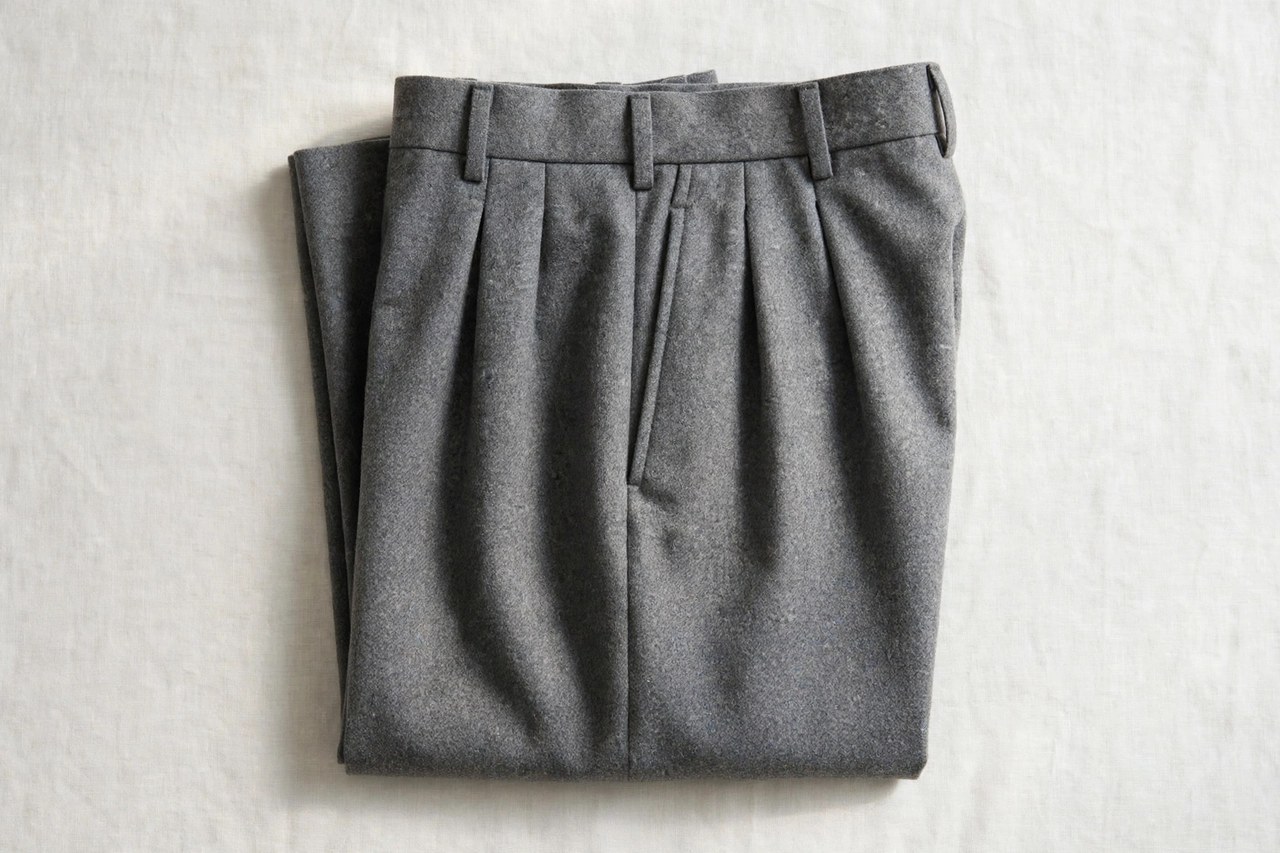
Pleated pants are trousers with one or two folds of cloth - pleats - set into the front at the waistband, opening to give the hip and thigh room the flat front cannot. Pleats are tailoring's oldest comfort device and its most debated line: dismissed as dated in one decade, restored as classic in the next, and throughout, the right answer for men whose build or whose sitting life asks the front for more cloth. This guide explains how pleats work mechanically, single against double, forward against reverse, and how a pleat must hang to look tailored rather than tired. Its mirror image, the plain-front guide, sits beside it in this letter. This guide covers the styles worth knowing, the fit points that decide comfort, the fabrics and construction that separate a good buy from a regret, and the simple care that makes the garment last.
Stored Ease, Opening on Demand
A pleat is stored ease. Folded flat at the waistband, it lies closed while you stand - a clean stitched line from waist toward the pocket - and opens as the hip flexes when you sit, supplying inches of cloth exactly where sitting demands them, then closes again on standing. Single pleats are the moderate form: one fold per side, a cleaner line, enough ease for most men. Double pleats double the reserve and the classic register, suiting fuller cuts and higher rises. Direction matters to the eye: forward pleats fold toward the fly, the British tailored tradition, and tend to lie flatter; reverse pleats fold toward the pockets, the commoner American form, and can billow if the fit is off. The system requires its partners: a rise high enough for the pleats to hang from the natural waist - pleats worn low, below their design point, gape permanently - and usually a cuffed hem, whose weight pulls the leg straight and keeps the pleats' vertical lines true.
For any leg garment the rise is the first specification, because it decides sitting comfort before fabric gets a vote: measure from front waistband through to back and compare it with a pair that already works. Then audit the stress points - bar-tacked belt loops and pocket corners, double-stitched inseams, hems finished evenly - and the pocketing, which should be deep, smooth and strong enough to carry what the garment's pockets invite you to carry.
From the Natural Waist Down
Fit a pleated trouser from the top down. The waistband belongs at the natural waist, because the entire geometry - pleats closed standing, opening seated - is calculated from there. Standing, the pleats should lie completely flat and closed, parallel lines, no hint of opening; a pleat that gapes at rest is announcing a hip or waist a size too small, exactly as pocket flare does on a plain front. Seated, they should open smoothly without the fly straining. The leg below a pleat is traditionally fuller - straight or gently tapered - because a skinny leg under a pleated top reads as two different trousers joined at the knee. Break and cuff finish the job: a cuffed hem with a slight break keeps the fall straight. Judge the pair in motion and in a chair, and let a tailor set the waist precisely; pleats forgive sitting, not sloppy waistlines.
Measure where the waistband will actually sit, plus inseam to your preferred break, and thigh and seat for closer cuts. Then sit, squat and climb a step in the fitting room - a leg garment that only works standing still does not work. Waistbands relax roughly half an inch in wear and inseams shrink most in early washes, so buy the fit you want after those changes rather than the fit in the mirror.
Hang Them by the Hem
Pleated trousers live by their hang. Store them on clamp hangers by the hem, which lets gravity keep the pleats closed and the crease set, or folded carefully along the pleat lines. Pressing is the skill: a pleat must be pressed in its fold and nowhere else, because a stray crease across a pleat ruins the architecture - professionals press pleats first, and home ironers should use a press cloth and patience, or leave wool pairs to the cleaner. Rest and rotation matter as with all tailoring. The reward is a front that stays composed through a working day of sitting - the use case pleats were invented for - and a silhouette that, cut at the proper rise and fullness, reads as deliberate classicism rather than nostalgia. Fashion's wheel will keep turning; the mechanics will keep being right.
Wash leg garments inside out and cool; heat is the agent that fades dye, tires elastic and shortens inseams. Dry low or on the line, hang or fold promptly, and crease deliberately or not at all. Walk the stress points each season - hem edges, pocket corners, seat and inner thigh - and mend the small fray while it is still small: leg garments fail gradually, then suddenly, and the two-minute October repair prevents the November replacement.
Common Questions
What do pleats actually do on pants?
They store cloth. A pleat is a fold at the front waistband that lies flat and closed while you stand, looking like a clean stitched line, then opens as you sit to give the hip and thigh the extra inches sitting requires. That is why pleated trousers stay comfortable and composed through a desk day and why they suit men who find a flat front tight across the hip. The pleat is a mechanical device first and a style signal second.
Should pleated pants sit at the natural waist?
Yes - the whole design assumes it. Pleats are cut to hang closed from the natural waist and open over the hip as it flexes. Worn low, on the hips, the geometry breaks: the pleats gape open at rest, billow, and read as shapeless rather than classic. If you prefer a low rise, a plain front is the honest construction for it. Pleats also pair with a fuller leg and usually a cuff, whose weight keeps their lines falling straight.
Single or double pleats - which should I choose?
Single pleats for most men: one fold per side gives genuine sitting ease with the cleanest line, and suits modern classic cuts. Double pleats add a second fold, more reserve cloth and a more traditional, fuller silhouette - the right choice for fuller builds, higher rises and deliberately classic tailoring. Whichever you choose, the test is the same: standing, the pleats lie completely closed; seated, they open smoothly without strain anywhere.
More in Men's Clothes Guide P
Waist to Ankles, Both Legs Separately
Trousers are an item of clothing worn from the waist to the ankles, covering both legs separately — a rather simple definition for a garment with as much mechanics in its front as the pleat provides. The plain front pants guide in this letter gives the other answer to the same question, and the pants guide covers the whole family.
Looking for Men's Clothing Stores?
This guide explains men's pleated pants. To browse where to buy, visit our men's clothing store directory, where you can find retailers that carry them.