Men's Pinstripe Pants Guide
Pinstripe pants are dress trousers patterned with pinstripes - the narrow, closely spaced vertical stripes, traditionally white or pale on a dark wool ground, that tailoring borrowed from suiting and banking dress. The stripe is the whole identity: it lengthens the leg visually, formalizes any trouser it touches, and dictates what the pants may be worn with. This guide is about the pattern itself - stripe spacing and contrast, the cloth it belongs on, and the long-standing question of when striped trousers may be separated from their jacket - while the general pants grammar of rise and break lives in the pants guide in this letter.
Shop Men's Pinstripe Pants Now
Shop Men's Pinstripe Pants on Amazon Shop Men's Pinstripe Pants on eBayThe Amazon and eBay links on this page are affiliate links. If you make a purchase through them, Apparel Search may earn a commission.
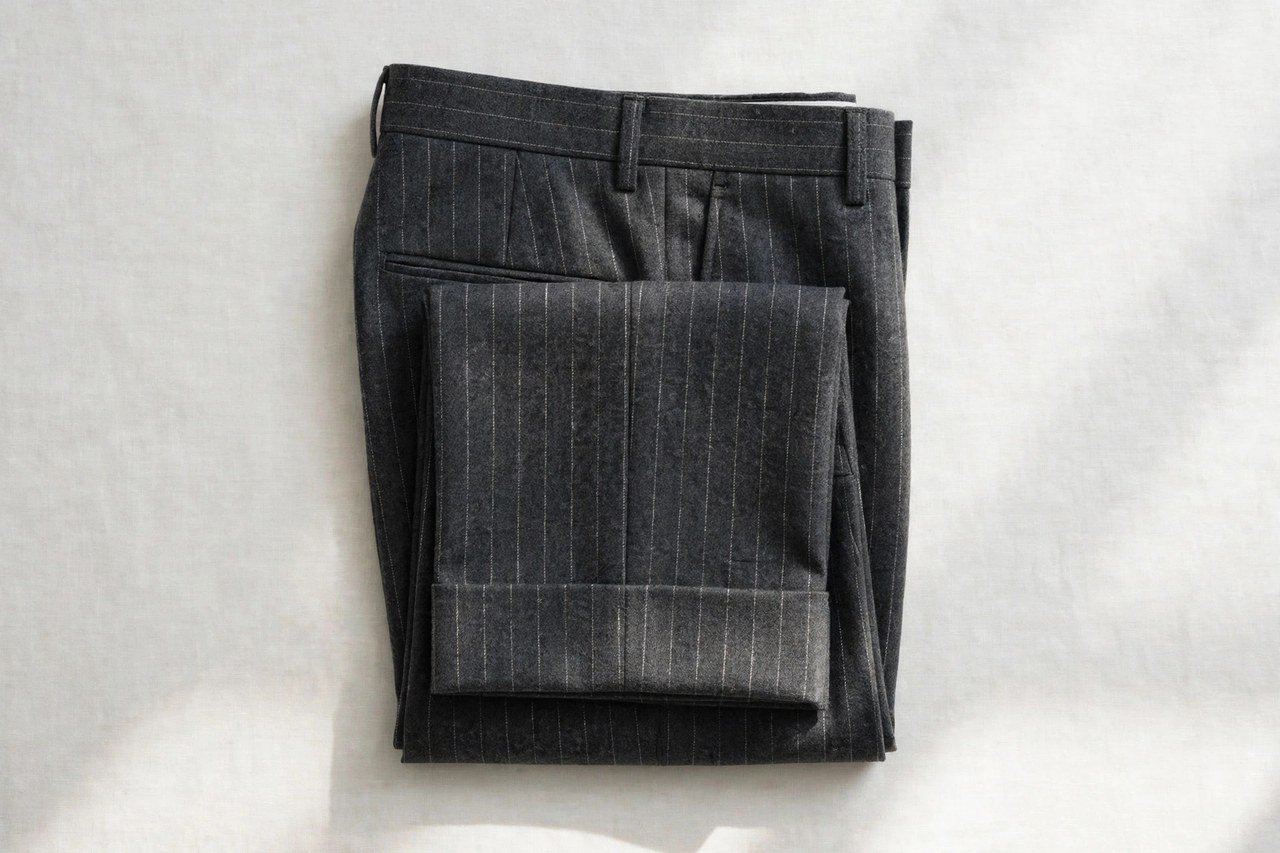
Pinstripe pants are dress trousers patterned with pinstripes - the narrow, closely spaced vertical stripes, traditionally white or pale on a dark wool ground, that tailoring borrowed from suiting and banking dress. The stripe is the whole identity: it lengthens the leg visually, formalizes any trouser it touches, and dictates what the pants may be worn with. This guide is about the pattern itself - stripe spacing and contrast, the cloth it belongs on, and the long-standing question of when striped trousers may be separated from their jacket - while the general pants grammar of rise and break lives in the pants guide in this letter. This guide is built around the questions buyers actually ask: which style, which size, which fabric, and what will it look like after a year of real use - answered in order, with the trade-offs stated plainly.
Ground, Line and the True Hang
Read a pinstripe by its ground and its line. The classic ground is a smooth worsted wool in charcoal, navy or black; the classic line is a single fine stripe, a thread or two wide, spaced an inch or so apart - subtle at conversational distance, unmistakable up close. Wider spacing and bolder contrast read more fashion and less boardroom; chalk stripes, softer and rope-like, are the flannel cousin and belong to a different, more textured register. On trousers, the stripe must run true: stripes should hang vertically and parallel when the leg hangs, which is a cutting-quality test - a leg cut off-grain twists, and a twisted pinstripe advertises it instantly. The front follows suiting convention, most often plain-front in modern cuts or a single pleat in classic ones; our plain-front and pleated guides in this letter cover those mechanics, and on striped cloth the pleat question matters more, because a pleat interrupted by stripes must still let them fall straight.
For any leg garment the rise is the first specification, because it decides sitting comfort before fabric gets a vote: measure from front waistband through to back and compare it with a pair that already works. Then audit the stress points - bar-tacked belt loops and pocket corners, double-stitched inseams, hems finished evenly - and the pocketing, which should be deep, smooth and strong enough to carry what the garment's pockets invite you to carry.
Fit Them as Suiting
Fit pinstripe pants as suiting, because that is what they are. The waistband should sit at the natural waist the jacket expects, the rise should match the suit's system, and the hem break should be the dress standard - a slight break over a polished shoe, never stacking, because stacked cloth breaks the stripe's vertical line, which is the garment's entire visual argument. Cuffs (turn-ups) are the classic partner to stripes and add the weight that helps a fine worsted hang straight; plain hems read more modern. Check the stripes in the fitting room mirror from ten feet: they should fall parallel and unbroken from waist to hem on both legs, with the crease - if pressed - running down the center of the stripe pattern rather than fighting it. A twist you can see there will not improve with wear.
Measure where the waistband will actually sit, plus inseam to your preferred break, and thigh and seat for closer cuts. Then sit, squat and climb a step in the fitting room - a leg garment that only works standing still does not work. Waistbands relax roughly half an inch in wear and inseams shrink most in early washes, so buy the fit you want after those changes rather than the fit in the mirror.
Keep the Suit Together
Pinstripe trousers are most often half of a suit, and the first care rule is to keep the marriage intact: wear, rest and clean the trousers with their jacket so both pieces fade and age at the same rate, because a suit whose halves have lived different lives stops being a suit. Wool trousers rest between wears, brush down, and dry-clean sparingly with pressing doing the routine refreshing. The crease is part of the pattern's geometry, so hang on a clamp or bar that preserves it. Separates - wearing the trousers without the jacket - are covered in the questions below; whichever way you wear them, treat the cloth as tailoring: no machine washing, no iron directly on the face (a press cloth, always), and mending at the first sign of shine or fray at seat and hem.
Wash leg garments inside out and cool; heat is the agent that fades dye, tires elastic and shortens inseams. Dry low or on the line, hang or fold promptly, and crease deliberately or not at all. Walk the stress points each season - hem edges, pocket corners, seat and inner thigh - and mend the small fray while it is still small: leg garments fail gradually, then suddenly, and the two-minute October repair prevents the November replacement.
Common Questions
Can pinstripe pants be worn without the suit jacket?
Carefully, and knowing it is a debated move. The traditional rule says striped trousers are half a suit and look orphaned alone; the modern practice pairs them with a solid blazer, a fine knit or a crisp shirt where the trousers read as a deliberate pattern choice. The safer separates are bolder stripes in casual cuts; the classic fine pinstripe in worsted wool still reads most honestly with its jacket - and wearing the halves apart also ages them unevenly, which can retire the suit.
What is the difference between pinstripes and chalk stripes?
Definition and texture. A pinstripe is a fine, sharp, single-thread line woven or printed crisply on a smooth ground, spaced regularly and reading clean at a distance. A chalk stripe is wider, softer-edged and slightly rope-like, as if drawn in tailor's chalk, and it belongs on flannel and textured cloths. Pinstripes are the sharper, more formal, city register; chalk stripes are the softer, more sporting one. The fitting and care rules are the same; the company they keep differs.
Should pinstripe pants have cuffs?
Traditionally yes, and the pairing still works: cuffs add weight at the hem that helps fine worsted trousers hang straight, which keeps the stripes falling vertically as they should, and they complete the classic suiting silhouette. Plain hems are the modern alternative and read cleaner with narrower, contemporary cuts. Either is correct when deliberate - what breaks the look is a hem that pools or stacks, interrupting the stripe's line.
More in Men's Clothes Guide P
From Our Original Guide: Thin as a Pin
Our original pinstripe pants page defined the pattern with a question, and this guide keeps it. Pinstripes are a pattern of very thin stripes of any color running in parallel, often found in cloth — and when we say very thin, do we mean thin as a pin? Yes, we probably mean that. The page placed the striped trouser inside the wider pants family, linking back to the men’s pants guide in this letter and onward to the fashion and clothing directories; those links are carried in this page’s lists below.
Looking for Men's Clothing Stores?
This guide explains men's pinstripe pants. To browse where to buy, visit our men's clothing store directory, where you can find retailers that carry them.