Men's Plain-Front Pants Guide
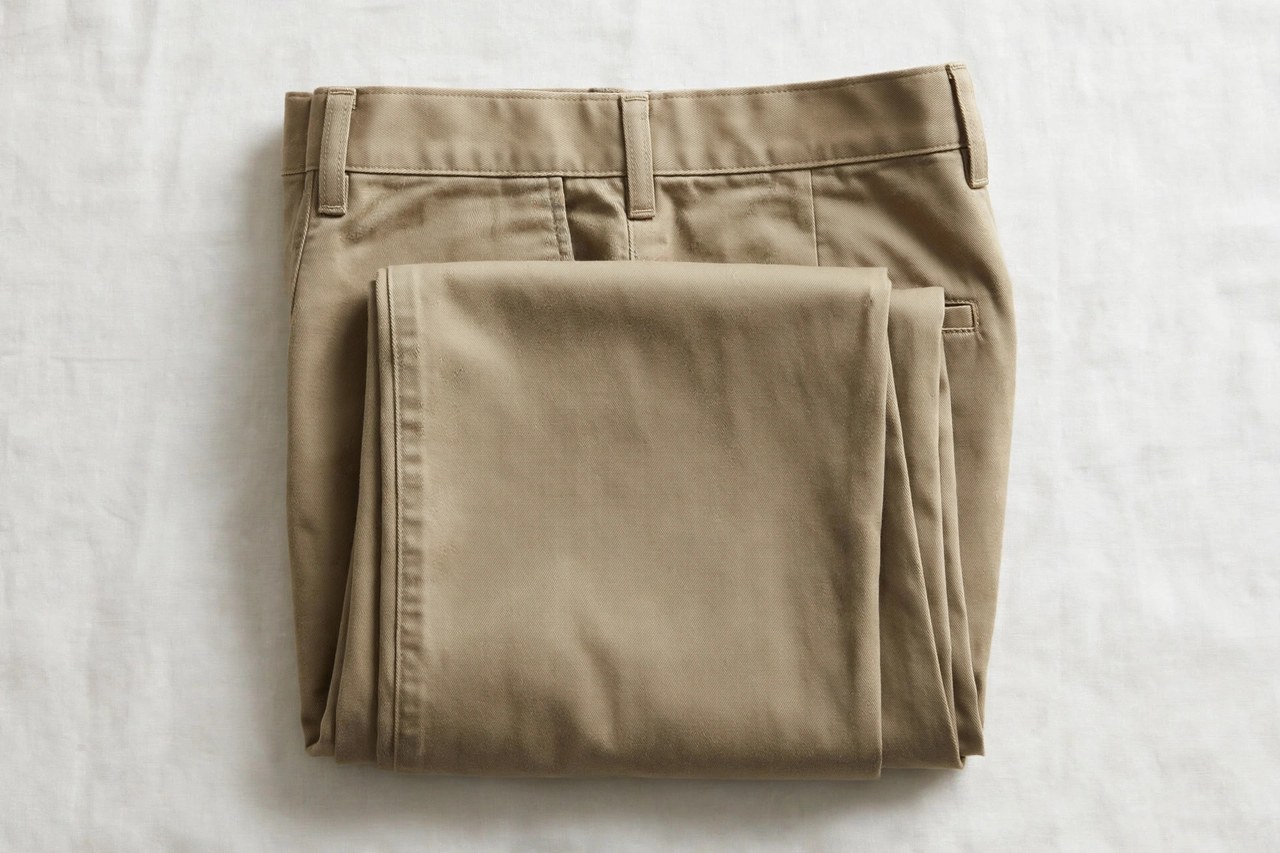
Plain-front pants - flat-front trousers - are pants whose front is smooth from waist to hip, with no pleats folding the cloth at the waistband. The flat front is the modern default, and this guide is its case and its limits: how the plain front changes the trouser's line, who it flatters, and the fit errors that a pleat would forgive but a flat front exposes. The pleated alternative has its own guide in this letter, and the umbrella pants guide covers the grammar both share; this page is about the front itself.
Shop Men's Plain-Front Pants Now
Shop Men's Plain-Front Pants on Amazon Shop Men's Plain-Front Pants on eBayThe Amazon and eBay links on this page are affiliate links. If you make a purchase through them, Apparel Search may earn a commission.
Plain-front pants - flat-front trousers - are pants whose front is smooth from waist to hip, with no pleats folding the cloth at the waistband. The flat front is the modern default, and this guide is its case and its limits: how the plain front changes the trouser's line, who it flatters, and the fit errors that a pleat would forgive but a flat front exposes. The pleated alternative has its own guide in this letter, and the umbrella pants guide covers the grammar both share; this page is about the front itself. This guide explains what to look for, how the sizing actually works, which fabrics and constructions earn their price, and how to care for the garment so it keeps doing its job season after season.
An Absence That Works
A plain front is an absence that does work. Without pleats, the cloth leaves the waistband in one clean plane, so the trouser's line runs unbroken from waist to hem and the silhouette reads longer and leaner - the reason plain fronts dominate contemporary tailoring and nearly all casual pants, where pleats were never the tradition: chinos, khakis and five-pocket styles are plain-front by birth. The construction compensates for the missing cloth with cut: a slightly lower rise is common, darts at the back shape the seat, and the front relies on the wearer's own shape rather than folded ease. Fabrics show their quality plainly here - a smooth worsted or a clean cotton twill looks sharp, while a limp cloth collapses against the thigh, because no pleat distracts the eye. Details tilt modern: slash or on-seam pockets that keep the plane flat, a clean waistband with no extension tab theatrics.
For any leg garment the rise is the first specification, because it decides sitting comfort before fabric gets a vote: measure from front waistband through to back and compare it with a pair that already works. Then audit the stress points - bar-tacked belt loops and pocket corners, double-stitched inseams, hems finished evenly - and the pocketing, which should be deep, smooth and strong enough to carry what the garment's pockets invite you to carry.
No Cloth in Reserve
Fit a plain front with less optimism than a pleat. There is no folded reserve of cloth to open when you sit, so the waist, hip and thigh must be right standing and seated alike: if the pockets flare open like ears, the hip is too tight and no tailor can add the cloth that a pleat would have supplied - size up and have the waist taken in instead, which is the standard plain-front alteration order. The rise should sit where the design intends, usually at or just below the natural waist; worn lower, a plain front pulls and creases horizontally, the tell-tale sign of a front being asked to do a pleat's job. Slim and straight legs suit the flat line best; very full legs in a plain front can look unfinished unless the cut is deliberate. Sit, climb stairs and check the mirror seated - the seated view is the plain front's honest portrait.
Measure where the waistband will actually sit, plus inseam to your preferred break, and thigh and seat for closer cuts. Then sit, squat and climb a step in the fitting room - a leg garment that only works standing still does not work. Waistbands relax roughly half an inch in wear and inseams shrink most in early washes, so buy the fit you want after those changes rather than the fit in the mirror.
The Front Announces Everything
Plain fronts care easily, which is part of their appeal. The smooth front presses cleanly and keeps a crease without a pleat's alignment fuss; home-laundered cotton versions iron flat in a pass. Wool plain-front trousers follow the dress routine - rest, brush, sparing dry-cleaning, a clamp hanger - and benefit from the crease being set deliberately, since the front has no other architecture. The fit discipline extends into ownership: a plain front announces weight changes at the waist sooner than a pleat does, in pocket flare and front pull, so the honest response is the alteration, not the hope. Keep the waistband button and hook sound, because on a flat front the closure carries the whole front's tension, and a failing hook shows immediately in the line.
Wash leg garments inside out and cool; heat is the agent that fades dye, tires elastic and shortens inseams. Dry low or on the line, hang or fold promptly, and crease deliberately or not at all. Walk the stress points each season - hem edges, pocket corners, seat and inner thigh - and mend the small fray while it is still small: leg garments fail gradually, then suddenly, and the two-minute October repair prevents the November replacement.
Common Questions
What are plain-front pants?
Pants with a smooth, unpleated front: the cloth leaves the waistband in one flat plane from waist to hip instead of being folded into pleats. It is the modern default for dress trousers and the native construction of chinos, khakis and most casual pants. The look is a longer, cleaner line; the trade-off is fit - with no pleated cloth in reserve, the waist, hip and thigh must be correct as cut.
Who should wear plain-front rather than pleated pants?
Most men, most of the time, in current dress - and particularly slimmer and average builds, whose line the flat front flatters. Men who carry weight at the waist and seat, or who simply prefer the classic drape and sitting ease of folded cloth, are better served by pleats, as our pleated pants guide explains. The two fronts also suit different registers: plain fronts read modern and minimal, pleats read classic and tailored. Neither is a rule; fit honesty decides.
Why do the pockets flare on my plain-front pants?
Because the hip is too small for the body in it. Pocket flare - the front pockets gaping open like ears - is the plain front's strain gauge: with no pleat to open and supply cloth when you move or sit, a tight hip pulls the pockets apart. The fix is a size up through hip and thigh with the waist taken in by a tailor, an easy alteration. Sucking in, or a bigger belt, only moves the strain to the waistband closure.
More in Men's Clothes Guide P
Another Way of Saying Flat Front
Plain front is essentially another way of saying flat front pants — in other words, pants that don’t have pleats. Pleats are found just below the waistband on the front and typify many styles of formal trousers, which is exactly the construction this front does without.
Looking for Men's Clothing Stores?
This guide explains men's plain-front pants. To browse where to buy, visit our men's clothing store directory, where you can find retailers that carry them.