Men's Flat Front Pants Guide
Men's flat front pants - also called plain front pants - are trousers with no pleats below the waistband: the front of the garment lies smooth and straight from waist to leg. That one absence defines the style. Pleated trousers carry one, two or three small folds stitched just below the waistband, opening toward the pockets (reverse pleats, typical of khakis and corduroys) or toward the fly (forward pleats), pressed to a crease or left soft. Flat front pants have none of it, and the result is the cleaner, slimmer silhouette that has made the plain front the default for jeans, chinos, dress trousers and most modern suiting.
Shop Men's Flat Front Pants Now
Shop Men's Flat Front Pants on Amazon Shop Men's Flat Front Pants on eBayThe Amazon and eBay links on this page are affiliate links. If you make a purchase through them, Apparel Search may earn a commission.
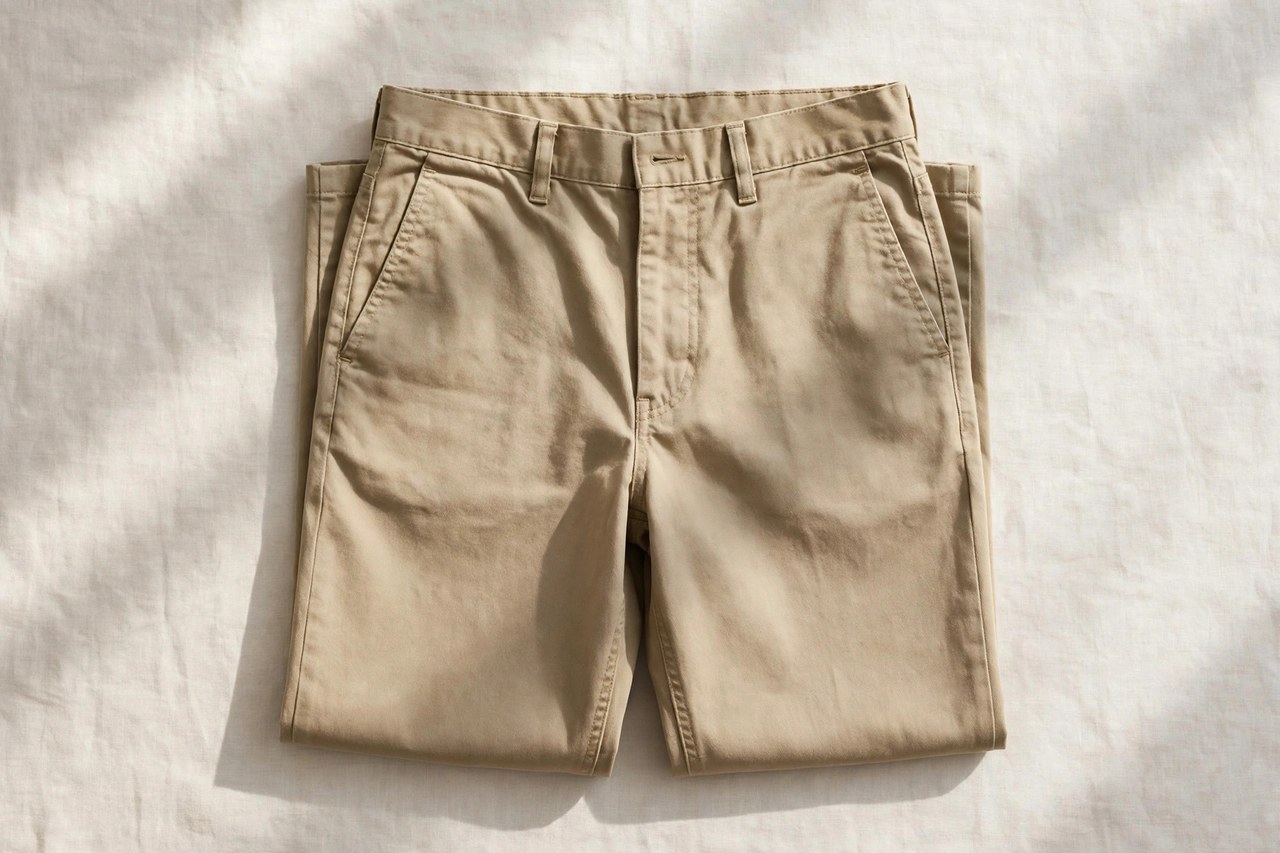
Men's flat front pants - also called plain front pants - are trousers with no pleats below the waistband: the front of the garment lies smooth and straight from waist to leg. That one absence defines the style. Pleated trousers carry one, two or three small folds stitched just below the waistband, opening toward the pockets (reverse pleats, typical of khakis and corduroys) or toward the fly (forward pleats), pressed to a crease or left soft. Flat front pants have none of it, and the result is the cleaner, slimmer silhouette that has made the plain front the default for jeans, chinos, dress trousers and most modern suiting. This guide covers the styles worth knowing, the fit points that decide comfort, the fabrics and construction that separate a good buy from a regret, and the simple care that makes the garment last.
Styles and Construction
Construction follows the silhouette. Without pleats there is no extra cloth to manage at the hip, so flat fronts are cut closer through the seat and thigh and usually sit slightly lower on the waist than a classic pleated trouser. They typically finish without cuffs - though that is a convention, not a rule - and the flat front shows best in fabrics that hold a line: cotton twills and khakis, wool gabardine and flannel for dress pairs, denim for jeans. The stress points tell the quality: bar-tacked pocket corners and belt loops, a waistband that stays flat rather than rolling, and a fly that lies closed without gaping when you sit.
For any leg garment the rise is the first specification, because it decides sitting comfort before fabric gets a vote: measure from front waistband through to back and compare it with a pair that already works. Then audit the stress points - bar-tacked belt loops and pocket corners, double-stitched inseams, hems finished evenly - and the pocketing, which should be deep, smooth and strong enough to carry what the garment's pockets invite you to carry.
Fit and Sizing
The flat front's fit rule is honesty at the hip: because there are no pleats to open and give room when you sit, the trouser must fit your seat and thigh as cut. Too tight shows instantly - pockets flare, the fly pulls, horizontal creases appear across the front - and no tailor can add cloth that was never there. Correct fit is smooth standing, comfortable sitting, with the waistband closing without strain at the waist you actually have. Rise is the comfort decision: a mid rise suits most men in this style, and the fashionable very low rise is where flat fronts earn their uncomfortable reputation.
Measure where the waistband will actually sit, plus inseam to your preferred break, and thigh and seat for closer cuts. Then sit, squat and climb a step in the fitting room - a leg garment that only works standing still does not work. Waistbands relax roughly half an inch in wear and inseams shrink most in early washes, so buy the fit you want after those changes rather than the fit in the mirror.
Wearing and Care
Care keeps the front flat. Wash or clean by the fabric's label - cotton pairs inside out and cool to hold color, wool pairs on a professional or gentle regime - hang by the waistband or fold over a hanger bar, and press the leg crease if the style wants one while leaving the front itself smooth. Walk the hem and pocket corners each season. A flat front pair kept crisp reads as deliberate tailoring; the same pair wrinkled and bagging at the knee reads as neglect, because this style has no pleats to hide behind.
Wash leg garments inside out and cool; heat is the agent that fades dye, tires elastic and shortens inseams. Dry low or on the line, hang or fold promptly, and crease deliberately or not at all. Walk the stress points each season - hem edges, pocket corners, seat and inner thigh - and mend the small fray while it is still small: leg garments fail gradually, then suddenly, and the two-minute October repair prevents the November replacement.
Common Questions
What is the difference between flat front and pleated pants?
Pleats are small folds stitched below the waistband that open to give extra room through the hip and thigh when you sit; flat front (plain front) pants have no pleats and lie smooth. Pleats suit fuller seats and thighs, classic tailoring, and men who carry things in their front pockets. Flat fronts give a slimmer, more modern line and suit leaner builds and most contemporary suits and chinos. Neither is more formal by itself - fit and fabric decide that.
Do flat front pants work for bigger thighs or a larger waist?
They can, with the right cut: look for a classic or relaxed flat front fit with a higher rise and room cut into the seat and thigh, rather than a slim low-rise fashion cut. The failure mode to avoid is a flat front that is tight at the hip - pockets flare and the front creases horizontally. If every flat front you try does that, a single reverse pleat is the honest alternative; it exists precisely to solve that fit problem.
Should flat front pants have cuffs?
Convention says no: the plain front's clean line usually pairs with a plain hem, and cuffs are traditionally the pleated trouser's finish. It is a convention, not a law - a cuffed flat front chino or flannel can look deliberately classic. What matters more is the break: flat fronts are usually worn with a small or no break so the smooth front line continues unbroken to the shoe.
More in Men's Clothes Guide F
Pleats, Explained by Their Absence
Utilitarian and very casual styles such as jeans and cargo pants are flat-front — without pleats at the waistband. Pleats just below the waistband on the front of the garment are typical of many formal and casual trousers including suit trousers and khakis; there may be one, two, three or none, facing either direction — opening toward the pockets as reverse pleats, typical of khakis and corduroy trousers, or toward the zipper as forward pleats — and they are categorized as pressed, heat-set into a sharp crease, or un-pressed, falling in soft rounded folds, with pleats sewn into place called tucks. Plain front trousers do NOT have the pleats. Flat front pants typically do not have cuffs, though that is not an absolute requirement, and they make the wearer’s silhouette smoother and straighter than pleated pants. A classic article asks whether your wife prefers that you wear plain front trousers.
More to Explore on Apparel Search
- Men's Pant Guide
- Men's Plain Front Pants
- Pleated Pant Guide
- Fashion
- Clothing Retail Stores
- Fashion News
- Fashion Designers
- Popular Brands
- Men's Clothing Stores
- Men's Clothing Wholesalers
- prefer that you wear plain front trousers
- pant styles
- Fashion Designer Directory
- Men's Clothes Guide H-P
- Men's Clothes Guide Q-Z
Looking for Men's Clothing Stores?
This guide explains men's flat front pants. To browse where to buy, visit our men's clothing store directory, where you can find retailers that carry them.