Men's Pants Guide
Pants - trousers in the British term - are the leg garment that anchors almost every outfit a man owns, and this guide is the umbrella for the whole category: dress trousers, chinos, khakis, cords, casual five-pocket styles and the specialty cuts that get their own P guides here, from pleated and plain-front fronts to pinstripe patterns and polyester fabrics. Read this page for the shared grammar of all pants - rise, leg, break and cloth - then follow the links for the fronts, patterns and fibers that change how a pair is chosen.
Shop Men's Pants Now
Shop Men's Pants on Amazon Shop Men's Pants on eBayThe Amazon and eBay links on this page are affiliate links. If you make a purchase through them, Apparel Search may earn a commission.
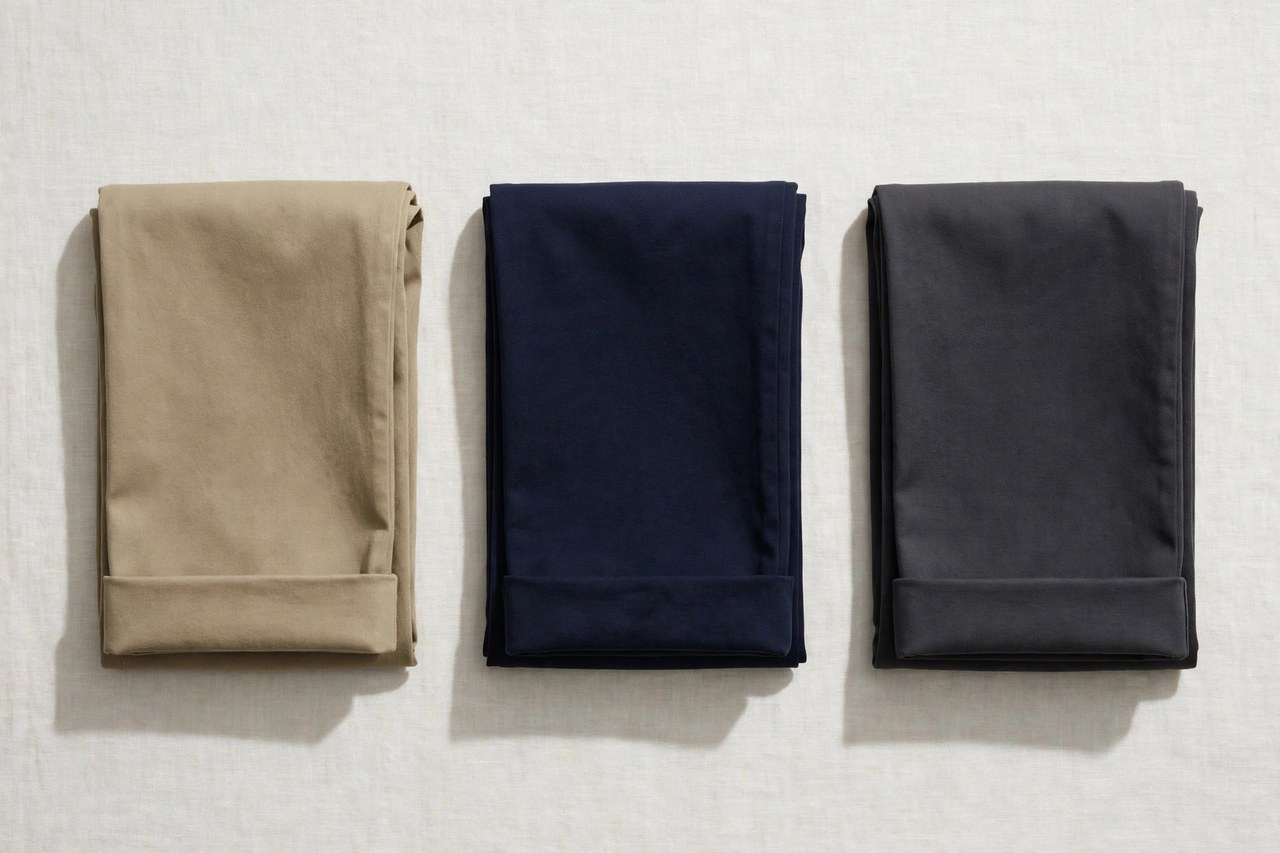
Pants - trousers in the British term - are the leg garment that anchors almost every outfit a man owns, and this guide is the umbrella for the whole category: dress trousers, chinos, khakis, cords, casual five-pocket styles and the specialty cuts that get their own P guides here, from pleated and plain-front fronts to pinstripe patterns and polyester fabrics. Read this page for the shared grammar of all pants - rise, leg, break and cloth - then follow the links for the fronts, patterns and fibers that change how a pair is chosen. This guide covers the styles worth knowing, the fit points that decide comfort, the fabrics and construction that separate a good buy from a regret, and the simple care that makes the garment last.
Front, Leg and Cloth
Every pair of pants is three decisions. The front decision - pleated or plain - is covered in its own guides in this letter and changes how the cloth falls from the waist. The leg decision runs from slim through straight to relaxed, and it is a proportion choice: the leg should echo the body's build and the shoes it meets, neither painted on nor pooling. The cloth decision sets the register: smooth wool and wool blends for dress trousers, cotton twill for chinos and khakis, corduroy and moleskin for cold casual wear, denim-weight cottons for five-pocket styles, and synthetics where travel and easy care lead - the polyester pants guide in this letter takes that fiber apart. Details audit quickly: a curtain waistband and split back waist mark dress construction, bar-tacked pockets mark work honesty, and a hem finished to a deliberate break - none, slight, or full - finishes the line the whole garment was building.
For any leg garment the rise is the first specification, because it decides sitting comfort before fabric gets a vote: measure from front waistband through to back and compare it with a pair that already works. Then audit the stress points - bar-tacked belt loops and pocket corners, double-stitched inseams, hems finished evenly - and the pocketing, which should be deep, smooth and strong enough to carry what the garment's pockets invite you to carry.
Rise Decides Everything
Pants fit is rise first. The rise decides where the waistband sits and how the pair feels seated, and no leg taper compensates for a rise that fights your posture. Measure waist where the band will actually ride, inseam to the break you intend, and check thigh and seat by sitting, squatting and climbing a step in the fitting room. Dress trousers should hold a crease and skim the shoe; casual pants may stack a little at the ankle but should not drag. Waistbands relax about half an inch in the first wears and cotton inseams shrink most in the first washes, so judge a new pair as the pair it will be after a month, not the pair in the mirror. Alterations fix hems and small waist changes beautifully - buy for rise and thigh, tailor the rest.
Measure where the waistband will actually sit, plus inseam to your preferred break, and thigh and seat for closer cuts. Then sit, squat and climb a step in the fitting room - a leg garment that only works standing still does not work. Waistbands relax roughly half an inch in wear and inseams shrink most in early washes, so buy the fit you want after those changes rather than the fit in the mirror.
Rest, Brush, Mend
Care follows cloth. Wool dress trousers rest a day between wears on a clamp hanger that lets the crease set, brush down after wear, and dry-clean sparingly - pressing refreshes them more often than cleaning should. Cotton chinos and casual pants wash inside out and cool to hold color, and come out of low heat or off the line promptly if you want the crease or its absence to look deliberate. Walk the stress points each season: hem edges, pocket corners, seat and inner thigh, where pants actually wear out. The mid-priced pair mended at the first fray outlasts the expensive pair worn through, so inspect as you fold and repair while repairs are still two-minute jobs.
Wash leg garments inside out and cool; heat is the agent that fades dye, tires elastic and shortens inseams. Dry low or on the line, hang or fold promptly, and crease deliberately or not at all. Walk the stress points each season - hem edges, pocket corners, seat and inner thigh - and mend the small fray while it is still small: leg garments fail gradually, then suddenly, and the two-minute October repair prevents the November replacement.
Two workwear classics get their own guides: the military-born fatigue pants and the reinforced double knee pants.
Common Questions
What is the difference between pants and trousers?
Nothing in the garment - it is geography in the vocabulary. Trousers is the standard British term and the word tailoring still uses everywhere; pants is the everyday American term (and in Britain, confusingly, a word for underwear). On this site the guides use pants, and the dress, chino, pleated, plain-front and pinstripe pages all describe the same family of leg garments under that name.
Which pants measurements matter most when buying?
Rise first, then waist, inseam, thigh and seat. Rise decides sitting comfort and where the waistband lives, and it cannot be altered. Waist and inseam should be measured where the band will ride and to the break you intend. Then test dynamically - sit, squat, climb a step - because a pair that only works standing still does not work. Buy for rise and thigh; hems and small waist changes tailor easily.
How many pairs of pants should a man rotate?
Enough that no pair is worn two days running - trousers, like shoes, last far longer rested between wears. A working rotation is usually a dress pair or two, chinos in two colors, and a casual five-pocket style, adjusted to how you actually dress. Rest lets creases reset, moisture dry and fibers recover, and it spreads the wear that concentrates at seat, thigh and hem.
More in Men's Clothes Guide P
One Leg at a Time
Apparel Search believes that you should always put trousers on one leg at a time. The pants family is gathered in one place — big and tall pants, ski pants, athletic pants, khakis, knit pants, dress pants and designer jeans alongside the pleated and plain-front guides in this letter — and the trousers, wool pants and cotton pants pages complete the family.
More to Explore on Apparel Search
Looking for Men's Clothing Stores?
This guide explains men's pants. To browse where to buy, visit our men's clothing store directory, where you can find retailers that carry them.