Men's Khaki Pants Guide
Men's khaki pants - khakis - are cotton twill trousers that take their name from a color, a light shade of yellow-brown, and their shape from a uniform. The trousers that became popular following World War II were initially military-issue khaki twill, invariably khaki in color; today, the term can refer to the fabric and style of trousers based on that older model - also called chinos - rather than their color, which is why a modern pair of khakis can be navy, olive, stone or black and still be khakis in every way that matters.
Shop Men's Khaki Pants Now
Shop Men's Khaki Pants on Amazon Shop Men's Khaki Pants on eBayThe Amazon and eBay links on this page are affiliate links. If you make a purchase through them, Apparel Search may earn a commission.
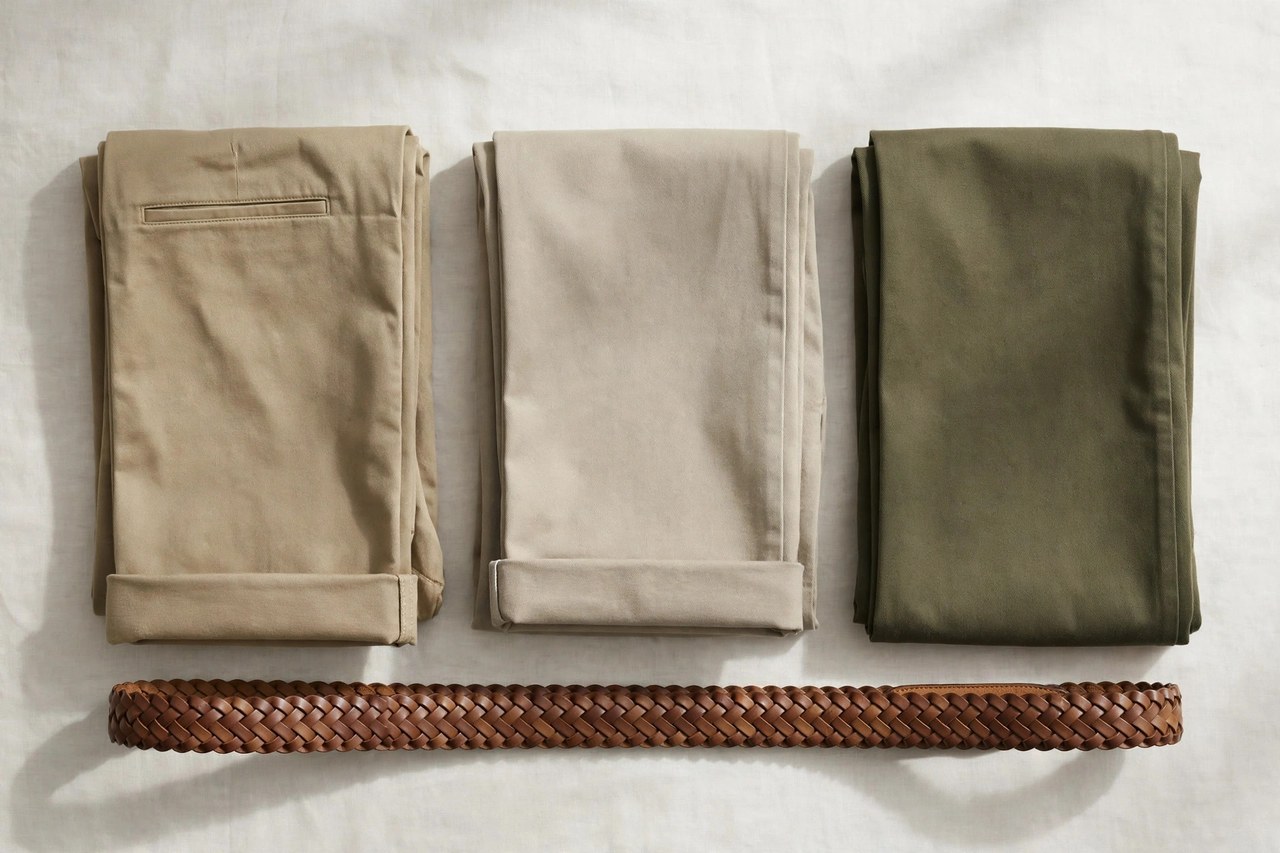
Men's khaki pants - khakis - are cotton twill trousers that take their name from a color, a light shade of yellow-brown, and their shape from a uniform. The trousers that became popular following World War II were initially military-issue khaki twill, invariably khaki in color; today, the term can refer to the fabric and style of trousers based on that older model - also called chinos - rather than their color, which is why a modern pair of khakis can be navy, olive, stone or black and still be khakis in every way that matters. This guide covers the styles worth knowing, the fit points that decide comfort, the fabrics and construction that separate a good buy from a regret, and the simple care that makes the garment last.
Twill, Weights, Fronts and Finishes
Start with the cloth, because khaki is a fabric story before it is a color story. Real khakis are a cotton twill - a diagonal-rib weave that drapes cleanly, resists wrinkling better than a plain weave, and takes a pressed crease or shrugs one off depending on the finish. Weights run from light summer twills around six ounces to sturdy eight- and nine-ounce cloth that holds its line through a workday; garment-dyed versions arrive soft with the color slightly lived-in, while piece-dyed dress chinos keep a sharper, more uniform surface for office wear. Construction sorts the rack: a plain front lies flat and modern under a tucked shirt, while pleats - the subject of their own guide in this directory - give seated room and a more traditional line. Pockets should be on-seam or quarter-top in front with button-through welt pockets behind, the waistband should carry a proper closure plus an interior button or hook so the fly never carries the load alone, and better pairs add a split waistband at the back so a tailor can let the waist out. Finishes decide the job: a wrinkle-resistant treatment buys weekday ease at a small cost in softness, while an untreated twill creases honestly and irons back to attention in minutes.
For any leg garment the rise is the first specification, because it decides sitting comfort before fabric gets a vote: measure from front waistband through to back and compare it with a pair that already works. Then audit the stress points - bar-tacked belt loops and pocket corners, double-stitched inseams, hems finished evenly - and the pocketing, which should be deep, smooth and strong enough to carry what the garment's pockets invite you to carry.
Fit, Rise and the Hem Rule
Fit khakis the way you will wear them, because the same cut reads as two different trousers tucked and untucked. The waist should sit where you actually belt - at the natural waist for dressier pairs, slightly lower for casual fits - and close without the front pockets flaring, which is the visible sign the hip is too tight. The rise decides sitting comfort: too low and the waistband dives when you sit, too high for your torso and the cloth pools. Through the leg, choose the silhouette by shoe and occasion: a straight leg with a slight break covers a loafer or a boot without argument, a tapered leg with little or no break suits the modern office and a clean sneaker, and nothing in this category forgives a hem that puddles - khakis look sloppy a half inch sooner than jeans do, because the lighter cloth shows every fold. Buy the inseam after washing if the label warns of shrinkage, and remember that cotton twill relaxes about half an inch at the waist in wear, so a firm-but-kind new fit is the right long-term fit.
Measure where the waistband will actually sit, plus inseam to your preferred break, and thigh and seat for closer cuts. Then sit, squat and climb a step in the fitting room - a leg garment that only works standing still does not work. Waistbands relax roughly half an inch in wear and inseams shrink most in early washes, so buy the fit you want after those changes rather than the fit in the mirror.
Wearing and Care
Khakis reward the simplest care in this letter: wash cool and inside out to protect the color - khaki dye fades at the creases first, which is character on a weekend pair and a flaw on an office pair, so keep the two jobs in separate trousers. Dry low or on the line and remove promptly; the twill's one vice is a stubborn wrinkle set by a hot, crowded dryer. A quick press along the front crease restores the dressed line, while skipping the crease entirely keeps the casual reading - decide per pair and stay consistent, because a half-pressed khaki looks undecided. Store hung by the waistband or folded over a bar hanger rather than balled on a shelf, brush off dust before it grinds into the twill, and treat stains at once - light colors show everything, and khaki's military ancestors were washed often for a reason. Rotate two or three pairs through the week and each will outlast a single daily workhorse by far more than the arithmetic suggests.
Wash leg garments inside out and cool; heat is the agent that fades dye, tires elastic and shortens inseams. Dry low or on the line, hang or fold promptly, and crease deliberately or not at all. Walk the stress points each season - hem edges, pocket corners, seat and inner thigh - and mend the small fray while it is still small: leg garments fail gradually, then suddenly, and the two-minute October repair prevents the November replacement.
Common Questions
Are khakis and chinos the same thing?
Essentially, yes: today the term khakis can refer to the fabric and style of trousers based on the older military model, also called chinos, rather than their color. Khaki names the light yellow-brown color the military twill came in; chino names the cotton twill cloth itself. In a modern shop the words are used interchangeably for the same trouser - a flat- or pleated-front cotton twill pant - so shop by fabric weight, fit and finish rather than by which word is on the label.
Should khaki pants be pleated or plain front?
Choose by body and by job. A plain front lies flat, reads modern, and suits most men under a tucked shirt or a sweater; it is the safe default for office and casual wear alike. Pleats give genuine seated room and a more traditional, dressier line, and they help men whose waist is smaller than their seat and thigh, because the extra cloth opens when you sit instead of pulling. What matters is that the pleats lie closed when you stand - pleats that gape open are announcing a size too small, not a style choice.
Why do my khakis fade at the creases and pockets?
Because surface dye and friction meet there first. Khaki twill is dyed through, but the raised diagonal ribs of the weave catch abrasion at folds, pocket edges and the seat, and cool color lifts fastest exactly where the cloth bends and rubs. Washing inside out, using cool water, and drying low slows it; keeping a sharper pair reserved for dressed wear and letting a second pair take the weekend wear turns the fading into the honest, lived-in look the fabric has carried since its uniform days.
More in Men's Clothes Guide K
Khaki, the Color That Became a Trouser
Khaki is a color, a light shade of yellow-brown. The trousers known as “khakis”, which became popular following World War II, were initially military-issue khaki twill used in uniforms and were invariably khaki in color. Today, the term can refer to the fabric and style of trousers based on this older model, also called “chinos”, rather than their color. The khaki definition in the glossary, the men’s pants guide, and the pleated and plain-front pants guides are linked below.
More to Explore on Apparel Search
Looking for Men's Clothing Stores?
This guide explains men's khaki pants. To browse where to buy, visit our men's clothing store directory, where you can find retailers that carry them.