Men's Clothes Guide K
Every men's clothing topic that starts with K - khaki pants and kilts, and the great knitwear family: knit hats, lounge pants, pants, shirts and sweaters under the knitwear umbrella.
Shop Men's Clothing Now
Shop Men's Clothing on Amazon Shop Men's Clothing on eBayThe Amazon and eBay links on this page are affiliate links. If you make a purchase through them, Apparel Search may earn a commission.
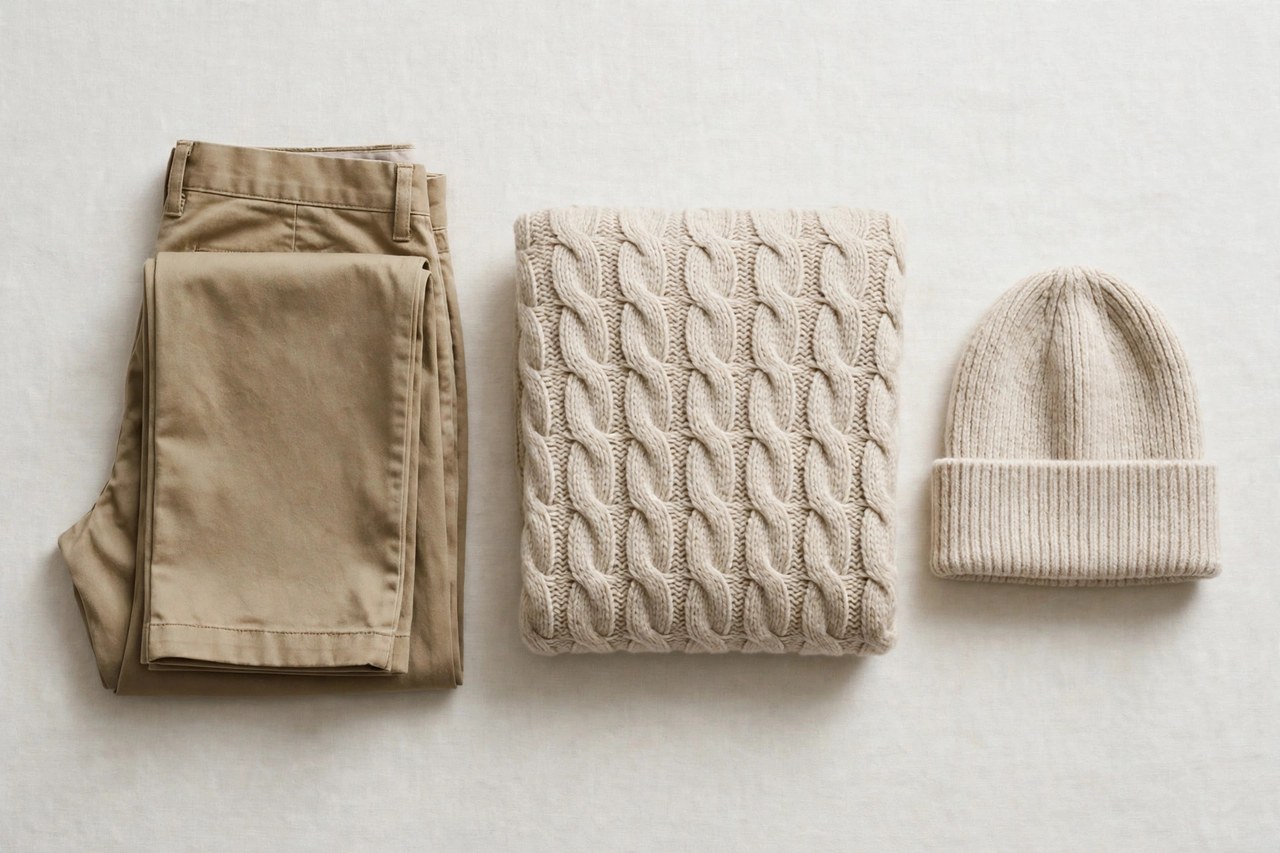
Welcome to the K section of the Men's Clothes Guide. This letter divides neatly in two: two standalone classics - khaki pants, the cotton twill trouser that marched out of uniform into every wardrobe, and kilts, the pleated tartan garment of the Scottish Highlands - and one great family that fills the rest of the letter: knitwear, and the garments knitted fabric makes possible. Six of the eight guides here are knits, which makes K the most single-minded letter in the guide - a whole section built, loop by loop, from one way of making cloth.
Are there more clothing categories that start with the letter K? Well, the answer is probably yes - please keep in mind that we are only human. If you know other men's apparel categories that you think should be listed in this directory, please do not hesitate to contact us with your suggestions. Until another K topic earns its place, the letter covers its ground completely: one trouser of woven twill, one garment of pleated wool, and the full knit wardrobe from hat to lounge pant.
The Two Classics
The khaki pants guide starts with the color itself - khaki is a color, a light shade of yellow-brown, and the trousers that became popular after World War II were military-issue khaki twill before they were anything else - and follows the term as it loosened from a color into a cut, until khakis and chinos became two names for the same essential cotton trouser in any color. Its brief is the modern one: twill weights, pleated versus plain fronts, the hem rule that separates a sharp pair from a sloppy one, and care that keeps the color honest.
The kilts guide is the letter's history piece: a knee-length, non-bifurcated garment with pleats at the rear, from the 16th-century Highlands by way of the great kilt - the full-length belted plaid whose upper half served as a cloak - to the small kilt with its pleats already sewn, credited to an English Quaker named Thomas Rawlinson in the 1720s. It covers yardage, pleating to the sett or the stripe, tartan wool and the formal kit around the garment, and the measured fitting - waist at the navel, hem at mid-knee - that a kilt demands and rewards.
The Knitwear Family
The knitwear guide is the umbrella: knitting as a method, loops versus the crossings of woven cloth, weft and warp knitting, fully-fashioned versus cut-and-sew construction - the one page that explains the other five. Beneath it, each garment gets its own angle. Knit sweaters take the pullover-versus-cardigan definition and the craft of gauge and ply. Knit shirts argue the knit-versus-woven case through jersey, pique and interlock - tees, polos and henleys. Knit pants make the dressed case for the category, ponte and double-knits that present as trousers while moving like athletic wear, while knit lounge pants take the home brief, and the honest loungewear-versus-sleepwear distinction, all to themselves. Knit hats close the letter at the top of the body: the wool knit cap of seamen, fishers and hunters, and the cuffed construction that wins warmth where it is lost fastest.
Read together, the six knit guides share one care system - cool washing, flat drying, folded storage, a day's rest between wears - stated fully in the knitwear guide and applied garment by garment in the rest. Use the grid below as the letter's complete map: all eight topics are listed exactly once, in alphabetical order, and the alphabet bar above reaches every other letter of the Men's Clothes Guide - J, the compact letter of jackets and jeans, just before this one, and L just after.
Looking for Men's Clothing Stores?
This hub indexes the Men's Clothes Guide K section. To browse where to buy, visit our men's clothing store directory, where you can find retailers that carry these items.