Men's Knit Hats Guide
Men's knit hats - knit caps - are knitted head coverings built for warmth: a hat is worn for protection against the elements, for ceremonial or religious reasons, for safety, or as a fashion accessory, and the knit cap is the protection branch of that family in its purest form. Originally of wool, though now often of synthetic fibers, a knit cap is designed to provide warmth in cold weather, typically of simple, tapering construction - and a multitude of local names, because every cold climate on earth arrived at the same garment.
Shop Men's Knit Hats Now
Shop Men's Knit Hats on Amazon Shop Men's Knit Hats on eBayThe Amazon and eBay links on this page are affiliate links. If you make a purchase through them, Apparel Search may earn a commission.
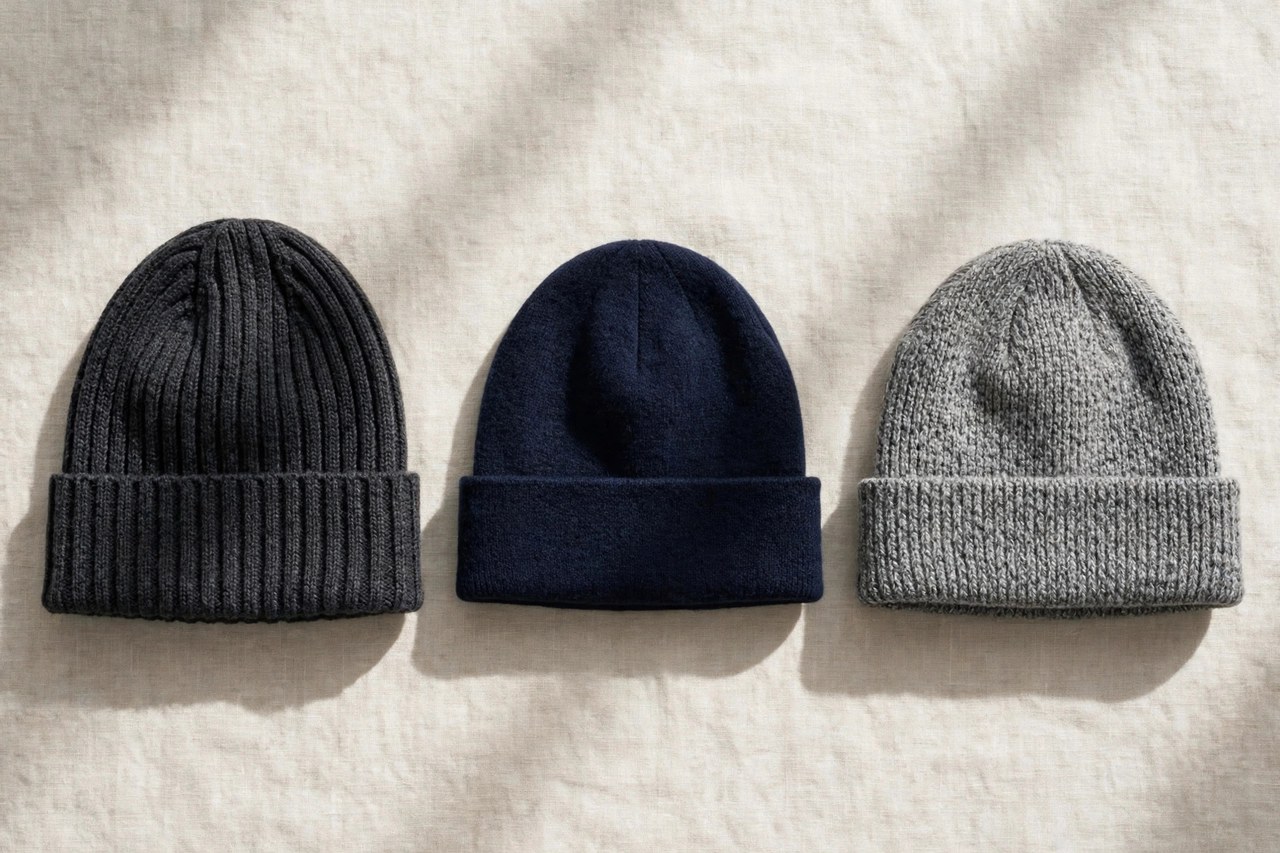
Men's knit hats - knit caps - are knitted head coverings built for warmth: a hat is worn for protection against the elements, for ceremonial or religious reasons, for safety, or as a fashion accessory, and the knit cap is the protection branch of that family in its purest form. Originally of wool, though now often of synthetic fibers, a knit cap is designed to provide warmth in cold weather, typically of simple, tapering construction - and a multitude of local names, because every cold climate on earth arrived at the same garment. This guide is built around the questions buyers actually ask: which style, which size, which fabric, and what will it look like after a year of real use - answered in order, with the trade-offs stated plainly.
Knits, Cuffs, Fibers and Crowns
Construction is a short list of decisions you can read at a glance once you know them. The knit itself comes first: a ribbed knit stretches to fit and grips without pressure, a stockinette knit lies smoother and thinner, and a cable or textured knit buys warmth with trapped air at the cost of bulk. The cuff is the second system - a folded brim doubles the layers over the ears, which is where warmth is won or lost, and lets you adjust coverage; an uncuffed, shallow fisherman style sits above the ears and trades real warmth for the look. Fibers set the budget and the weather report: wool insulates even when damp and resists odor across a working week outdoors - which is why the wool knit cap was an extremely common form of headgear for seamen, fishers, hunters and others working outdoors from the 18th century forward, and remains standard in Scandinavia and other cold regions - while acrylic costs less and washes easier but insulates less when wet, and cotton knits are cool-weather hats only, since wet cotton chills. Seams, crowns and linings finish the audit: a four- or six-panel seamed crown sits closer than a gathered one, and a fleece band inside a windproof shell hat is the upgrade worth paying for in real winter.
Accessories reward material honesty: solid metal over plated base metal, full-grain leather over bonded scraps, stitching over glue wherever fabric or hide is joined. Work every moving part through its full travel before paying - clasps, hinges, springs, adjusters - because small hardware fails before large materials do. And budget the care with the purchase: conditioner, the right cloth, a dry drawer; an accessory you can maintain will outlast a finer one you cannot.
Fit: Grip, Coverage and the Ten-Minute Test
A knit hat fits by grip, not by measurements on a chart - though the chart helps: most are sold as one size, which means the ribbing must stretch across a wide range of heads, so the honest test is ten minutes of wear. The hat should sit snug enough to stay put when you look down and shake your head once, cover the ears fully in its cuffed styles - a cap that rides up to half-cover them will do it all day - and never leave a pressure line that becomes a headache by lunch. A slightly deep crown is forgiving, because the cuff can fold higher; a shallow one that barely reaches the ears cannot be fixed by pulling. If you wear glasses, check that the cuff does not press the arms into your temples, and if the hat is for work outdoors, check it under a hood or helmet before the first cold morning depends on it. Buy the fit with the haircut you keep most of the winter, not the one you left the barber with.
Accessories have exact fits and exact measures: belt length to the middle hole of a belt you own, hat size as head circumference, a watch case within the wrist's width. Makers' accessory charts vary more than apparel charts, so measure and use the chart rather than ordering a habitual letter - ninety seconds with a tape prevents the most avoidable returns in menswear.
Wearing and Care
Knit hats ask little and are ruined mostly by heat. Wash cool - wool by hand or on a wool cycle with knitwear detergent, synthetics in a mesh bag on gentle - and never wring the water out, which twists the ribbing out of recovery; roll in a towel, then dry flat or over a bowl that holds the crown's shape. A hat reshaped while damp keeps its fit; one dried balled on a radiator keeps the ball. Keep a working hat by the door and a better one for town, brush lint and pills off with a fabric comb - pilling is loose fiber migrating, worst on soft acrylics - and store the winter set dry and uncrushed with cedar nearby if wool is in the mix. Rotate two hats through a wet week so each dries fully between wears: a damp knit insulates a fraction as well as a dry one, and the rotation costs nothing but a second hook by the door.
Store accessories deliberately: leather away from sun and plastic, metal dry, belts rolled or hung by the buckle rather than folded at the same crease forever. Condition leather a few times a year, polish metal with the cloth meant for its finish, and repair hardware early - a loose screw today is a lost cufflink or a failed clasp next month. Rotate daily pieces in pairs and both will outlast a single workhorse.
Common Questions
Why were wool knit caps the standard hat for sailors and outdoor workers?
Because wool solves the working problem: it insulates even when damp, keeps warming through spray and sweat, and resists odor across days of wear. The wool knit cap was an extremely common form of headgear for seamen, fishers, hunters and others spending their working day outdoors from the 18th century forward, and is still commonly used for that purpose in Scandinavia and other cold regions. The simple, tapering construction could be knitted anywhere, repaired with the same yarn, and pulled down over the ears or rolled up as the weather changed - three virtues no tailored hat could match at sea.
What is the warmest style of men's knit hat?
The cuffed, ribbed cap in wool or a wool blend, worn with the fold pulled down over the ears. The cuff doubles the knit exactly where heat escapes and wind enters, ribbing grips so the coverage stays put, and wool keeps insulating if the hat gets damp. Textured knits - cables and waffle stitches - trap still air and run warmer than a flat stockinette at the same weight, and a fleece-lined band or a windproof insert is the final upgrade for genuinely bitter days. A shallow fisherman beanie above the ears is a style choice; it is not the warm answer.
How should a knit hat fit?
Snug, low and stable: full ear coverage in cuffed styles, enough grip to survive looking down and shaking your head once, and no pressure line that turns into a headache within the hour. Ribbed knits stretch to fit most heads, so judge by a ten-minute wear rather than the one-size label. Choose a slightly deep crown over a shallow one - the cuff can fold higher for a shorter fit, but a hat that barely reaches your ears cannot be pulled into warmth it does not have.
More in Men's Clothes Guide K
The Knit Cap of Sailors and Hunters
A hat is a head covering worn for various reasons, including protection against the elements, ceremonial reasons, religious reasons, safety, or as a fashion accessory. Knitting is a method by which yarn is manipulated to create a textile or fabric, by hand or by machine. A knit cap, originally of wool though now often of synthetic fibers, is designed to provide warmth in cold weather and is typically of simple, tapering construction, though many variants exist. Historically, the wool knit cap was an extremely common form of headgear for seamen, fishers, hunters and others spending their working day outdoors from the 18th century forward, and it is still commonly used for this purpose in Scandinavia and other cold regions of the world — found all over the world wherever the climate demands a warm hat, under a multitude of local names. The men’s hats guide and the hat stores directory are linked below.
Looking for Men's Clothing Stores?
This guide explains men's knit hats. To browse where to buy, visit our men's clothing store directory, where you can find retailers that carry them.