Men's Hats Guide
A men's hat is a head covering worn for protection against the elements, for ceremonial or religious reasons, for safety, or as a fashion accessory - distinguished within headwear by its shaped crown and, usually, a brim. The men's market runs a large assortment of styles, from the common baseball cap to the old-fashioned chimney-pot hat and the chapeau-bras of the 18th century, and the formal black silk top hat was once an indispensable portion of a man's suit. This guide covers the shaped, styled end of headwear: the hat as a deliberate garment, chosen by form, material and occasion.
Shop Men's Hats Now
Shop Men's Hats on Amazon Shop Men's Hats on eBayThe Amazon and eBay links on this page are affiliate links. If you make a purchase through them, Apparel Search may earn a commission.
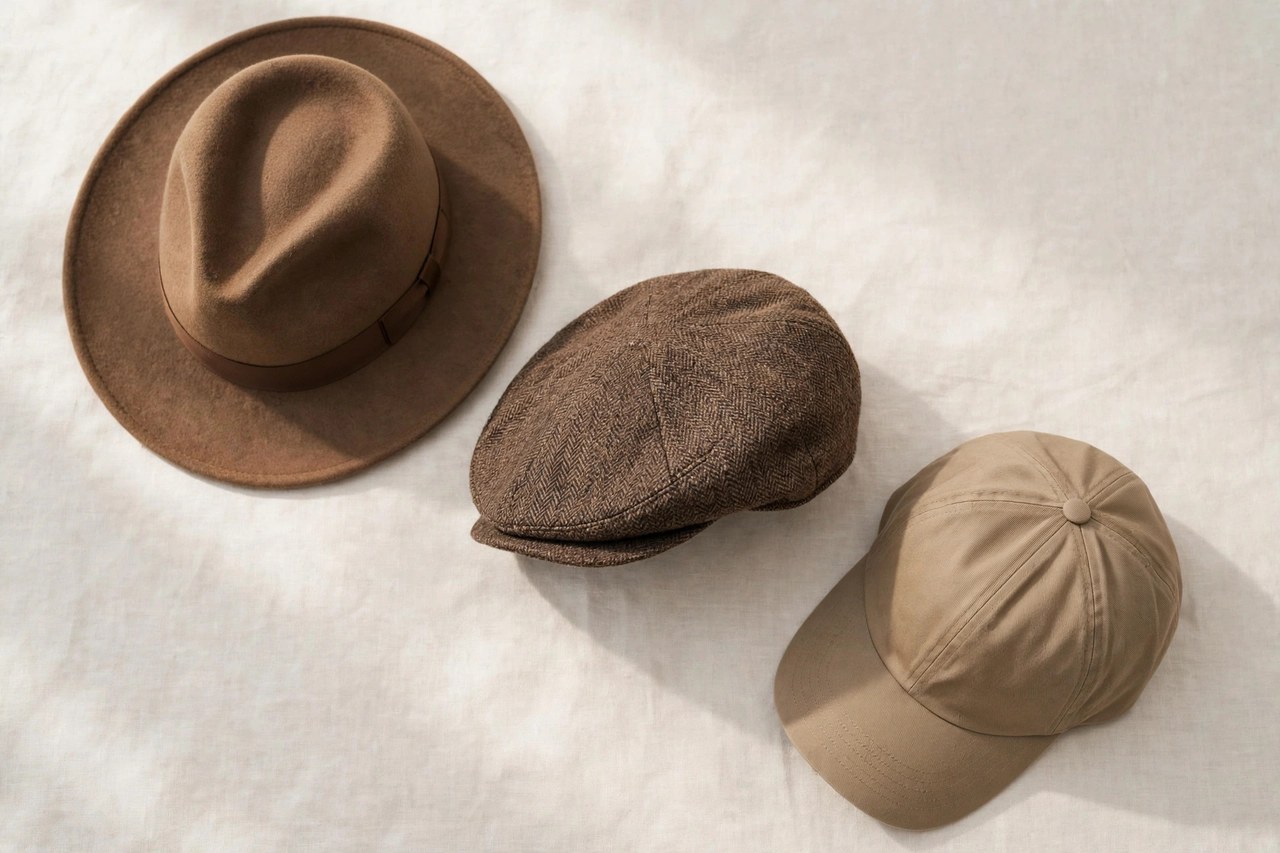
A men's hat is a head covering worn for protection against the elements, for ceremonial or religious reasons, for safety, or as a fashion accessory - distinguished within headwear by its shaped crown and, usually, a brim. The men's market runs a large assortment of styles, from the common baseball cap to the old-fashioned chimney-pot hat and the chapeau-bras of the 18th century, and the formal black silk top hat was once an indispensable portion of a man's suit. This guide covers the shaped, styled end of headwear: the hat as a deliberate garment, chosen by form, material and occasion. This guide covers the styles worth knowing, the fit points that decide comfort, the fabrics and construction that separate a good buy from a regret, and the simple care that makes the garment last.
Styles and Construction
Shop hats by architecture. A brimmed hat - fedora, trilby, panama, cowboy hat - shades the face and sheds weather, and its formality rises with the smoothness of its felt or straw and the narrowness of its trim. Flat caps and newsboys are soft, brim-short and travel kindly. The baseball cap is the modern default: a soft crown, a stiff front brim, casual by definition whatever it is made of. Materials set the season and the care: fur-felt and wool-felt for cold months, woven straw and panama for heat, cotton twill and canvas for work and sport, cashmere for luxury knits and caps. A hat's lining, sweatband and edge finishing are where its price honestly lives - a bound brim and a leather sweatband outlast their glued equivalents by years.
Accessories reward material honesty: solid metal over plated base metal, full-grain leather over bonded scraps, stitching over glue wherever fabric or hide is joined. Work every moving part through its full travel before paying - clasps, hinges, springs, adjusters - because small hardware fails before large materials do. And budget the care with the purchase: conditioner, the right cloth, a dry drawer; an accessory you can maintain will outlast a finer one you cannot.
Fit and Sizing
Hat sizing is head measurement, not guesswork: wrap a tape around the head just above the ears and eyebrows, where the hat will sit, and match the centimeters or inches to the maker's chart - fitted hats are sized to the eighth of an inch, adjustable ones forgive. The fit should be snug enough to stay in a breeze without pressure at the temples, and a new felt should feel firm, not tight: felt relaxes a fraction with wear and heat. Brim width is proportion, not fashion alone - wider brims suit broader builds and stronger sun, narrower brims suit smaller frames and city wear. Try the hat with the coat or jacket it will live with; a hat is judged at the whole silhouette, never in isolation.
Accessories have exact fits and exact measures: belt length to the middle hole of a belt you own, hat size as head circumference, a watch case within the wrist's width. Makers' accessory charts vary more than apparel charts, so measure and use the chart rather than ordering a habitual letter - ninety seconds with a tape prevents the most avoidable returns in menswear.
Wearing and Care
Hats reward handling by the brim, never the crown - pinching the pinch is how crowns crack and soften out of shape. Store felt hats on a stand or resting on their crown on a clean surface, brushed with the nap, away from radiating heat, and rest a hat a day between wears so the sweatband dries. Straw hats store unstacked, out of sun that is not on your head. Rain is weather, not damage, for most felts: shake, reshape and dry at room temperature. A hat that fits, suits and is stored properly is one of the longest-lived purchases in menswear - decades are normal service, and the definitions linked below map every style name you will meet.
Store accessories deliberately: leather away from sun and plastic, metal dry, belts rolled or hung by the buckle rather than folded at the same crease forever. Condition leather a few times a year, polish metal with the cloth meant for its finish, and repair hardware early - a loose screw today is a lost cufflink or a failed clasp next month. Rotate daily pieces in pairs and both will outlast a single workhorse.
For the number behind every size in this guide, see how to measure hat size - where the tape goes and the fitted size chart in inches and centimetres.
Common Questions
What is the difference between a hat and other headwear?
A hat is a shaped head covering, typically with a formed crown and a brim - all the way around in many styles - worn for protection, ceremony, religion, safety or fashion. Headwear is the wider family that also includes caps, helmets, hoods, turbans and wraps. All hats are headwear; most headwear is not a hat. The headwear guide linked below covers the whole family, while this guide concentrates on hats themselves - their styles, from baseball caps to top hats, and their materials.
How do I find my men's hat size?
Measure your head where the hat will sit: a soft tape around the skull just above the ears and the eyebrows, level all round. Match that measurement to the maker's chart - fitted hats are sold in exact sizes (in inches, or in centimeters in European sizing), and many caps and casual hats use adjustable bands instead. The correct fit is secure in a breeze, free of temple pressure, and for felt, slightly firm when new, since felt eases with wear.
Are hats still in style for men?
They never left; they changed jobs. The formal hat - the black silk top hat that once completed a suit - has retired to ceremony, but functional and subcultural hats thrive: baseball caps as the universal default, felt and straw brimmed hats in style-conscious dressing, knit hats in winter, cowboy hats in their regions. Whatever type of head covering you are wearing can be in style - the rule is intention: a hat chosen for its occasion and worn with confidence reads as style; a hat apologized for reads as a costume.
More in Men's Clothes Guide H
Hats, Defined
A hat is a head covering worn for various reasons, including protection against the elements, ceremonial reasons, religious reasons, safety, or as a fashion accessory. The menswear market has a large assortment of styles — types of hats run from the common baseball cap to old-fashioned chimney-pot hats, or even the chapeau-bras which had been popular in the 18th century. The full list of hat styles is in the definitions section, linked below. And don’t forget to learn about men’s cowboy hats.
Looking for Men's Clothing Stores?
This guide explains men's hats. To browse where to buy, visit our men's clothing store directory, where you can find retailers that carry them.