Men's Cashmere Hats Guide
Men's cashmere hats are knitted caps and beanies in cashmere - the fiber applied to the body's most heat-losing and most comfort-sensitive extremity. A cashmere beanie is a small garment with an outsized effect: it is softer on a shaved or thinning scalp than any wool, warmer for its weight than acrylic, and the one winter accessory a man wears every single cold day, which is the arithmetic that justifies it.
Shop Men's Cashmere Hats Now
Shop Men's Cashmere Hats on Amazon Shop Men's Cashmere Hats on eBayThe Amazon and eBay links on this page are affiliate links. If you make a purchase through them, Apparel Search may earn a commission.
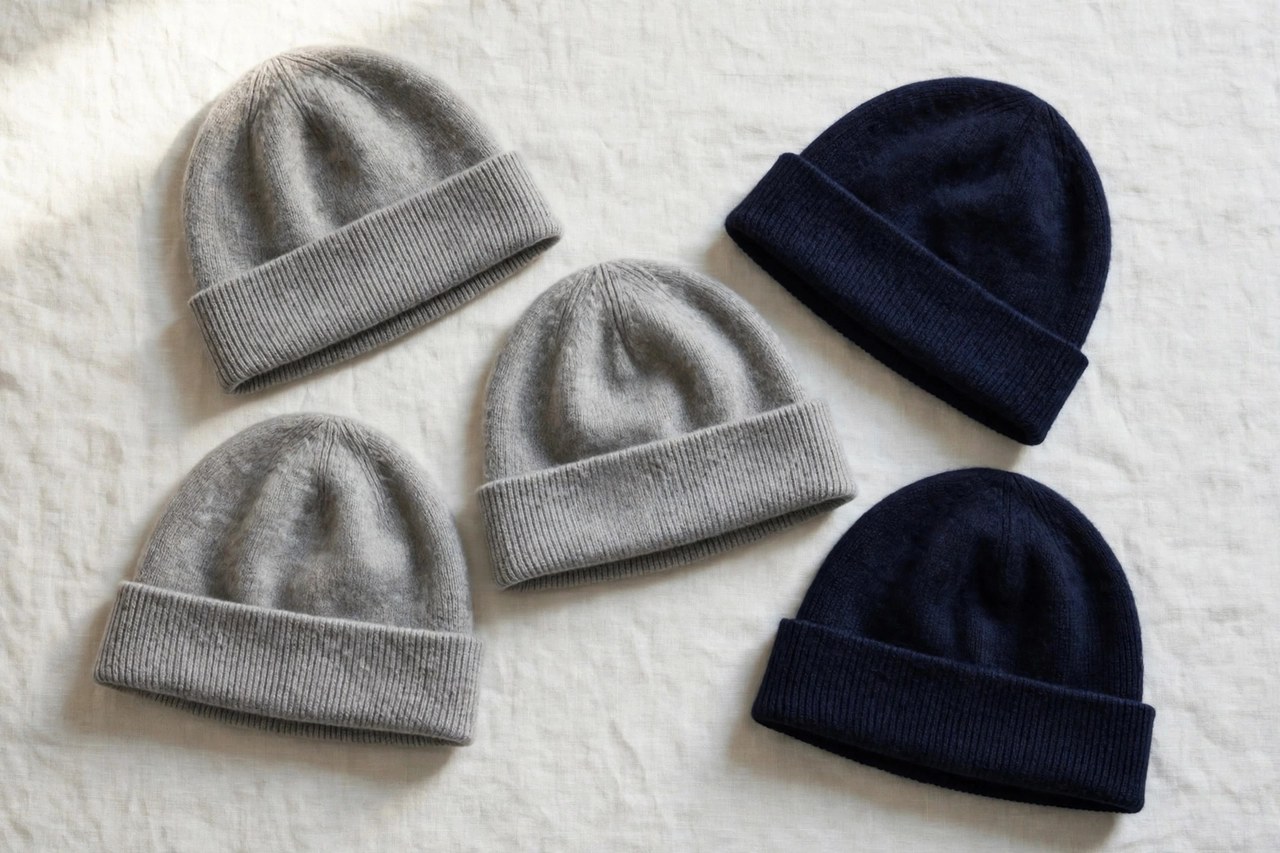
Men's cashmere hats are knitted caps and beanies in cashmere - the fiber applied to the body's most heat-losing and most comfort-sensitive extremity. A cashmere beanie is a small garment with an outsized effect: it is softer on a shaved or thinning scalp than any wool, warmer for its weight than acrylic, and the one winter accessory a man wears every single cold day, which is the arithmetic that justifies it. This guide is built around the questions buyers actually ask: which style, which size, which fabric, and what will it look like after a year of real use - answered in order, with the trade-offs stated plainly.
Styles and Construction
Knits divide by ply and rib: a 2-4 ply ribbed beanie is the standard, its rib supplying the elasticity that pure cashmere yarn lacks; finer-gauge watch caps sit closer and dressier; looser fisherman knits read casual. Blends with a little nylon or elastic in the rib hold their grip longest - pure cashmere ribs relax, and a beanie that creeps up the forehead is failing its only mechanical task. Lined versions (a fleece or jersey band inside) answer wind and sensitive skin. Colors should be bought like the coat wardrobe's - navy, charcoal, black, and one seasonal pleasure.
Size headwear by measurement: a tape just above the eyebrows and ears gives the circumference every honest chart uses. Then check the parts listings skip - the sweatband (leather molds and absorbs, fabric bands wash), crown structure (structured holds a silhouette, unstructured packs flat), and ventilation, which decides the seasons a hat can honestly serve. Store hats on a hook or form, brush them instead of washing when the material allows, and they repay the respect for years.
Fit and Sizing
Fit a cashmere hat by its second hour, not its first minute: the knit should cover the ears fully with the brim folded to your depth, snug enough to stay in wind without a pressure line on the forehead. Because cashmere relaxes, buy the fit that feels secure-now rather than tight-now; a too-big cashmere beanie becomes a slouch whether you wanted one or not. Men with larger heads should seek the makers who grade knit hats in sizes rather than trusting one-size ribbing to extremes.
Judge a hat after a full minute of wear with your usual hair and glasses: correct fits settle, tight ones announce themselves at the temples, loose ones shift when you look down. The brim sits level, shading without pressing the ears, and the sweatband contacts all the way round. Between sizes, take the larger with sizing tape inside the band rather than the tight hat you will quietly stop wearing.
Wearing and Care
Wash cashmere hats gently and rarely - they soil at the inner band, which a careful spot-clean usually answers - dry flat to shape on a bowl or form, and store them clean with moth protection, since a hat put away with hair oil in its band is a moth's prepared meal. Keep a second hat in rotation through the coldest weeks; daily-worn cashmere, even in a hat, needs its rest days.
Brush hats after wear so dust never settles in, spot-clean the sweatband - the part that actually soils - and air everything fully before storage. Felt and structured crowns are never machine-washed; washable caps go through gently, ideally in a cap form, and dry on something head-shaped. Store where air moves and shapes are respected, off hooks rather than under piles.
Common Questions
Are cashmere hats warmer than wool hats?
Per gram, yes - cashmere's fine, crimped fiber traps more still air than wool of the same weight, so a cashmere beanie matches a heavier wool one's warmth. In a gale, total coverage and wind resistance matter more than fiber: a lined or tightly ribbed cashmere hat beats a loose one in any fiber.
Why does a cashmere beanie lose its shape?
Cashmere yarn has little natural elasticity, so the rib's recovery depends on knit structure and any elastane or nylon blended into it. A beanie that has relaxed can be partly restored by a gentle wash and flat drying to its original dimensions; prevention is rotation and never storing the hat stretched over anything.
Is a cashmere hat worth it?
For daily winter wearers, it is one of the fiber's best-value garments: cost per wear over a winter of commutes undercuts most of the wardrobe, and the comfort difference against the skin - no wool itch on the forehead - is felt every minute it is on. It is the classic small luxury that behaves like equipment.
More in Men's Clothes Guide C
Looking for Men's Clothing Stores?
This guide explains men's cashmere hats. To browse where to buy, visit our men's clothing store directory, where you can find retailers that carry them.