Men's Headwear Guide
Men's headwear - also called headgear or headdress - is the name given to any element of clothing worn on the head: caps, crowns, hats, helmets, hoods, turbans and head wraps among them. It is worn for a wider set of reasons than any other clothing category: protection from weather and impact, keeping hair contained or tidy, fashion, modesty, religious identity, even orthodontic correction and self-expression. A common example is the hat, which often has a brim all the way around and may sit on the head or be secured in place. This guide is the umbrella - how the whole family divides by job, and where its specialists, hats first among them, get their own full guides.
Shop Men's Headwear Now
Shop Men's Headwear on Amazon Shop Men's Headwear on eBayThe Amazon and eBay links on this page are affiliate links. If you make a purchase through them, Apparel Search may earn a commission.
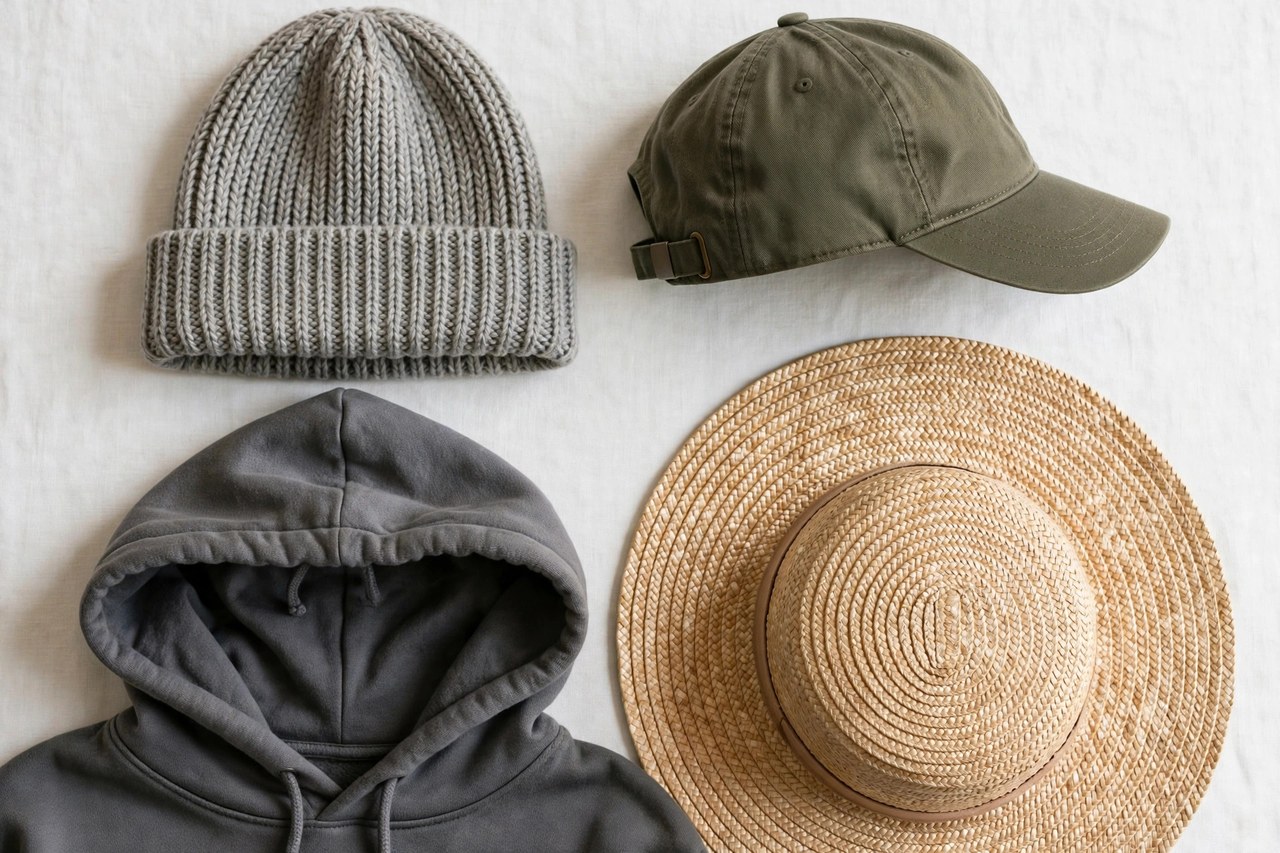
Men's headwear - also called headgear or headdress - is the name given to any element of clothing worn on the head: caps, crowns, hats, helmets, hoods, turbans and head wraps among them. It is worn for a wider set of reasons than any other clothing category: protection from weather and impact, keeping hair contained or tidy, fashion, modesty, religious identity, even orthodontic correction and self-expression. A common example is the hat, which often has a brim all the way around and may sit on the head or be secured in place. This guide is the umbrella - how the whole family divides by job, and where its specialists, hats first among them, get their own full guides. This guide is built around the questions buyers actually ask: which style, which size, which fabric, and what will it look like after a year of real use - answered in order, with the trade-offs stated plainly.
Styles and Construction
Sort headwear by the job it does. Protection writes the largest chapter: sun hats and caps shade, knit hats and balaclavas insulate, rain hats shed water, and helmets - cycle, riding, work and sport - are safety equipment bought to a standard, never to a style. Containment is the second job: surgical caps, chef's hats, swim caps and hair nets keep hair where a workplace or a pool requires it, and the surgical caps guide in this section covers the medical case. Identity is the third: uniform caps, religious coverings and ceremonial pieces say who the wearer is, and their rules belong to their institutions. Fashion is the fourth, and it borrows from all the others - yesterday's work cap and flight helmet are today's street styles.
Accessories reward material honesty: solid metal over plated base metal, full-grain leather over bonded scraps, stitching over glue wherever fabric or hide is joined. Work every moving part through its full travel before paying - clasps, hinges, springs, adjusters - because small hardware fails before large materials do. And budget the care with the purchase: conditioner, the right cloth, a dry drawer; an accessory you can maintain will outlast a finer one you cannot.
Fit and Sizing
Headwear fit is job fit. A fashion cap or hat follows head circumference, measured where the band will sit; a knit hat should grip without a headache line and cover the ears it was bought to warm; a helmet fits to its own discipline - level, snug with the strap adjusted, the maker's size chart obeyed exactly, and replaced after any impact, because a crashed helmet has spent its protection even when it looks unmarked. Containment headwear is fitted by coverage: hair fully held, no escapes at the nape. Across the family, comfort over hours is the honest test - headwear is worn on the most sensitive real estate you own, and a small pressure point at minute five is a headache at hour five.
Accessories have exact fits and exact measures: belt length to the middle hole of a belt you own, hat size as head circumference, a watch case within the wrist's width. Makers' accessory charts vary more than apparel charts, so measure and use the chart rather than ordering a habitual letter - ninety seconds with a tape prevents the most avoidable returns in menswear.
Wearing and Care
Care follows material and mission. Knits wash cool and dry flat; caps keep their brims' shape washed gently and dried over a form or a rolled towel, never machine-dried into a curl; hats follow the hats guide's brim-and-stand discipline. Helmets are cleaned with mild soap only - solvents attack the foam that protects you - stored out of sun and heat, and retired by their maker's date or after a fall, whichever comes first. Surgical caps and other washable containment pieces launder hot by their workplace's rules. Headwear works at the boundary between you and the weather, the workplace and the road; keep it clean, keep it shaped, and replace the safety pieces on schedule, not on sentiment.
Store accessories deliberately: leather away from sun and plastic, metal dry, belts rolled or hung by the buckle rather than folded at the same crease forever. Condition leather a few times a year, polish metal with the cloth meant for its finish, and repair hardware early - a loose screw today is a lost cufflink or a failed clasp next month. Rotate daily pieces in pairs and both will outlast a single workhorse.
Common Questions
What counts as headwear?
Any element of clothing worn on the head: caps, crowns, hats, helmets, hoods, turbans, head wraps and more. The purposes are as various as the pieces - protection against the elements or impact, keeping hair contained or tidy, fashion, modesty, religious identity, orthodontic correction and self-expression. A hood counts, as one of this guide's own links notes - which makes the hooded sweatshirt a piece of headwear with a sweatshirt attached.
What is the difference between headwear, headgear and headdress?
In ordinary use, nothing practical: headgear, headwear and headdress are three names for the same family of head-worn clothing. Headdress carries a ceremonial flavor, headgear a functional one (it is the word safety standards prefer), and headwear is the fashion industry's general term - and the one this directory uses for the umbrella guide, with hats and the other specialists given their own pages below it.
How should a men's helmet or cap be fitted?
By its job's own standard. A cap follows your head circumference, measured where the band sits, snug without temple pressure. A helmet is stricter: level on the head, snug all round with no rocking, the chin strap adjusted so the helmet cannot roll off, sized by the maker's chart rather than habit - and replaced after any impact and at the maker's retirement date, because its protective foam is a single-use and aging material even when the shell looks perfect.
More in Men's Clothes Guide H
Headwear, Defined
Headgear, headwear or headdress is the name given to any element of clothing which is worn on one’s head, used for a variety of reasons including protection, keeping hair contained or tidy, fashion, modesty, religious identity, orthodontic correction, and self-expression. Styles include caps, crowns, hats, helmets, hoods, turbans and head wraps. A common example of headwear for men would be hats: hats often have a brim all the way around the rim, and may be either placed on the head or secured with hat-pins pushed through the hat and the hair. The formal man’s black silk top hat was formerly an indispensable portion of the suit; women’s hats attained a fantastic number of shapes, from immense confections to a few bits of cloth piled on top of the head; and the hat as an article of formal wear has fallen out of fashion, though some kinds of hats other than baseball caps live on in young people’s subcultural fashions.
Looking for Men's Clothing Stores?
This guide explains men's headwear. To browse where to buy, visit our men's clothing store directory, where you can find retailers that carry them.