Men's Cashmere Apparel Guide
Men's cashmere apparel is the whole cashmere wardrobe viewed at once: every garment made from the fine undercoat fiber of the cashmere goat - sweaters above all, but also coats, suits, scarves, hats, pants and loungewear. This page is the family's map: what cashmere is, how its quality is graded, and which garment deserves your money first - with each garment's own full guide linked below.
Shop Men's Cashmere Apparel Now
Shop Men's Cashmere Apparel on Amazon Shop Men's Cashmere Apparel on eBayThe Amazon and eBay links on this page are affiliate links. If you make a purchase through them, Apparel Search may earn a commission.
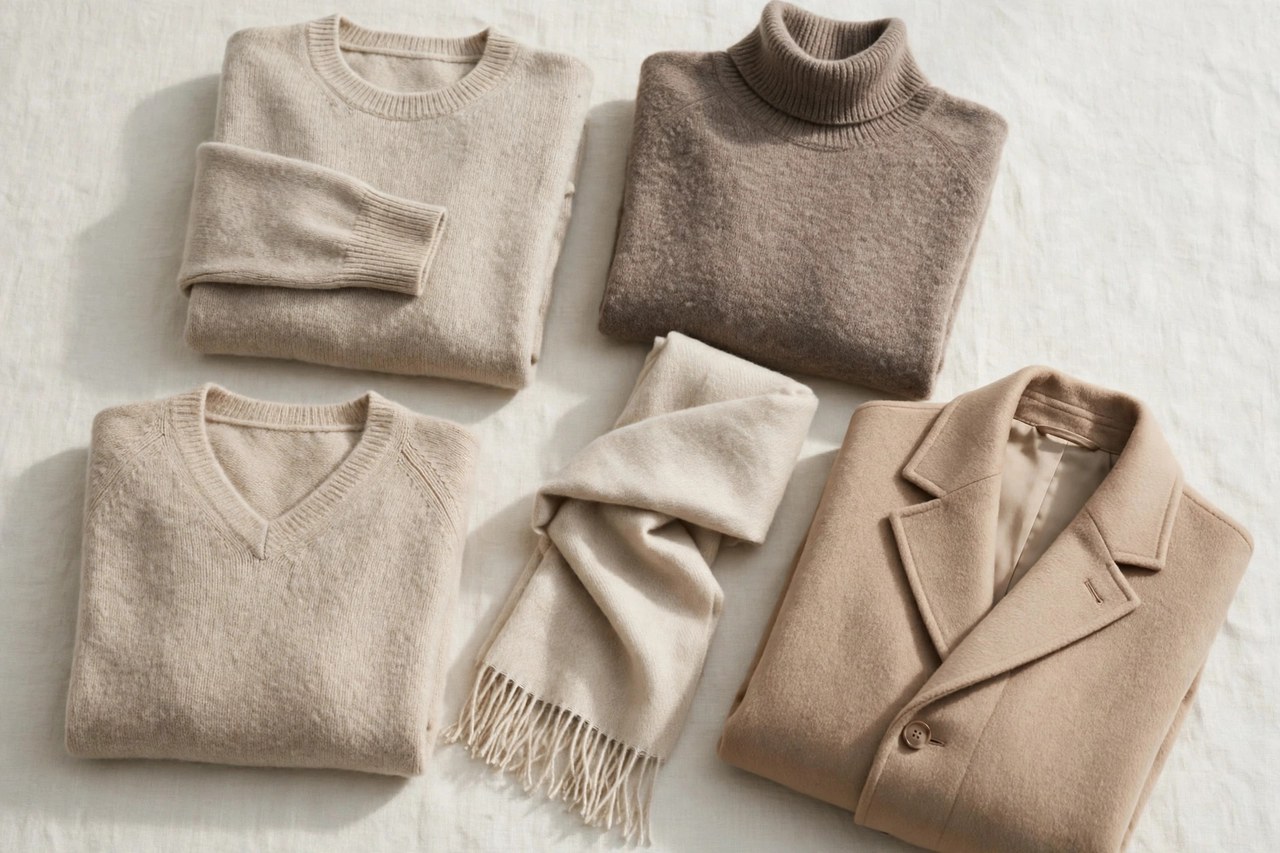
Men's cashmere apparel is the whole cashmere wardrobe viewed at once: every garment made from the fine undercoat fiber of the cashmere goat - sweaters above all, but also coats, suits, scarves, hats, pants and loungewear. This page is the family's map: what cashmere is, how its quality is graded, and which garment deserves your money first - with each garment's own full guide linked below. This guide covers the styles worth knowing, the fit points that decide comfort, the fabrics and construction that separate a good buy from a regret, and the simple care that makes the garment last.
Styles and Construction
Cashmere quality runs on two numbers labels rarely print: fiber diameter (fine cashmere averages 15-16 microns; coarser fiber is scratchier and weaker) and staple length (long fibers, 36mm and up, spin stronger yarn that pills less). Price spreads so widely because both numbers vary invisibly - two sweaters can share a label and share nothing else. Ply (strands per yarn) and gauge (stitches per inch) then translate fiber into garment: a 4-ply sweater is a winter object, a 1-ply fine-gauge knit a layering one. Buy the fiber's evidence: dense, springy knitting, even color, and a hand that feels dry-soft rather than slippery-soft with silicone finishing.
Judge knitwear by gauge, ply and finishing rather than by softness in the shop, because every knit feels kind on day one. Gauge counts stitches per inch - finer gauges drape and layer, coarser gauges insulate and read casual. Ply counts the strands twisted into the yarn: more plies mean more warmth, roundness and price. Fully-fashioned shaping, knitted in rather than cut and sewn, marks better garments, and linked seams at the shoulders and neck lie flatter and last longer than overlocked ones.
Fit and Sizing
Fit cashmere by garment, using each guide below - but the family's rule is consistent: cashmere drapes and relaxes, so buy the fit that skims on day one rather than the fit that clings, and never size down counting on the knit to hold you in. Shoulders and necklines show quality first in wear: they should sit clean without being sized into submission.
Fit knitwear by the body, not the shoulders alone: a sweater should skim rather than cling, with ease for a shirt beneath at the chest, sleeves ending at the wrist bone, and body length covering the waistband without pooling. Knits relax with wear - a slightly firm new fit is often the right long-term fit - but ribbed cuffs and hems should recover when stretched, and a neckline should sit flat against the base of the neck, neither gaping nor strangling.
Wearing and Care
Care is the family's shared covenant, detailed per garment below: gentle cool washing or trusted cleaning, flat drying, folded storage with moth protection, rest between wears, and depilling as maintenance rather than alarm. Cashmere kept this way is famously long-lived; cashmere washed hot and hung is a season's purchase at a decade's price.
Knitwear care is gentle by default: wash cool by hand or on a wool cycle with knitwear detergent, never wring, roll in a towel to lift water, and dry flat on a mesh or towel, reshaped to its measurements. Fold for storage - hangers stretch shoulders into points - with cedar or lavender against moths, and rest a sweater a day between wears so its fibers recover their loft. Depill with a comb or electric shaver; pilling is loose fiber migrating, not the garment failing.
Common Questions
What makes cashmere so expensive?
Supply and sorting: a cashmere goat yields only about 150 grams of usable down a year - several goats per sweater - combed by hand in spring, then sorted by fineness and length, with the finest, longest grades scarce. The fiber's warmth-to-weight and softness are real, but the price begins in that arithmetic, not in branding.
Is more ply always better in cashmere?
No - ply is purpose, not quality. More plies make a warmer, heavier, more substantial garment; fewer make a finer, lighter layer. A superb 1-ply sweater beats a poor 4-ply one. Judge fiber length and knitting density first, then choose the ply that matches the garment's season and role.
How can you judge cashmere quality in a shop?
Three tests: stretch a hidden patch of knit and watch it spring back (dead stretch means short fiber); rub the surface briskly - quality cashmere pills slightly with long fibers, poor cashmere sheds short fuzz immediately; and hold the garment to the light for even density. Price far below the market's floor is itself evidence about fiber length.
More in Men's Clothes Guide C
More to Explore on Apparel Search
Looking for Men's Clothing Stores?
This guide explains men's cashmere apparel. To browse where to buy, visit our men's clothing store directory, where you can find retailers that carry them.