Men's Cashmere Crewneck Sweaters Guide
Men's cashmere crewneck sweaters are the fiber's flagship garment: a pullover with a round neckline at the base of the neck, knitted in cashmere at gauges from fine layering weights to chunky multi-ply knits. The crewneck is the sweater a man wears most - over a T-shirt on its own, under a jacket as insulation, across three seasons - and in cashmere it becomes the rare garment that is simultaneously the warmest, lightest and most comfortable option for its slot.
Shop Men's Cashmere Crewneck Sweaters Now
Shop Men's Cashmere Crewneck Sweaters on Amazon Shop Men's Cashmere Crewneck Sweaters on eBayThe Amazon and eBay links on this page are affiliate links. If you make a purchase through them, Apparel Search may earn a commission.
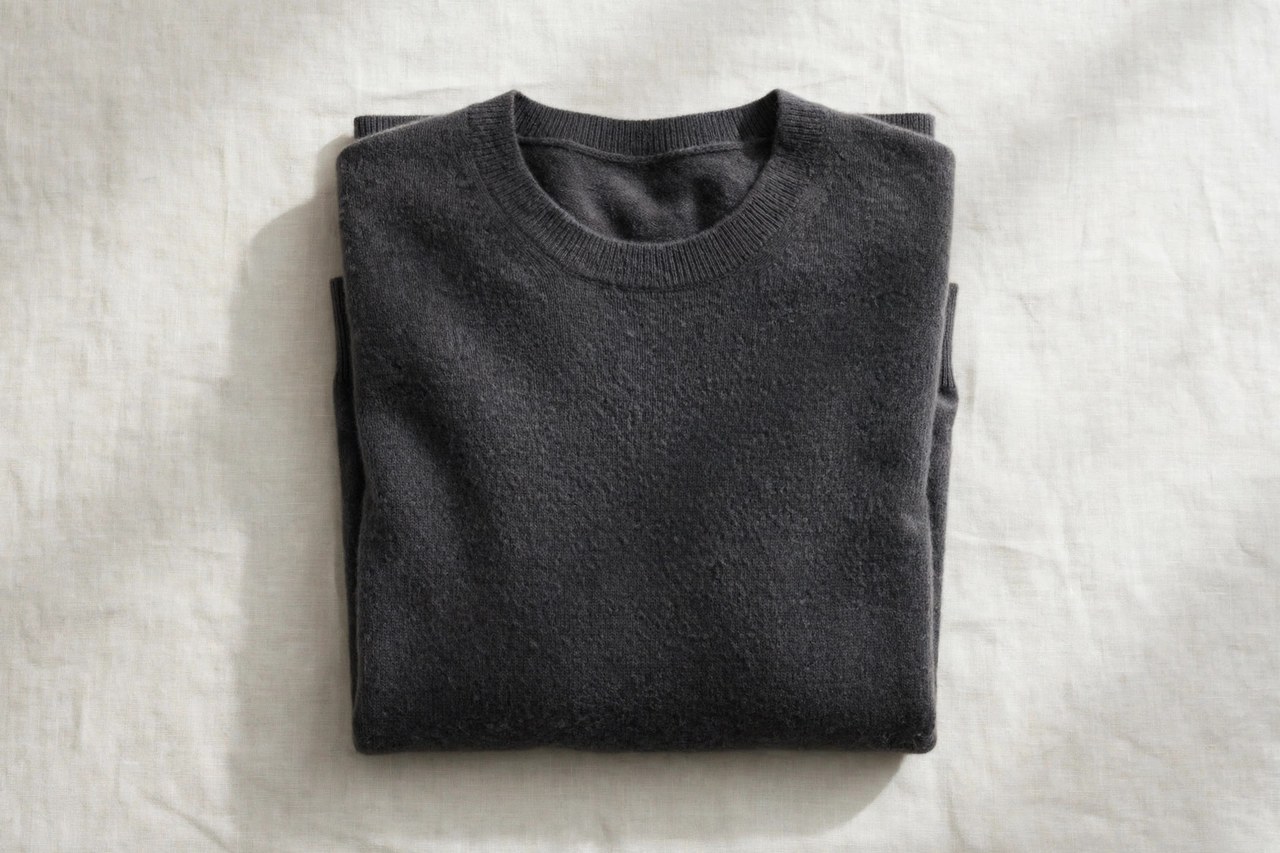
Men's cashmere crewneck sweaters are the fiber's flagship garment: a pullover with a round neckline at the base of the neck, knitted in cashmere at gauges from fine layering weights to chunky multi-ply knits. The crewneck is the sweater a man wears most - over a T-shirt on its own, under a jacket as insulation, across three seasons - and in cashmere it becomes the rare garment that is simultaneously the warmest, lightest and most comfortable option for its slot. This guide covers the styles worth knowing, the fit points that decide comfort, the fabrics and construction that separate a good buy from a regret, and the simple care that makes the garment last.
Styles and Construction
Choose by ply and gauge for the job: 1-2 ply fine-gauge crews layer under tailoring and serve spring and autumn; 4-ply and above are standalone winter sweaters. Fully-fashioned construction - panels shaped on the machine, seams linked by hand - marks the quality tier in fit and longevity, against cut-and-sew knits whose armholes and sides are overlocked. The neckband deserves inspection: a well-made crew sits flat at the base of the neck and recovers after the head passes through, because that passage is the garment's daily stress test.
Judge knitwear by gauge, ply and finishing rather than by softness in the shop, because every knit feels kind on day one. Gauge counts stitches per inch - finer gauges drape and layer, coarser gauges insulate and read casual. Ply counts the strands twisted into the yarn: more plies mean more warmth, roundness and price. Fully-fashioned shaping, knitted in rather than cut and sewn, marks better garments, and linked seams at the shoulders and neck lie flatter and last longer than overlocked ones.
Fit and Sizing
Fit the crewneck to skim the torso over its intended underlayer, with sleeves to the wrist bone and the hem covering the waistband without pooling. Cashmere relaxes - a slightly firm first fit settles into the right one - but the neckline should be right immediately, because necklines do not improve. Under a jacket, pick the finer gauges and let the jacket carry the silhouette; worn solo, a mid-weight crew can carry a little more ease.
Fit knitwear by the body, not the shoulders alone: a sweater should skim rather than cling, with ease for a shirt beneath at the chest, sleeves ending at the wrist bone, and body length covering the waistband without pooling. Knits relax with wear - a slightly firm new fit is often the right long-term fit - but ribbed cuffs and hems should recover when stretched, and a neckline should sit flat against the base of the neck, neither gaping nor strangling.
Wearing and Care
Wash cool and gently (hand or wool cycle, knitwear detergent), dry flat to the garment's own measurements, fold with moth protection, and rest a day between wears so the knit recovers its loft. Depill the underarm and side zones as they appear - early pills are the short fibers leaving, and their departure is the sweater settling, not failing.
Knitwear care is gentle by default: wash cool by hand or on a wool cycle with knitwear detergent, never wring, roll in a towel to lift water, and dry flat on a mesh or towel, reshaped to its measurements. Fold for storage - hangers stretch shoulders into points - with cedar or lavender against moths, and rest a sweater a day between wears so its fibers recover their loft. Depill with a comb or electric shaver; pilling is loose fiber migrating, not the garment failing.
Common Questions
What ply cashmere crewneck should you buy?
For a first and most-worn sweater, 2-ply is the versatility point: warm under a coat, fine enough over a shirt, light enough for spring evenings. Go 1-ply for layering under close tailoring, 4-ply and up when the sweater replaces a jacket in deep winter. Climate and wardrobe role decide - ply is specification, not rank.
Why does cashmere pill, and is it a bad sign?
Pilling is short fibers working loose and tangling at friction points, and a small amount in the first wears is normal even in fine cashmere - it is the short-fiber fraction leaving. Quality long-staple cashmere pills less and stops sooner. Persistent heavy pilling signals short fiber and a shorter life; a cashmere comb or electric shaver keeps the surface clean meanwhile.
Can a cashmere crewneck be worn against the skin?
It is one of the fiber's pleasures - fine cashmere is smoother than most wools and most men wear it over a T-shirt mainly to stretch the wash interval, not for comfort. Worn on skin it needs washing more often; worn over a tee it needs less. Either is correct; the laundry arithmetic is yours to run.
More in Men's Clothes Guide C
Looking for Men's Clothing Stores?
This guide explains men's cashmere crewneck sweaters. To browse where to buy, visit our men's clothing store directory, where you can find retailers that carry them.