Men's Cardigan Sweaters Guide
A men's cardigan sweater is a knitted sweater that opens at the front and closes with buttons or a zip - the sweater as jacket, named for the Earl of Cardigan of Crimean War fame. In this guide it is the family page: the styles, necklines and weights of the whole cardigan clan. Its most famous member, the cable knit cardigan, has its own page in this letter; this one covers everything from the fine-gauge office cardigan to the heavy shawl-collar house sweater.
Shop Men's Cardigan Sweaters Now
Shop Men's Cardigan Sweaters on Amazon Shop Men's Cardigan Sweaters on eBayThe Amazon and eBay links on this page are affiliate links. If you make a purchase through them, Apparel Search may earn a commission.
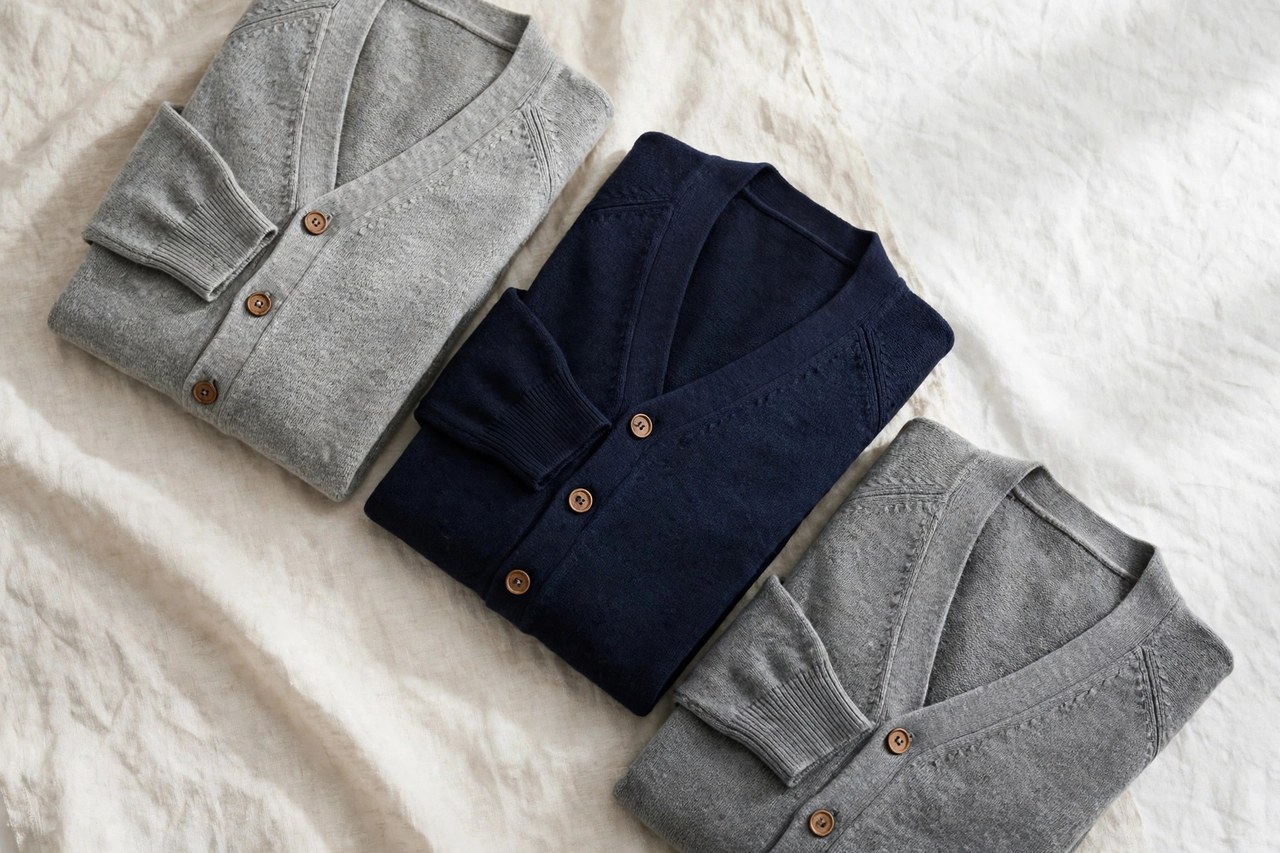
A men's cardigan sweater is a knitted sweater that opens at the front and closes with buttons or a zip - the sweater as jacket, named for the Earl of Cardigan of Crimean War fame. In this guide it is the family page: the styles, necklines and weights of the whole cardigan clan. Its most famous member, the cable knit cardigan, has its own page in this letter; this one covers everything from the fine-gauge office cardigan to the heavy shawl-collar house sweater. This guide covers the styles worth knowing, the fit points that decide comfort, the fabrics and construction that separate a good buy from a regret, and the simple care that makes the garment last.
Styles and Construction
The styles divide by weight and neckline. Fine-gauge V-neck cardigans in merino or cotton layer under blazers and over shirts as knitwear's answer to a waistcoat. Mid-weight button cardigans replace a light jacket in shoulder seasons. Heavy shawl-collar and grandpa cardigans - ribbed, pocketed, sometimes belted in vintage cuts - are home and country wear. Zip-front cardigans trade the button ritual for one-handed ease. Closures matter: buttons on a knitted band need a firmly finished placket, and leather or horn buttons outlast plastic ones that crack in the wash.
Judge knitwear by gauge, ply and finishing rather than by softness in the shop, because every knit feels kind on day one. Gauge counts stitches per inch - finer gauges drape and layer, coarser gauges insulate and read casual. Ply counts the strands twisted into the yarn: more plies mean more warmth, roundness and price. Fully-fashioned shaping, knitted in rather than cut and sewn, marks better garments, and linked seams at the shoulders and neck lie flatter and last longer than overlocked ones.
Fit and Sizing
Fit a cardigan by the buttoned chest: the fronts should meet with the buttons in their holes and no strain diamonds between them. Shoulders sit at the shoulder, body length covers the waistband, and the bottom button is conventionally left open. Under a jacket, choose the fine gauges and the slimmer cuts; worn as outerwear, a cardigan can carry a little ease. A cardigan that fits like a shirt is a shirt with ambitions - size for the layer beneath.
Fit knitwear by the body, not the shoulders alone: a sweater should skim rather than cling, with ease for a shirt beneath at the chest, sleeves ending at the wrist bone, and body length covering the waistband without pooling. Knits relax with wear - a slightly firm new fit is often the right long-term fit - but ribbed cuffs and hems should recover when stretched, and a neckline should sit flat against the base of the neck, neither gaping nor strangling.
Wearing and Care
Button bands ripple if dried carelessly: reshape them flat after every wash and dry the sweater flat, buttoned, so the fronts dry at equal length. Fold for storage, keep buttons fastened in the drawer so the fronts rest aligned, and check button stitching each season - a lost cardigan button mid-front is the one that cannot be hidden. Match a spare from the inside seam allowance if the maker sewed one in.
Knitwear care is gentle by default: wash cool by hand or on a wool cycle with knitwear detergent, never wring, roll in a towel to lift water, and dry flat on a mesh or towel, reshaped to its measurements. Fold for storage - hangers stretch shoulders into points - with cedar or lavender against moths, and rest a sweater a day between wears so its fibers recover their loft. Depill with a comb or electric shaver; pilling is loose fiber migrating, not the garment failing.
Common Questions
What is the difference between a cardigan and a sweater?
A cardigan is the open-front member of the sweater family: it fastens with buttons or a zip rather than pulling over the head. Everything else - yarn, gauge, pattern - is shared with pullovers. The opening is what makes it a layer you can put on, take off and moderate temperature with through a day.
How do you wear a cardigan without looking dated?
Fit and contrast do it: a slim, fine-gauge cardigan buttoned over a plain shirt or crewneck, sleeves pushed slightly, reads modern, while a baggy heavy cardigan worn open over a graphic tee reads costume. Leave the last button undone, keep the under-layer simple, and let one texture - not three - lead.
Zip or buttons on a cardigan?
Buttons suit finer gauges and dressed wear and can be replaced, resewn and adjusted; zips suit casual and heavier cardigans and close faster with cold hands. A two-way zip is the practical premium - it lets the hem open when you sit. Either fails the same way if the placket is flimsy, so judge the band, not just the closure.
More in Men's Clothes Guide C
Looking for Men's Clothing Stores?
This guide explains men's cardigan sweaters. To browse where to buy, visit our men's clothing store directory, where you can find retailers that carry them.