Men's Cable Knit Cardigan Guide
A men's cable knit cardigan is a button-front sweater whose front panels and sleeves are patterned with raised rope-like cables - vertical ropes of stitches that cross over one another to imitate twisted rope. The cable pattern is not decoration printed on the surface; it is knitted into the fabric itself, which is why a real cable cardigan has weight, texture and shadow that a printed imitation never achieves.
Shop Men's Cable Knit Cardigan Now
Shop Men's Cable Knit Cardigan on Amazon Shop Men's Cable Knit Cardigan on eBayThe Amazon and eBay links on this page are affiliate links. If you make a purchase through them, Apparel Search may earn a commission.
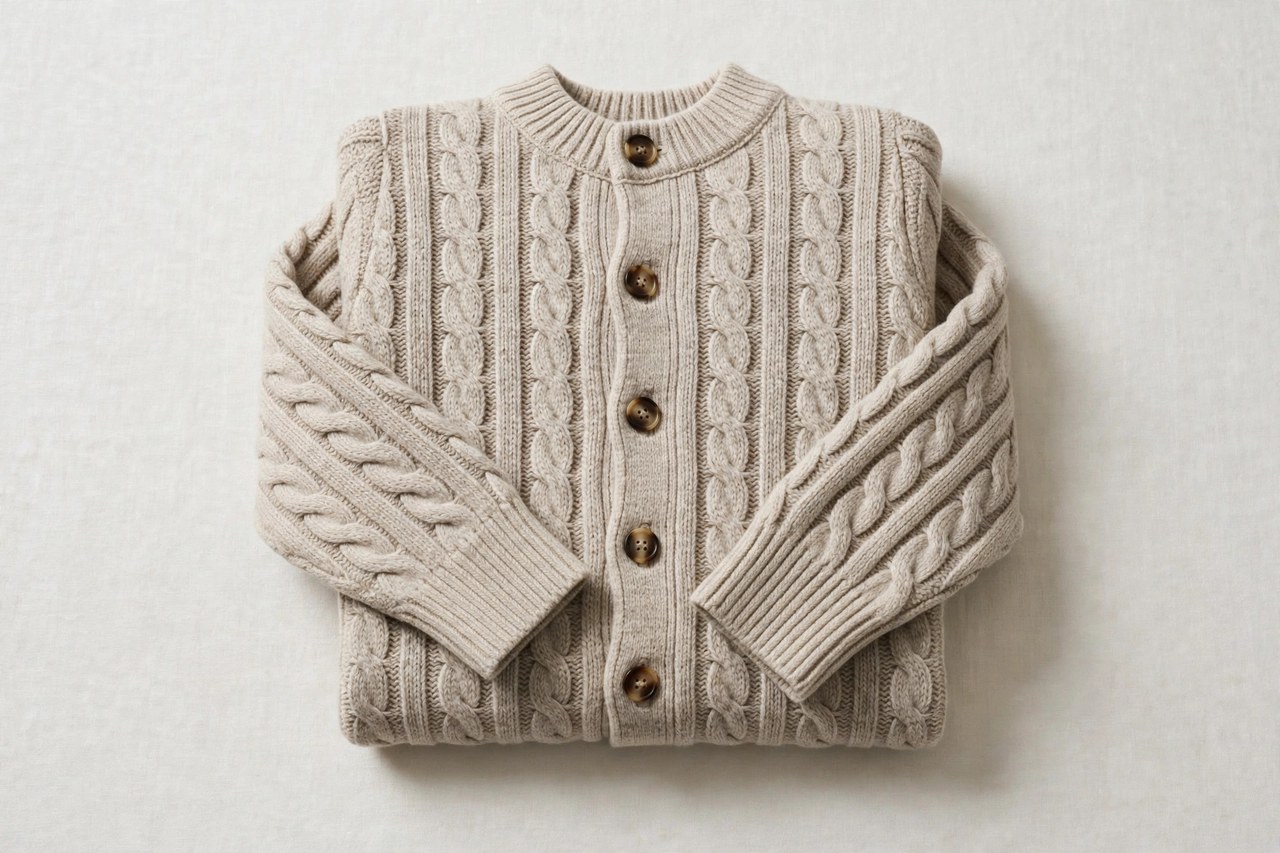
A men's cable knit cardigan is a button-front sweater whose front panels and sleeves are patterned with raised rope-like cables - vertical ropes of stitches that cross over one another to imitate twisted rope. The cable pattern is not decoration printed on the surface; it is knitted into the fabric itself, which is why a real cable cardigan has weight, texture and shadow that a printed imitation never achieves. This guide explains what to look for, how the sizing actually works, which fabrics and constructions earn their price, and how to care for the garment so it keeps doing its job season after season.
Styles and Construction
Cables are worked by holding stitches on a cable needle while their neighbors are knitted, then knitting the held stitches so the columns cross. Classic layouts run a wide central rope flanked by narrower cables and textured diamonds or moss stitch. Yarns divide by purpose: wool and wool blends give the spring and definition the pattern needs, cotton cables are crisper and cooler but heavier, and acrylic cables cost least and pill fastest. Buttons are traditionally leather football buttons or horn; shawl collars and patch pockets mark the country end, clean V fronts the city end.
Judge knitwear by gauge, ply and finishing rather than by softness in the shop, because every knit feels kind on day one. Gauge counts stitches per inch - finer gauges drape and layer, coarser gauges insulate and read casual. Ply counts the strands twisted into the yarn: more plies mean more warmth, roundness and price. Fully-fashioned shaping, knitted in rather than cut and sewn, marks better garments, and linked seams at the shoulders and neck lie flatter and last longer than overlocked ones.
Fit and Sizing
A cardigan should button to the chest without the fronts pulling into X-wrinkles, and the cable columns should run straight down the body rather than spiraling - spiral means the size is twisting on you. Sleeves end at the wrist with the cuff rib holding position, and length should cover the waistband. Leave the bottom button undone as convention allows, and size for the shirt beneath: a cardigan is a layer, not a compression garment.
Fit knitwear by the body, not the shoulders alone: a sweater should skim rather than cling, with ease for a shirt beneath at the chest, sleeves ending at the wrist bone, and body length covering the waistband without pooling. Knits relax with wear - a slightly firm new fit is often the right long-term fit - but ribbed cuffs and hems should recover when stretched, and a neckline should sit flat against the base of the neck, neither gaping nor strangling.
Wearing and Care
Cables catch and snag more readily than plain knitting, so keep the cardigan away from rough straps and Velcro, and pull a snagged loop through to the inside rather than cutting it. Wash and dry flat by the knitwear rules, store folded, and re-block the fronts after washing so the button band - the part that carries the garment's whole structure - dries straight.
Knitwear care is gentle by default: wash cool by hand or on a wool cycle with knitwear detergent, never wring, roll in a towel to lift water, and dry flat on a mesh or towel, reshaped to its measurements. Fold for storage - hangers stretch shoulders into points - with cedar or lavender against moths, and rest a sweater a day between wears so its fibers recover their loft. Depill with a comb or electric shaver; pilling is loose fiber migrating, not the garment failing.
Cable patterns reach their fullest expression in the Irish Aran sweater, where cables combine with diamonds, zigzags and honeycomb in dense traditional patterning.
Common Questions
How can you tell a real cable knit from a printed imitation?
Turn it over and touch it: a real cable is raised, rope-like and identical in structure on the reverse, because the pattern is knitted into the fabric. A print is flat, sits on the surface, and the reverse shows plain jersey. Weight is the second tell - genuine cable knitting consumes far more yarn than the flat cloth it covers.
What do you wear under a cable knit cardigan?
An oxford or flannel shirt is the classic base, a plain crewneck t-shirt the casual one, and a turtleneck the cold-weather one. Keep the under-layer smoother than the cardigan - the cables supply all the texture the outfit needs - and let the cardigan's color contrast gently with what is beneath it.
Do cable knit cardigans stretch out?
All knits relax, and heavy cotton cables relax most because the yarn itself has little spring. Wool-rich cables recover best when rested a day between wears and stored folded rather than hung. If a cuff or button band has stretched, a careful cool re-block - washing, reshaping to size and drying flat - restores most of the original fit.
More in Men's Clothes Guide C
The Cable Knit, Illustrated
A close study of cable-knitted cloth, shown in the photos below, lets you see the rope structure rather than imagine it. The cardigan also belongs to a wider family, with men’s sweaters, cardigan sweaters and cotton sweaters.
Photos

More to Explore on Apparel Search
Looking for Men's Clothing Stores?
This guide explains men's cable knit cardigan. To browse where to buy, visit our men's clothing store directory, where you can find retailers that carry them.