Men's Cotton Sweaters Guide
Men's cotton sweaters are pullovers and knits in cotton yarn - the cool-weather knit for men who run warm, live in mild climates, or cannot abide wool against their skin. A cotton sweater does not insulate like wool (cotton's fiber holds little loft), and that is its role: it is the layer for spring, autumn, summer evenings and heated interiors, where a wool sweater would be a sentence and a cotton one is a comfort.
Shop Men's Cotton Sweaters Now
Shop Men's Cotton Sweaters on Amazon Shop Men's Cotton Sweaters on eBayThe Amazon and eBay links on this page are affiliate links. If you make a purchase through them, Apparel Search may earn a commission.
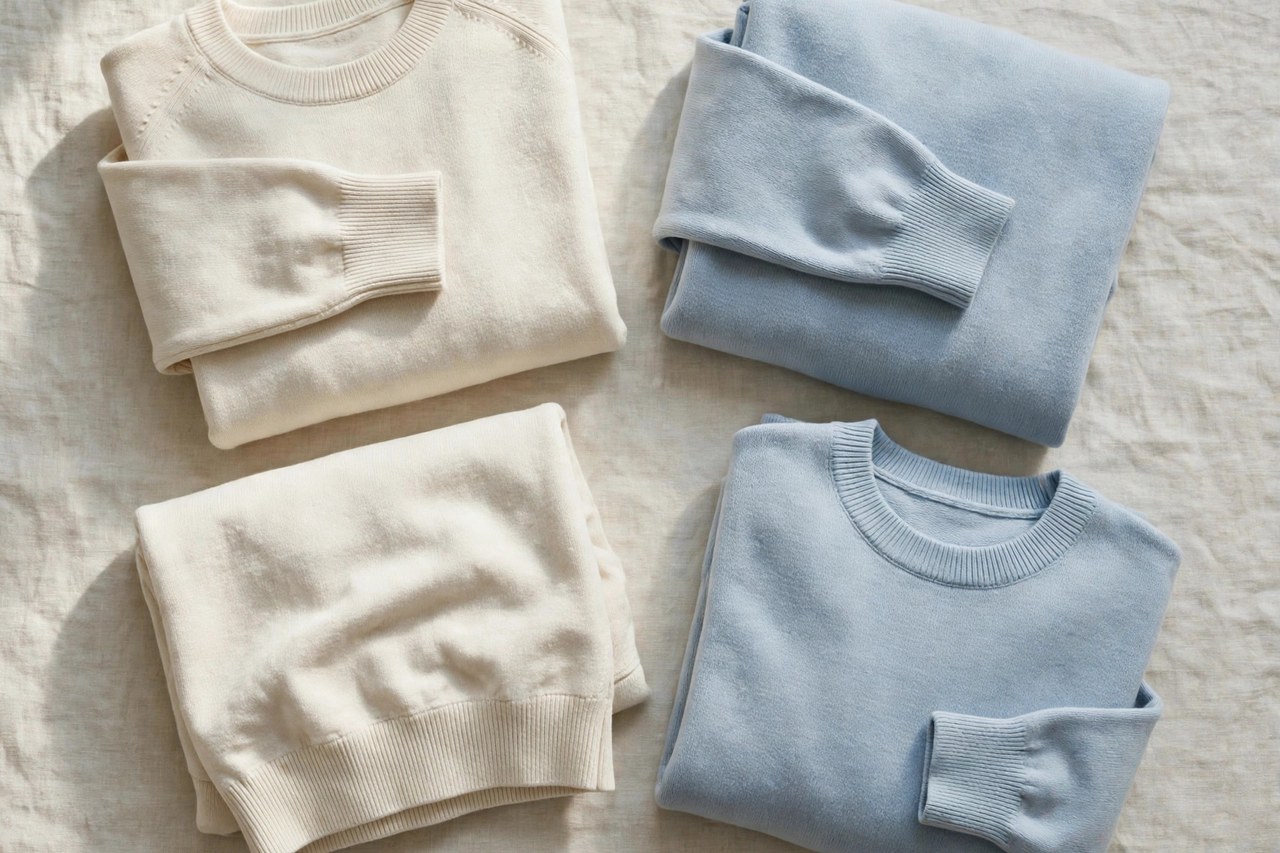
Men's cotton sweaters are pullovers and knits in cotton yarn - the cool-weather knit for men who run warm, live in mild climates, or cannot abide wool against their skin. A cotton sweater does not insulate like wool (cotton's fiber holds little loft), and that is its role: it is the layer for spring, autumn, summer evenings and heated interiors, where a wool sweater would be a sentence and a cotton one is a comfort. This guide covers the styles worth knowing, the fit points that decide comfort, the fabrics and construction that separate a good buy from a regret, and the simple care that makes the garment last.
Styles and Construction
Cotton knits have their own character: they knit up crisp, hold stitch definition beautifully (cables and textures show at their best), take dye in clean bright colors, and hang with a dry, cool hand. Their known behaviors are weight - a cotton sweater is heavier than the same knit in wool - and relaxation, since cotton yarn has no spring: better makes knit tighter, add a core of nylon or a whisper of elastane in ribs, and shape garments fully-fashioned so the fit is knitted in rather than hoped for. Crew and V necks dominate; cotton cardigans live with the cardigan page, and cotton rolls and shawl collars serve the coastal wardrobe.
Judge knitwear by gauge, ply and finishing rather than by softness in the shop, because every knit feels kind on day one. Gauge counts stitches per inch - finer gauges drape and layer, coarser gauges insulate and read casual. Ply counts the strands twisted into the yarn: more plies mean more warmth, roundness and price. Fully-fashioned shaping, knitted in rather than cut and sewn, marks better garments, and linked seams at the shoulders and neck lie flatter and last longer than overlocked ones.
Fit and Sizing
Fit a cotton sweater knowing it will relax: buy the fit precise, almost neat, and let the first wears ease it into its true, slightly softer line. Sleeves especially grow - a cuff at the wrist bone on day one is a cuff over the thumb by season two if bought long. Body length should cover the waistband exactly, because a relaxed cotton hem that started long ends as a skirt. Men between sizes usually take the smaller in cotton knits, the reverse of the wool habit.
Fit knitwear by the body, not the shoulders alone: a sweater should skim rather than cling, with ease for a shirt beneath at the chest, sleeves ending at the wrist bone, and body length covering the waistband without pooling. Knits relax with wear - a slightly firm new fit is often the right long-term fit - but ribbed cuffs and hems should recover when stretched, and a neckline should sit flat against the base of the neck, neither gaping nor strangling.
Wearing and Care
Cotton sweaters wash more forgivingly than wool - cool machine cycles are usually fine - but they must dry flat, because a wet cotton knit is the heaviest garment in the laundry and hanging stretches it cruelly. Fold for storage (moths ignore cotton, one of its quiet virtues), expect gradual color softening, and re-block to measurements after washing: the sweater will take the shape you give it, every time.
Knitwear care is gentle by default: wash cool by hand or on a wool cycle with knitwear detergent, never wring, roll in a towel to lift water, and dry flat on a mesh or towel, reshaped to its measurements. Fold for storage - hangers stretch shoulders into points - with cedar or lavender against moths, and rest a sweater a day between wears so its fibers recover their loft. Depill with a comb or electric shaver; pilling is loose fiber migrating, not the garment failing.
Common Questions
When is a cotton sweater better than a wool one?
In mild weather, heated rooms, and against sensitive skin: cotton's low insulation is the point in shoulder seasons and summer evenings, and men who find wool itchy get a true sweater's look with none of the prickle. In real cold, wool and cashmere win outright - choose the fiber for the thermometer, not the habit.
Do cotton sweaters stretch out?
Yes, more than any other knit fiber, because cotton yarn has almost no elastic recovery. Tight knitting, fully-fashioned shaping, reinforced ribs and flat drying all fight it, and quality cotton sweaters manage it well. The buyer's part is fit discipline: buy neat, never long, and let the garment relax into - not past - its fit.
How do you wash a cotton sweater?
Cool water, gentle cycle or hand wash, mild detergent; then roll in a towel, reshape to its measurements and dry flat. The two errors are heat (shrinks and hardens it) and hanging wet (stretches it by its own considerable wet weight). Cotton forgives the machine; it does not forgive the hanger.
More in Men's Clothes Guide C
Looking for Men's Clothing Stores?
This guide explains men's cotton sweaters. To browse where to buy, visit our men's clothing store directory, where you can find retailers that carry them.