Men's Crewneck T-Shirts Guide
Men's crewneck t-shirts are the T-shirt in its original form: a knitted pullover with short sleeves and a round ribbed neckline at the base of the neck. Born as a naval undershirt, standardized by two world wars and unbottled into public dress in the 1950s, the crewneck tee is now the most-worn garment in the world - and the most variable, spanning one-wash wonders and heavyweights built to outlast the jeans they are worn with.
Shop Men's Crewneck T-Shirts Now
Shop Men's Crewneck T-Shirts on Amazon Shop Men's Crewneck T-Shirts on eBayThe Amazon and eBay links on this page are affiliate links. If you make a purchase through them, Apparel Search may earn a commission.
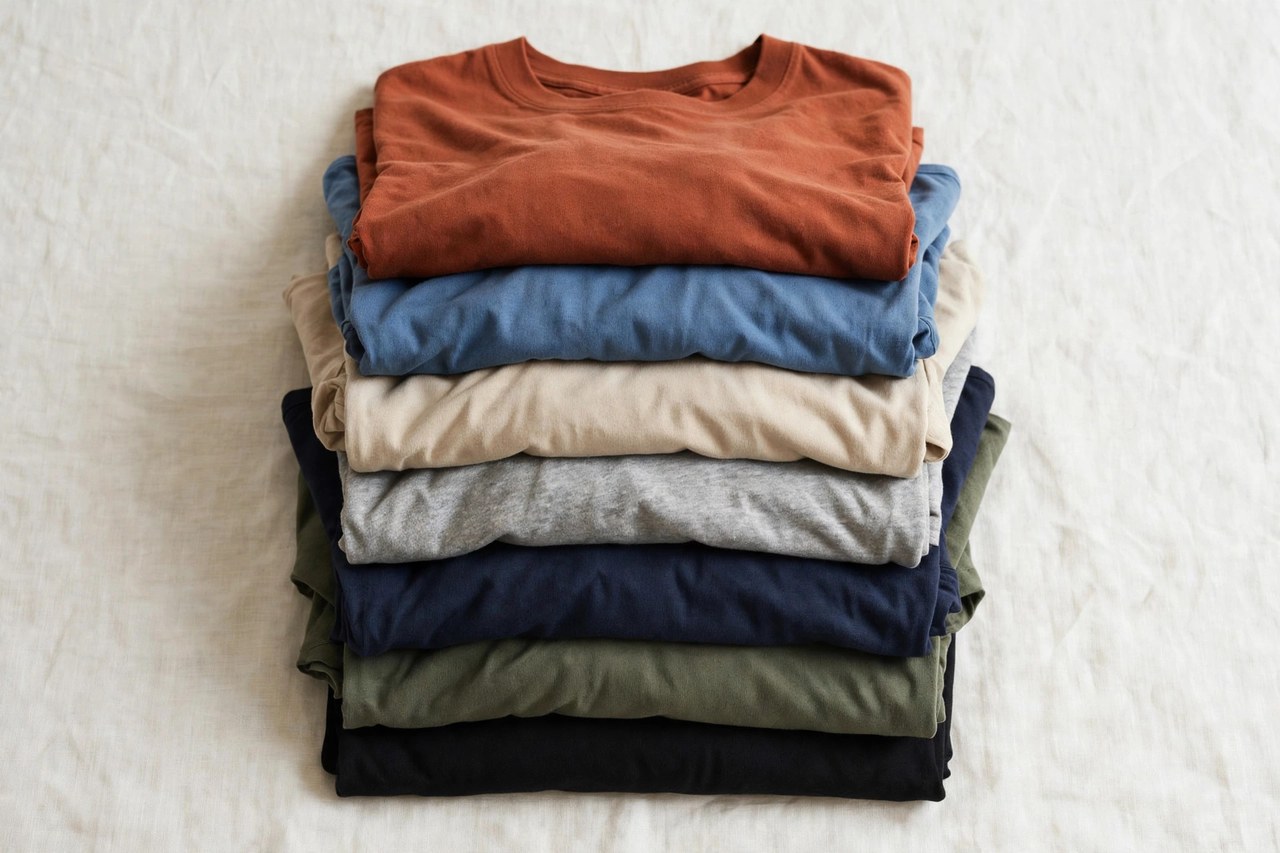
Men's crewneck t-shirts are the T-shirt in its original form: a knitted pullover with short sleeves and a round ribbed neckline at the base of the neck. Born as a naval undershirt, standardized by two world wars and unbottled into public dress in the 1950s, the crewneck tee is now the most-worn garment in the world - and the most variable, spanning one-wash wonders and heavyweights built to outlast the jeans they are worn with. This guide is built around the questions buyers actually ask: which style, which size, which fabric, and what will it look like after a year of real use - answered in order, with the trade-offs stated plainly.
Styles and Construction
Quality is weight, knit and collar. Fabric weight runs from light 120-gram fashion jersey to 220-gram-plus heavyweight cloth that drapes like a garment rather than a layer; ring-spun and long-staple cotton soften the hand, cotton-poly blends hold color and shape, and side-seamed construction hangs straighter than tubular knits in larger sizes. The collar decides the shirt's lifespan - a ribbed band with elastane, properly coverstitched, is the single best predictor. Pocket tees, henley-adjacent crew variations aside, the plain crewneck's whole design is the absence of design, which is why its cloth and cut carry all the information.
A top earns its keep in finishing: seams that hang straight and stay even at eight to twelve stitches per inch, collars and plackets that lie flat after washing, buttons sewn with thread shanks so they sit in their holes without pulling. Hold the cloth to the light - a tight, even weave or knit outwears a loose one at the same labeled weight, and pattern pieces cut on grain keep the garment from twisting around your body by the third wash.
Fit and Sizing
Fit by the modern standard: shoulders at the bone, sleeves ending mid-bicep without gripping, body skimming rather than clinging, hem at mid-fly. The crewneck tee forgives less than any shirt because there is nothing else to look at - too big reads as sleepwear, too small as undershirt. Measure your best tee flat (chest width and length) and buy by those numbers; brands' letters wander, your tape does not. Expect an inch of length shrinkage in pure cotton unless the shirt is pre-shrunk or garment-dyed.
Fit tops shoulders and chest first, because tailors cannot cheaply move either: the shoulder seam ends at the shoulder bone, the chest closes without pulling, and both arms raise without the hem escaping the waistband. Tucked lengths must stay tucked sitting; untucked lengths should end mid-fly. Sleeves are the cheap alteration, shoulders the permanent one - reject a wrong shoulder for any reason, forgive a long sleeve for many.
Wearing and Care
Wash crews cool and inside out - plain tees have no print to protect, but color and collar both benefit - dry low to defend the length, and fold rather than hang to keep shoulders true. Rotate a stable of tees rather than wearing one to death, retire shirts whose collars ripple or whose white has greyed past recovery, and let the heavyweight favorites age: a perfect old crewneck is a wardrobe asset no new purchase replicates.
Launder tops by the label with three defaults: cool or warm water to protect color and trims, dark and printed pieces inside out, and low or line drying, which is the largest single lever on a shirt's lifespan. Fasten buttons and zips before washing to protect the whole load, treat stains before the dryer can set them, and store knits folded so their shoulders keep the shape they were knitted with.
Common Questions
What weight t-shirt is best?
Midweight - roughly 160 to 200 grams per square meter - suits most men most of the year: it drapes as a garment, hides an undershirt's lines, and survives the wash. Lightweight tees suit heat and layering; heavyweight (220+) suits men who wear a tee as the whole outfit and want structure. The heavier the cloth, the more the shirt behaves like its own layer.
Crewneck or V-neck tee?
The crewneck is the default for a reason: it suits more faces and layering situations and carries the classic silhouette. V-necks open the line of the neck and layer invisibly under open collars. The shallow-V is the safe trial; deep V's are a fashion commitment. Most men settle with a drawer of crews and a couple of V's for specific shirts.
Why do t-shirts shrink more in length than width?
Jersey is knitted under tension, and washing releases the lengthwise loops first - the shirt relaxes toward its unstressed shape, which is shorter and slightly wider. Pre-shrunk and garment-dyed shirts have done most of this relaxing before sale. Buying an extra inch of length in pure cotton is the experienced buyer's standard adjustment.
More in Men's Clothes Guide C
Looking for Men's Clothing Stores?
This guide explains men's crewneck t-shirts. To browse where to buy, visit our men's clothing store directory, where you can find retailers that carry them.