Men's Crew Neck Undershirts Guide
Men's crew neck undershirts are the base-layer T: a lightweight, close-fitting undershirt with a round neckline at the base of the neck, worn under shirts to absorb sweat, smooth the outline and protect the outer garment. This guide is strictly about the garment as a product - fabrics, cuts, sizing and care - because an undershirt is an engineered layer: it succeeds when you forget it entirely between putting it on and taking it off.
Shop Men's Crew Neck Undershirts Now
Shop Men's Crew Neck Undershirts on Amazon Shop Men's Crew Neck Undershirts on eBayThe Amazon and eBay links on this page are affiliate links. If you make a purchase through them, Apparel Search may earn a commission.
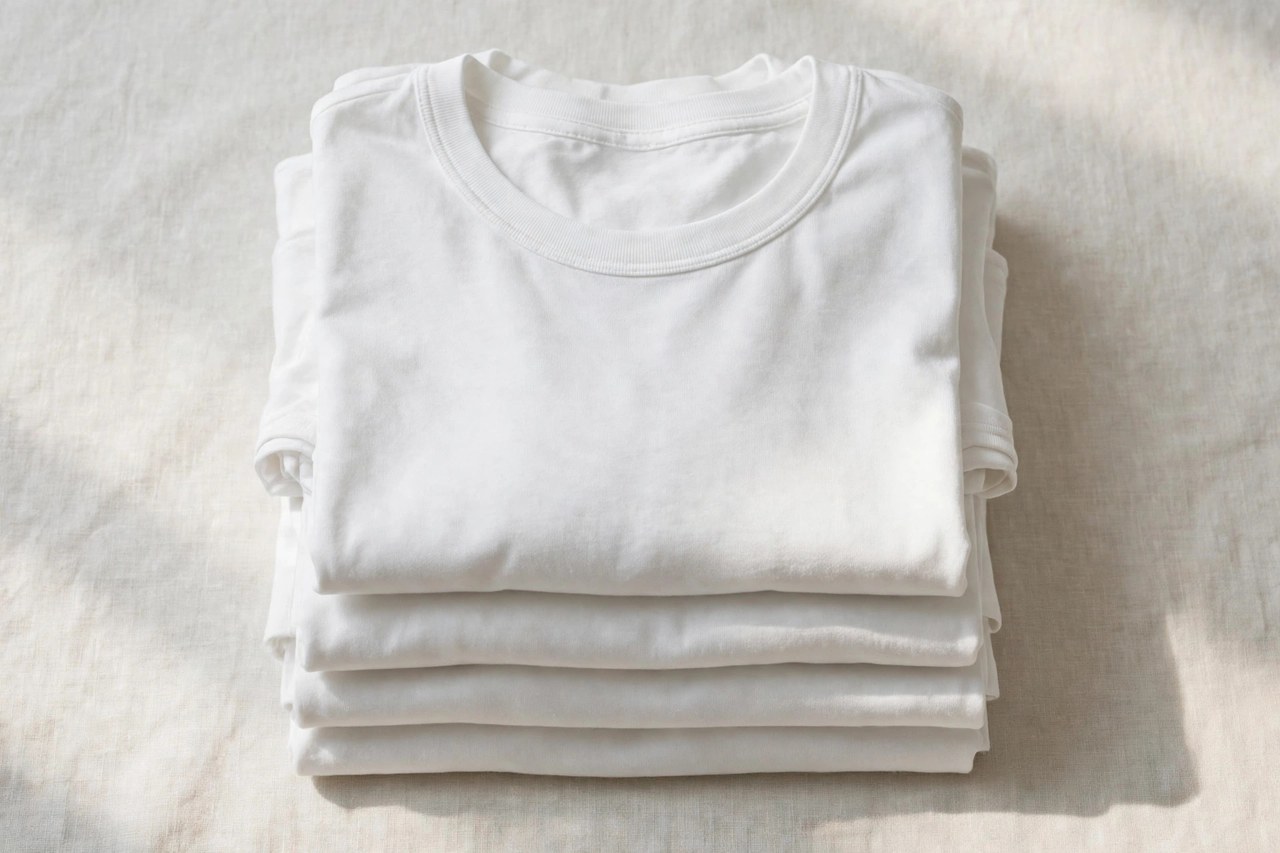
Men's crew neck undershirts are the base-layer T: a lightweight, close-fitting undershirt with a round neckline at the base of the neck, worn under shirts to absorb sweat, smooth the outline and protect the outer garment. This guide is strictly about the garment as a product - fabrics, cuts, sizing and care - because an undershirt is an engineered layer: it succeeds when you forget it entirely between putting it on and taking it off. This guide explains what to look for, how the sizing actually works, which fabrics and constructions earn their price, and how to care for the garment so it keeps doing its job season after season.
Styles and Construction
Fabrics decide the layer's behavior. Cotton is soft, cheap and absorbent but holds moisture against the skin and the shirt above. Cotton-modal blends are smoother, stronger when wet and keep their shape longer. Modern microfiber undershirts wick and dry fastest and are cut longest to stay tucked. Construction details to verify: a collar band with elastane so the neck keeps its line, side-seamless or flat-seamed bodies under arms, and a length that reaches well past the waistband - an undershirt that untucks has failed its one mechanical job. The crew neckline will show under an open collar; the V-neck exists for men who want it hidden, and the crew exists for those who prefer the covered neck or the classic visible band.
Read the fiber label first on anything worn next to skin. Cotton breathes and feels familiar but holds moisture; modal is smoother and stronger wet; modern microfibers move sweat and dry fast; and two to five percent elastane is what keeps waistbands and leg openings recovering instead of relaxing. Flat or covered seams where fabric crosses skin, a plush-backed waistband, and a cut matched to your leg and activity matter more than any brand mark.
Fit and Sizing
Size an undershirt closer than a T-shirt - it is a second skin, not a shirt - but never compressive unless it is sold as compression: the body should lie smooth with no riding up, armholes high enough not to bunch under a shirt's sleeve, and length sufficient to stay tucked through a day of sitting and reaching. Between sizes, take the longer body over the tighter one; a slightly relaxed undershirt still works, a short one does not.
Next-to-skin fit starts from an honest waist measurement taken where the band will sit. A correct base layer disappears in wear - no riding, no adjusting, no deep band marks at day's end. Between sizes, close athletic cuts usually reward sizing up and relaxed cuts sizing down; with any new construction, buy one test garment before committing to a multipack.
Wearing and Care
Wash before first wear, launder with the lights, and replace on condition: when the collar band ripples permanently, the underarms have yellowed through treatment, or the body has shrunk short of tucking, the layer has finished its service. A rotation of seven or more spreads the wash count. The outer shirts you protect will outlast several rotations of the undershirts that protected them - that is the economics of the layer.
Wash before first wear, keep a rotation of seven to ten pieces so no single garment is laundered weekly to death, and dry synthetics low to protect their elastane. Replace on condition, not calendar: when a waistband stays stretched after washing, leg elastic ripples, or the fabric thins enough to lose support, the garment has finished its service and no wash will restore it.
Common Questions
Crew neck or V-neck undershirt?
Choose by the shirt above: a crew neck's band shows under an open collar - fine, even classic, if it is clean and white - while a V-neck stays hidden. Under a tie or a buttoned collar both disappear equally, and there the crew's extra coverage wins on sweat protection across the chest. Most men end up owning both for different shirts.
How long should an undershirt be?
Long enough to stay tucked through a full day: several inches past the waistband, with tall sizes for tall men. Length is the specification most cheap undershirts skimp on and the failure wearers feel most - an undershirt that escapes at the back by noon is a size or a cut problem, not a tucking-technique problem.
Do undershirts really protect dress shirts?
Measurably: the undershirt absorbs the sweat and body oil that yellow collars and underarms and degrade shirt fabric, and it takes the deodorant contact that stains shirting. Shirts worn over undershirts need gentler, less frequent laundering and routinely last far longer. The undershirt is a sacrificial layer - cheap to replace, unlike the shirt.
More in Men's Clothes Guide C
The Undershirt Drawer
The crew neck belongs with its drawer-mates — the men’s undershirts guide and the V-neck undershirt — because the crew-versus-V question is the undershirt drawer’s founding decision. Treat the garment strictly as a product: fabric, cut, length and service life.
Looking for Men's Clothing Stores?
This guide explains men's crew neck undershirts. To browse where to buy, visit our men's clothing store directory, where you can find retailers that carry them.