Men's T-Shirts Guide
A men's t-shirt is the foundational knit top: a pullover shirt named for the T shape formed by its body and short sleeves, usually with a round crew neckline and no collar, buttons or pockets. This guide treats the t-shirt as a garment in its own right - its fabrics, weights, necklines and construction - because the tee is the most-worn, most-washed and most-replaced item in most men's wardrobes, and small quality differences compound across dozens of wears.
Shop Men's T-Shirts Now
Shop Men's T-Shirts on Amazon Shop Men's T-Shirts on eBayThe Amazon and eBay links on this page are affiliate links. If you make a purchase through them, Apparel Search may earn a commission.
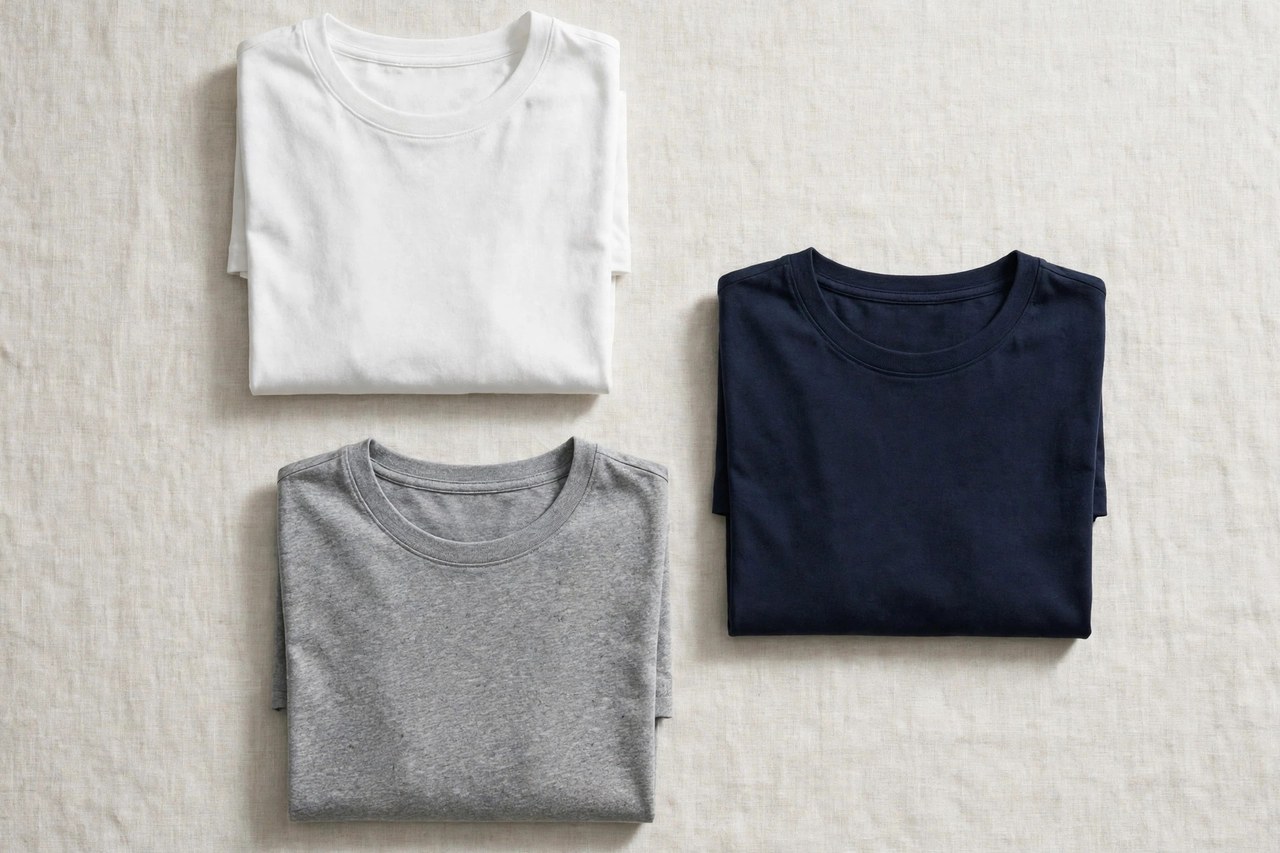
A men's t-shirt is the foundational knit top: a pullover shirt named for the T shape formed by its body and short sleeves, usually with a round crew neckline and no collar, buttons or pockets. This guide treats the t-shirt as a garment in its own right - its fabrics, weights, necklines and construction - because the tee is the most-worn, most-washed and most-replaced item in most men's wardrobes, and small quality differences compound across dozens of wears. This guide covers the styles worth knowing, the fit points that decide comfort, the fabrics and construction that separate a good buy from a regret, and the simple care that makes the garment last.
Styles and Construction
Fabric weight is the first specification: lightweight tees (around 140-160 gsm) drape and layer well but show wear sooner, midweight cloth (180-200 gsm) is the durable everyday standard, and heavyweight tees hold a structured, boxy shape. Cotton jersey is soft and breathable; cotton-polyester blends resist shrinkage and fading; ring-spun and combed cotton feel smoother against the skin. Judge construction at the collar - a ribbed neckband with a coverstitched seam that springs back after stretching - at the shoulder tape that stops the neckline sagging, and at side seams: tubular tees have none, while seamed tees fit the torso more precisely. Print, pocket and neckline variants (V-neck, henley-style plackets in tee cloth) all start from this same base garment.
A top earns its keep in finishing: seams that hang straight and stay even at eight to twelve stitches per inch, collars and plackets that lie flat after washing, buttons sewn with thread shanks so they sit in their holes without pulling. Hold the cloth to the light - a tight, even weave or knit outwears a loose one at the same labeled weight, and pattern pieces cut on grain keep the garment from twisting around your body by the third wash.
Fit and Sizing
A t-shirt should skim the torso without pulling across the chest, with shoulder seams at the shoulder bone and sleeves ending mid-bicep. Untucked length should cover the waistband and end around mid-fly; a tee worn as an undershirt needs extra length to stay tucked. Expect cotton tees to shrink mainly in length in the first washes, so judge the fit after washing when possible, and size from the maker's chest measurement rather than a habitual letter size.
Fit tops shoulders and chest first, because tailors cannot cheaply move either: the shoulder seam ends at the shoulder bone, the chest closes without pulling, and both arms raise without the hem escaping the waistband. Tucked lengths must stay tucked sitting; untucked lengths should end mid-fly. Sleeves are the cheap alteration, shoulders the permanent one - reject a wrong shoulder for any reason, forgive a long sleeve for many.
Wearing and Care
Wash tees inside out in cool or warm water, keep dark colors together, and dry low or on the line - heat is what fades prints, tires collar ribbing and shortens length over time. Fold rather than hang knit tees, because hangers stretch shoulders into points. Treat stains before drying, since a dryer sets them, and retire a tee to undershirt or layering duty when the collar loses its recovery rather than when the body wears out - the neckline almost always goes first.
Launder tops by the label with three defaults: cool or warm water to protect color and trims, dark and printed pieces inside out, and low or line drying, which is the largest single lever on a shirt's lifespan. Fasten buttons and zips before washing to protect the whole load, treat stains before the dryer can set them, and store knits folded so their shoulders keep the shape they were knitted with.
Common Questions
What weight t-shirt is best for everyday wear?
Midweight jersey, roughly 180-200 grams per square meter, is the everyday sweet spot: opaque, structured enough to wear alone, and durable through frequent washing. Go lighter for layering and hot climates, heavier for a boxy, workwear-style drape - and check whether the maker publishes weight at all, because that honesty usually signals a better garment.
Should a t-shirt have side seams?
Either can be good. Tubular (seamless-body) tees are comfortable and economical but can twist around the torso as they age. Side-seamed tees are cut and sewn to a shape, so they fit more deliberately and resist twisting, at a slightly higher price. If a favorite tee slowly rotates on your body, side seams are the fix.
How do I stop a t-shirt collar from stretching out?
Choose a collar with lycra or elastane in the ribbing and a taped, coverstitched neck seam, avoid yanking the shirt off by the neck, and never hang a wet tee by its collar. Drying flat or folding promptly after low-heat drying preserves the ribbing's recovery far longer.
More in Men's Clothes Guide T
Background and History
Well, this is certainly a very important category of men's fashion. It would be difficult to find a man without at least one of these garments in their wardrobe. The T-shirt evolved from undergarments used in the 19th century, and in the mid-20th century transitioned from undergarment to general-use casual clothing. T-shirts were originally worn as undershirts, but are now worn frequently as the only piece of clothing on the top half of the body. A T-shirt typically extends to the waist, but length can vary. The garment is common as a crewneck, but other variants of the T-shirt neckline are also popular, such as the V-neck. A T-shirt (or tee shirt, or tee) is a style of shirt, named after the T shape of the body and sleeves. It is normally associated with short sleeves, a round neck line known as a crew neck, with no collar. However, variations are available for this category of shirt. Men's t-shirts are generally made of a light, inexpensive fabric, and are easy
Photos

More to Explore on Apparel Search
- Types of T-shirts
- Men's Designer T-shirts
- Men's Graphic T-shirts
- Men's Novelty T-shirts
- Men's Band T-shirts
- Long Sleeve Men's T-shirts
- Men's Shirts
- Wholesale Blank T-shirts
- Men's T-shirt Stores
- Men's Ringer Tees
- men's cotton t-shirts
- men's printed cotton t-shirts
- men's printed t-shirts
- Men's Clothes Guide H-P
- Men's Clothes Guide Q-Z
Looking for Men's Clothing Stores?
This guide explains men's t-shirts. To browse where to buy, visit our men's clothing store directory, where you can find retailers that carry them.