Men's Cotton T-Shirts Guide
Men's cotton t-shirts are tees knitted from cotton jersey - the T-shirt in its defining material, against which every blend and synthetic is measured. The crewneck page of this letter treats the T-shirt as a garment; this page treats it as a fiber question: what kind of cotton, spun how, knitted how heavy - because between two white tees that look identical on the rail, the cotton is the entire difference between the one you keep for a decade and the one you demote by summer.
Shop Men's Cotton T-Shirts Now
Shop Men's Cotton T-Shirts on Amazon Shop Men's Cotton T-Shirts on eBayThe Amazon and eBay links on this page are affiliate links. If you make a purchase through them, Apparel Search may earn a commission.
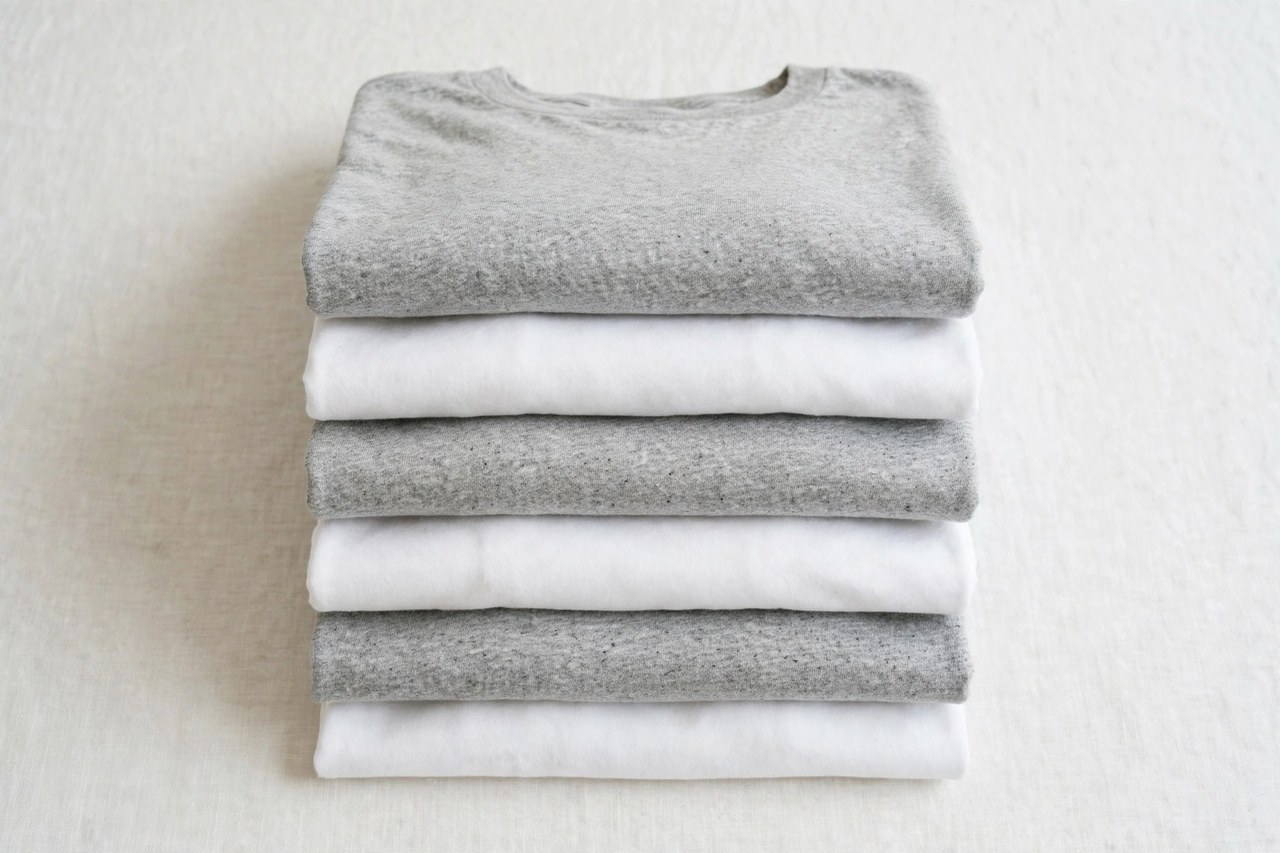
Men's cotton t-shirts are tees knitted from cotton jersey - the T-shirt in its defining material, against which every blend and synthetic is measured. The crewneck page of this letter treats the T-shirt as a garment; this page treats it as a fiber question: what kind of cotton, spun how, knitted how heavy - because between two white tees that look identical on the rail, the cotton is the entire difference between the one you keep for a decade and the one you demote by summer. This guide covers the styles worth knowing, the fit points that decide comfort, the fabrics and construction that separate a good buy from a regret, and the simple care that makes the garment last.
Styles and Construction
Cotton grades ascend from carded open-end (cheapest, coarsest, twists and pills) through ring-spun (smoother, stronger) to combed long-staple and organic variants whose premium is hand and longevity. Jersey weight runs 120 to 240 grams per square meter: light cloth drapes and breathes for layering, midweights (160-200) are the standalone standard, heavyweights stand up like garments. Slub jerseys knit irregular yarns for texture; garment-dyed tees trade color punch for softness and pre-shrunk calm. Pure cotton breathes and takes print beautifully; its only confession is wrinkles, moisture-holding and the collar's mortality, all managed by weight and rotation.
A top earns its keep in finishing: seams that hang straight and stay even at eight to twelve stitches per inch, collars and plackets that lie flat after washing, buttons sewn with thread shanks so they sit in their holes without pulling. Hold the cloth to the light - a tight, even weave or knit outwears a loose one at the same labeled weight, and pattern pieces cut on grain keep the garment from twisting around your body by the third wash.
Fit and Sizing
Fit by the crewneck doctrine with a cotton adjustment: pure cotton shrinks in length and relaxes in the body across its first washes, so buy length generously and the body exactly - pre-shrunk and garment-dyed shirts have largely prepaid the shrinkage and can be bought true. Heavyweight cloth forgives a closer fit by holding its own line; lightweight cloth shows everything and wants a cleaner size.
Fit tops shoulders and chest first, because tailors cannot cheaply move either: the shoulder seam ends at the shoulder bone, the chest closes without pulling, and both arms raise without the hem escaping the waistband. Tucked lengths must stay tucked sitting; untucked lengths should end mid-fly. Sleeves are the cheap alteration, shoulders the permanent one - reject a wrong shoulder for any reason, forgive a long sleeve for many.
Wearing and Care
Wash cool, inside out, dry low or line-dry to defend the length and the color, and rotate a stable set rather than riding one tee weekly - cotton jersey's wash life is generous but finite, and rotation is how a favorite survives to become vintage. Retire by the collar and the hand: when the band ripples or the cloth turns boardy through its wash count, the tee has rendered its service.
Launder tops by the label with three defaults: cool or warm water to protect color and trims, dark and printed pieces inside out, and low or line drying, which is the largest single lever on a shirt's lifespan. Fasten buttons and zips before washing to protect the whole load, treat stains before the dryer can set them, and store knits folded so their shoulders keep the shape they were knitted with.
Common Questions
What is the best cotton for a t-shirt?
Combed, ring-spun, long-staple cotton in a midweight jersey is the quality standard: smoother against skin, stronger in the wash, slower to pill and twist. Supima and quality organic cottons sit in this tier. Carded open-end cotton makes the promotional tee; the difference is obvious by the fifth wash even when invisible on the rail.
Do organic cotton t-shirts last as long?
Yes, when the underlying fiber quality matches: 'organic' certifies the growing, not the grade, and a long-staple organic tee is a premium garment, while a short-staple one is an ordinary tee with a virtuous label. Buy the fiber specifications first and the certification as the tiebreaker it honestly is.
How many washes should a good cotton tee survive?
A quality midweight tee in rotation should look right through fifty-plus washes and remain serviceable well past a hundred; cheap open-end tees twist, thin and lose their collars in fifteen to twenty-five. Rotation multiplies everything - five tees worn weekly in turn each see a fifth of the washes of one worn daily.
More in Men's Clothes Guide C
More to Explore on Apparel Search
Looking for Men's Clothing Stores?
This guide explains men's cotton t-shirts. To browse where to buy, visit our men's clothing store directory, where you can find retailers that carry them.