Men's Printed T-shirts Guide
Printed t-shirts are tees carrying a printed design - a graphic, photograph, slogan or artwork applied to the chest, back or all over - and they are the most expressive square foot of cloth in a man's wardrobe: band and tour shirts, art prints, humor, heritage logos and statements of every allegiance. This guide is the family's overview: the print methods and how to read them, placement and proportion, and how printed tees are fitted and kept. Two specialists sit beside it in this letter - printed cotton t-shirts, for the natural-fiber substrate, and pocket tees, for the small-print end of the art.
Shop Men's Printed T-shirts Now
Shop Men's Printed T-shirts on Amazon Shop Men's Printed T-shirts on eBayThe Amazon and eBay links on this page are affiliate links. If you make a purchase through them, Apparel Search may earn a commission.
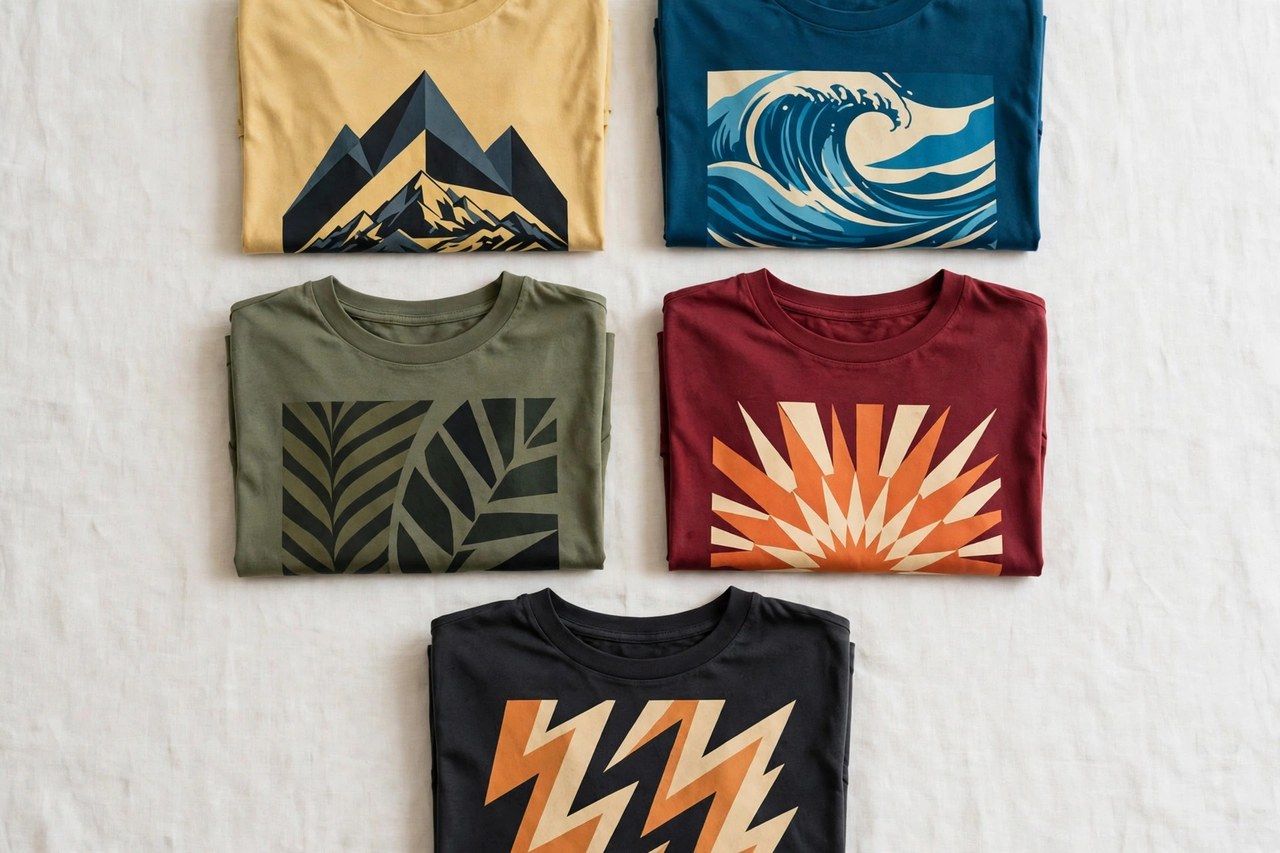
Printed t-shirts are tees carrying a printed design - a graphic, photograph, slogan or artwork applied to the chest, back or all over - and they are the most expressive square foot of cloth in a man's wardrobe: band and tour shirts, art prints, humor, heritage logos and statements of every allegiance. This guide is the family's overview: the print methods and how to read them, placement and proportion, and how printed tees are fitted and kept. Two specialists sit beside it in this letter - printed cotton t-shirts, for the natural-fiber substrate, and pocket tees, for the small-print end of the art. This guide is built around the questions buyers actually ask: which style, which size, which fabric, and what will it look like after a year of real use - answered in order, with the trade-offs stated plainly.
Read the Method by Touch
Methods make the print's lifespan, so learn to read them by touch. Screen printing lays ink through a mesh stencil, design color by color: bold, opaque, the durable standard, with a surface you can feel - plastisol sits on the cloth, water-based and discharge inks sink into it, as our printed cotton guide details. Direct-to-garment printing sprays water-based ink like an inkjet: photographic detail and unlimited color for short runs, softer and less wash-hardy. Heat transfer applies a pre-printed film with heat and pressure: cheap, quick, stiff across large areas and the first to crack and peel. Dye sublimation, on polyester only, turns ink to gas that becomes part of the fiber: permanent, feel-less, all-over capable, and impossible on cotton. The hand test sorts a shop shelf in seconds - flex the print, stretch it slightly, look at its edges: a print that moves with the jersey and shows clean registration will outlive one that sits like a sticker, whatever the tag claims.
A top earns its keep in finishing: seams that hang straight and stay even at eight to twelve stitches per inch, collars and plackets that lie flat after washing, buttons sewn with thread shanks so they sit in their holes without pulling. Hold the cloth to the light - a tight, even weave or knit outwears a loose one at the same labeled weight, and pattern pieces cut on grain keep the garment from twisting around your body by the third wash.
Proportion Is Placement
Placement obeys proportion. The standard chest print centers between the shoulders with its top a few inches below the collar; back prints mirror the position between the shoulder blades; left-chest prints borrow the pocket's discretion. A design should be sized to the shirt size - graded by better makers, one-size on cheap ones, which is why the same art looks balanced on a medium and lost or cramped at the extremes. Fit the tee to carry the art flat: a print stretched over a too-tight chest distorts and cracks early, a print sagging in a too-loose one reads as a poster in a bag. Body fit rules are the tee's usual - shoulder at the bone, chest smooth, hem at mid-fly - with fabric weight as the print's foundation: midweight jersey holds a large design flat and is the default choice for serious graphics, while featherweight fashion tees suit small or distressed art that moves with the cloth.
Fit tops shoulders and chest first, because tailors cannot cheaply move either: the shoulder seam ends at the shoulder bone, the chest closes without pulling, and both arms raise without the hem escaping the waistband. Tucked lengths must stay tucked sitting; untucked lengths should end mid-fly. Sleeves are the cheap alteration, shoulders the permanent one - reject a wrong shoulder for any reason, forgive a long sleeve for many.
Print Preservation With a Shirt Attached
A printed tee's care is print preservation with a shirt attached. Inside out, always: the print faces the drum and other garments otherwise. Cool water, mild detergent, no chlorine bleach, and line drying as the default - heat cracks inks, fades colors unevenly and tires the jersey, and the difference compounds across fifty washes. Iron never lands on a print; steam near it or iron the reverse. Rotation is preservation too: a favorite graphic worn weekly and washed weekly lives a harder year than three shirts sharing the duty. Done right, screen prints on sound jersey soften into the beloved state - the tour shirt that has earned its fade - while transfers simply fail. Buy the method as carefully as the design, and the shirt's message survives as long as its meaning does, which is the whole contract of the garment.
Launder tops by the label with three defaults: cool or warm water to protect color and trims, dark and printed pieces inside out, and low or line drying, which is the largest single lever on a shirt's lifespan. Fasten buttons and zips before washing to protect the whole load, treat stains before the dryer can set them, and store knits folded so their shoulders keep the shape they were knitted with.
Common Questions
Which printed t-shirt method lasts longest?
Screen printing, in its plastisol form, for bold designs - it is the durable standard, surviving years of washing with gradual softening rather than failure. Dye sublimation on polyester never cracks or fades because the ink becomes the fiber, but it works only on synthetics and light colors. Direct-to-garment trades lifespan for photographic detail. Heat transfers are the shortest-lived: the film stiffens, cracks and peels first, especially across large designs. The flex test in the shop - stretch the print gently - predicts most of this before you buy.
How should a printed t-shirt fit?
Well enough to keep the art flat and legible: shoulder seams at the bone, chest smooth without the print stretching or distorting, and length to about mid-fly. Tight fits crack prints early by holding them under tension; oversized fits let the design sag and fold. Choose midweight jersey for large graphics, since it holds a design flat against the chest, and check that the print itself is centered and level - correct placement on the correct body is what separates a graphic tee from a billboard with sleeves.
Why do printed t-shirts crack, and can it be prevented?
Prints crack when the ink film - thickest in plastisol screen prints and heat transfers - loses flexibility faster than the jersey beneath it, through heat, harsh washing and age. You slow it decisively: wash inside out in cool water, skip chlorine bleach, line dry instead of tumble drying, never iron the print, and avoid holding the print under stretch by buying the right size. Soft-hand methods - water-based, discharge and sublimation - barely crack at all, because little or no film sits on the surface to fail.
More in Men's Clothes Guide P
The Difference From a Printed Shirt
If you have already read our men’s printed shirts page you have a general understanding — the primary difference is the garment under the print, a knitted tee rather than a woven shirt, with everything that follows for print methods, hand and care. See also the designer, graphic and novelty t-shirt guides and the printed cotton t-shirts guide in this letter.
More to Explore on Apparel Search
Looking for Men's Clothing Stores?
This guide explains men's printed t-shirts. To browse where to buy, visit our men's clothing store directory, where you can find retailers that carry them.