Men's Graphic T-shirts Guide
A men's graphic t-shirt is a T-shirt - the unisex fabric shirt named after the T shape of its body and sleeves, normally short-sleeved with a round crew neck and no collar - carrying graphics: printed designs such as novelty prints, band artwork, comic imagery and logos. Where the plain tee is a blank, the graphic t-shirt is a page: the garment is the medium and the print is the message. This guide takes the print as its subject - how graphics are put on fabric, where they sit, what the great subject families are, and how print quality is judged before the shirt is washed ten times.
Shop Men's Graphic T-shirts Now
Shop Men's Graphic T-shirts on Amazon Shop Men's Graphic T-shirts on eBayThe Amazon and eBay links on this page are affiliate links. If you make a purchase through them, Apparel Search may earn a commission.
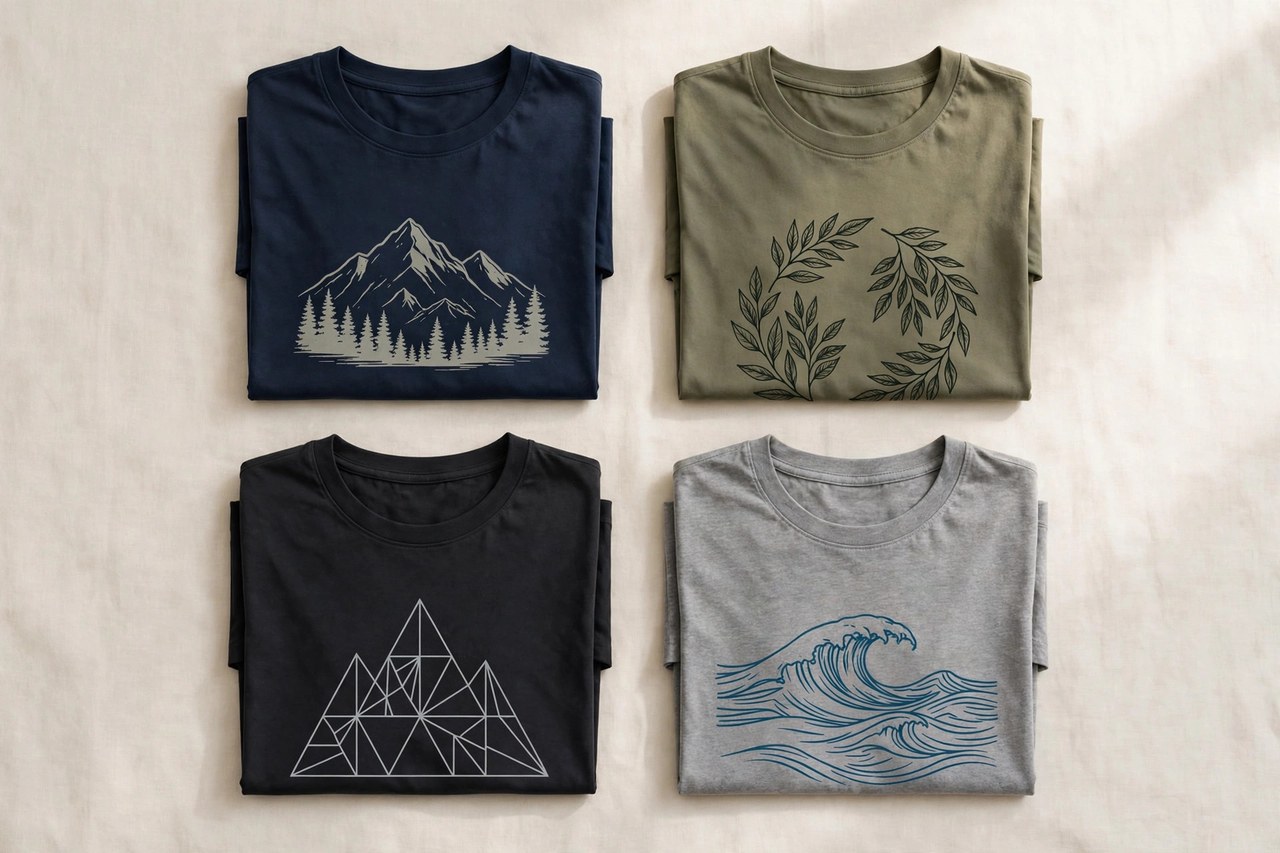
A men's graphic t-shirt is a T-shirt - the unisex fabric shirt named after the T shape of its body and sleeves, normally short-sleeved with a round crew neck and no collar - carrying graphics: printed designs such as novelty prints, band artwork, comic imagery and logos. Where the plain tee is a blank, the graphic t-shirt is a page: the garment is the medium and the print is the message. This guide takes the print as its subject - how graphics are put on fabric, where they sit, what the great subject families are, and how print quality is judged before the shirt is washed ten times. This guide is built around the questions buyers actually ask: which style, which size, which fabric, and what will it look like after a year of real use - answered in order, with the trade-offs stated plainly.
Styles and Construction
Print method is destiny. Screen printing lays ink through stencils, one color at a time, and remains the quality standard: opaque, durable prints with a slight hand feel that soften into the fabric over washes. Direct-to-garment printing sprays the design like an inkjet - unlimited colors and fine photographic detail, a thinner print that can fade faster. Heat transfers and vinyl sit on the surface and crack first where the shirt flexes most. Placement has its own grammar: the classic center chest, the full front, the small left-chest mark with a large back print, and the all-over print at the family's loud end. The subject families organize the market: novelty prints and humor, band and rock t-shirts carrying licensed artwork, comic book t-shirts, designer t-shirts where the graphic is the brand's signature, and printed cotton t-shirts as the everyday base - each has its own guide linked below, and the terminology section's types of t-shirts maps the wider family.
A top earns its keep in finishing: seams that hang straight and stay even at eight to twelve stitches per inch, collars and plackets that lie flat after washing, buttons sewn with thread shanks so they sit in their holes without pulling. Hold the cloth to the light - a tight, even weave or knit outwears a loose one at the same labeled weight, and pattern pieces cut on grain keep the garment from twisting around your body by the third wash.
Fit and Sizing
Fit the graphic tee by the print's geometry as much as the body's. A center-chest design should sit centered and level on the chest it was sized for: on a shirt too large it drifts toward the stomach, too small and it stretches and distorts across the chest, cracking a screen print's ink film with every wear. Shoulders and chest follow the plain tee's rules - seam on the shoulder bone, no pulling - and length decides whether the lower edge of a full-front print survives tucking. Sizing up for a relaxed fit is a legitimate style choice with vintage-style prints; sizing down is never kind to a graphic. When the design matters, try the shirt on and look at the artwork's placement in the mirror, because that placement is half of what you are buying.
Fit tops shoulders and chest first, because tailors cannot cheaply move either: the shoulder seam ends at the shoulder bone, the chest closes without pulling, and both arms raise without the hem escaping the waistband. Tucked lengths must stay tucked sitting; untucked lengths should end mid-fly. Sleeves are the cheap alteration, shoulders the permanent one - reject a wrong shoulder for any reason, forgive a long sleeve for many.
Wearing and Care
Print care decides whether the graphic outlives the shirt or the shirt outlives the graphic. Wash inside out, cool, with like colors: that one habit protects print from abrasion, heat and fading more than any detergent choice. Dry low or on the line, never iron directly on a print (iron inside out), and keep bleach away from anything with artwork. Screen prints cure and soften over early washes, then hold for years; transfers and vinyl are on a countdown that heat accelerates. Store folded rather than hung so the shoulders keep their shape, and stack prints away from direct sun in the drawer or closet. A good graphic tee, washed as its print demands, is a five-year garment; washed carelessly, the artwork is a one-season poster.
Launder tops by the label with three defaults: cool or warm water to protect color and trims, dark and printed pieces inside out, and low or line drying, which is the largest single lever on a shirt's lifespan. Fasten buttons and zips before washing to protect the whole load, treat stains before the dryer can set them, and store knits folded so their shoulders keep the shape they were knitted with.
Common Questions
How can you tell a quality graphic print before buying?
Look at opacity, edges and feel. A quality screen print is fully opaque (the shirt color does not ghost through light inks), its edges are crisp where the design meets blank fabric, and the ink sits slightly in the fabric rather than as a thick plastic slab on top of it. Stretch the print gently: quality ink flexes with the knit; a print that shows white cracks when stretched new will crack in earnest by the tenth wash. Check alignment too - a design printed off-center or tilted was made carelessly, and carelessness rarely stops at one step.
What is the difference between screen printing and direct-to-garment?
Screen printing pushes ink through a stencil screen for each color: vibrant, opaque and the most durable method, economical in runs, with a slightly raised hand feel that softens with washing. Direct-to-garment (DTG) prints the design with a specialized inkjet: unlimited colors, photographic detail and no minimum run, but a thinner ink deposit that can fade sooner and struggles for opacity on dark shirts. Bands and brands selling volume classics usually screen print; one-off and photo-real designs usually arrive by DTG.
Why do graphic t-shirts crack, and can it be prevented?
Prints crack when their ink film is stressed beyond its flexibility - by a too-tight fit stretching it over the chest, by hot drying baking it brittle, by transfers aging on the surface, or by cheap ink printed too thick. Prevention is the care routine: correct fit, inside-out cool washes, low or line drying, no iron on the print. A quality screen print on a well-fitting shirt, washed that way, softens instead of cracking and can outlast the fashion that produced it.
More in Men's Clothes Guide G
The Tee and Its Graphics
A T-shirt (or tee shirt, or tee) is a style of unisex fabric shirt, named after the T shape of the body and sleeves, normally associated with short sleeves and a round neckline known as a crew neck, with no collar — and a graphic t-shirt is one with graphics such as novelty prints. The family includes men’s t-shirts, printed t-shirts, printed cotton t-shirts, designer t-shirts and novelty t-shirts, and the subject tribes of band t-shirts, rock band t-shirts and comic book t-shirts, with the terminology section’s types of t-shirts and the blog’s graphic t-shirt posts alongside. This page covers the artwork; the graphic tees page covers the garment.
Looking for Men's Clothing Stores?
This guide explains men's graphic t-shirts. To browse where to buy, visit our men's clothing store directory, where you can find retailers that carry them.