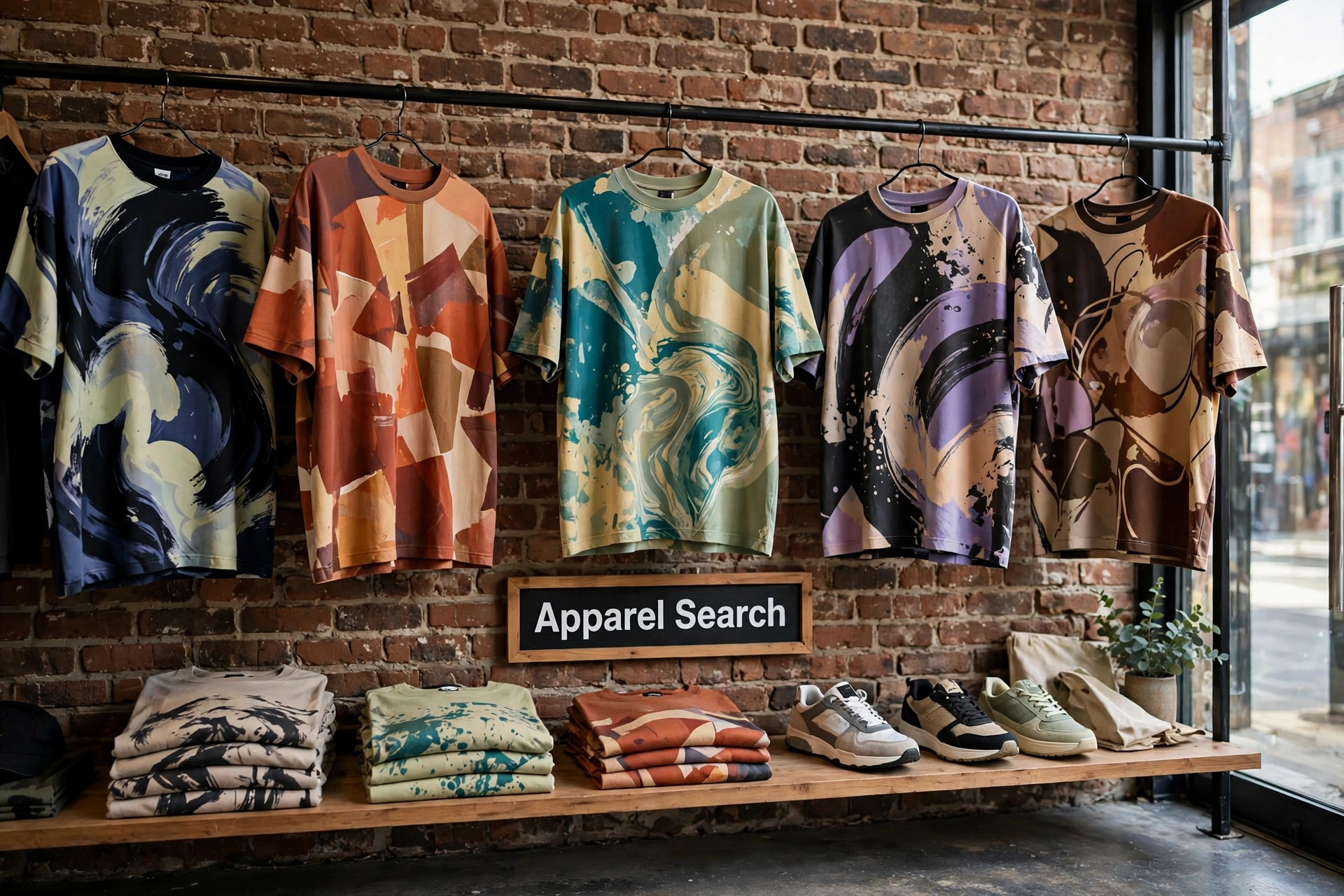
The oversized graphic tee is streetwear's foundation garment — the piece the rest of the outfit is built around, from skate and hip-hop roots to today's drops and collaborations. It looks like the simplest item in clothing, and at the cheap end it is. But the version streetwear actually wears is a designed object: a boxy, heavyweight jersey cut with dropped shoulders, carrying a graphic that was placed, sized and printed with intent. The difference between that tee and a regular shirt bought two sizes too big is visible from across the street. This guide breaks down the fit, the prints, the styling formulas that balance the volume, and the quality markers that separate a tee worth building outfits on from one that sags, twists and cracks by August.
It sits between three deeper guides: the Men's Streetwear Guide for the style as a whole, the men's and women's graphic tee guides for the garment family, and the oversized t-shirt styling guide for outfit-by-outfit formulas across all styles, not just streetwear.
The Silhouette
The Oversized Fit, Defined Precisely
A true oversized streetwear tee is cut oversized, which is a different thing from being sized oversized. The pattern is drafted wide through the chest and body, the shoulder seam drops two to five centimeters past the natural shoulder, the sleeve widens and lengthens to end near the elbow, and the body stays roughly standard in length — hip to just below — so the volume reads horizontal, not long. The collar sits higher and tighter than a fashion tee's, usually a thick ribbed crew neck that holds its ring shape against the loose body.
Sizing follows from that: buy your normal size in a genuinely oversized cut and it will fit as intended. Sizing up in a regular tee adds length everywhere — longer body, longer sleeves that pass the elbow, a collar that sags — and produces the borrowed-clothes look the style is often wrongly accused of. When in doubt between two sizes in a true oversized cut, the smaller usually keeps the proportions cleaner, because the width is already built in.
The Graphic
Reading the Print: Types, Placement, Taste
- Screen print is the standard — ink laid on the surface, capable of bold flat color and fine detail. A good screen print feels integrated with the fabric, not like a plastic sheet sitting on it.
- Puff print raises the ink into a soft 3-D relief; a streetwear staple for logos and lettering, best kept to smaller areas.
- Embroidery replaces ink with thread for small chest marks and premium pieces — the most durable decoration of all, and the most expensive to produce.
- All-over and garment-dyed prints treat the whole shirt as the canvas; vintage washes, sun-fade effects and cracked-print finishes are printed or washed in deliberately to imitate years of wear.
- Placement follows conventions worth knowing: a small left-chest mark reads classic and quiet; the big front graphic is the statement format; back prints — large across the shoulder blades, often with a small chest counterpart — are the streetwear signature, designed to be read as you walk away.
As for the artwork itself: logos, licensed band and character graphics, photo prints, typography pieces and abstract art all live in the style. The taste rule is simple — one graphic idea per outfit, worn like you mean it. And buy the licensed version: official graphics are printed better, last longer, and support the artists and acts whose work is being worn, while unlicensed copies are where most of the truly bad printing in this category hides.
Wearing It
Styling Formulas That Balance the Volume
An oversized top creates volume in the top half of the silhouette; streetwear styling manages that volume rather than fighting it.
- Wide with wide: the full streetwear proportion — oversized tee over baggy jeans or cargos, chunky sneakers below. It works because every element agrees; the tee is not the odd one out.
- Volume up, structure down: pair the tee with straight-leg trousers or clean shorts when you want the graphic to lead and the rest to behave. Shorts should end near the knee to keep the ratio right.
- The front tuck: a small tuck at the front waistband gives the boxy drape a waist point without losing the looseness — the easiest way to wear the style with slimmer bottoms.
- Layered: under an open overshirt, work jacket or hoodie, the graphic becomes the center panel of a layered look; over a long-sleeve tee or thermal, it carries into cold weather — a founding skate formula.
- Footwear anchors it: substantial sneakers balance a wide top half. Delicate, minimal shoes under a big tee make the outfit top-heavy.
Oversized is a proportion, not a size. Every piece in the outfit has to agree with it.
Before You Buy
Quality Markers Worth Paying For
- Fabric weight. The single best predictor. Streetwear-grade jersey runs roughly 220–280 GSM — hold it up: it should drape in soft folds, not flutter. Lightweight jersey (under ~180 GSM) twists after washing and lets large prints distort.
- Collar construction. A thick ribbed collar with a reinforcing tape at the back neck keeps the ring shape; a thin, floppy collar is the first thing to fail and the hardest to forgive.
- Print hand-feel. Run a palm over the graphic: quality prints flex with the fabric. A stiff, board-like print panel will crack early and wear hot.
- Print registration and edges. Colors should align, edges should be crisp, and there should be no ink in the seams or stray marks — the tell-tale signs of rushed production.
- Side seams and shrinkage. Seamed bodies hold the boxy shape better than tubular knits in this weight class, and pre-shrunk or garment-dyed pieces keep the fit you bought.
The Men's Graphic T-Shirts Guide and the Women's Graphic T-Shirts Guide cover construction and care across the whole category, and the t-shirt product directory collects styles across brands. The term itself is defined in our streetwear glossary entry.
Making It Last
Care That Keeps Prints Alive
Almost everything that ruins a graphic tee happens in the laundry. Wash inside out — this one habit protects the print from drum friction — in cold water on a gentle cycle, with similar colors, since oversized streetwear tees are often garment-dyed and shed dye early in their lives. Skip the tumble dryer when you can: heat is what curls collar ribbing, shrinks length, and ages screen ink into cracks. Hang or flat-dry instead. Iron inside out, never across a print, and fold rather than hang heavyweight tees for storage, because their own weight slowly stretches the shoulders on a hanger. Treated this way, a heavyweight graphic tee keeps its shape and print for years — which is how the vintage ones this style imitates got to look the way they do.
Good to Know
Common Questions
- How oversized should an oversized graphic tee actually be?
- Deliberately boxy, not simply big: dropped shoulders, sleeves ending near the elbow, a body wide enough to drape rather than cling, and a hem around the hip. Buying two sizes up in a regular-fit tee gives you length without the designed width, which reads as a mistake rather than a style.
- What fabric weight makes a graphic tee feel premium?
- Streetwear's benchmark is heavyweight cotton jersey, roughly 220 GSM and up, which drapes in the boxy silhouette, holds a large print without distorting it, and survives washing. Thin, lightweight jersey sags at the collar, twists, and lets big prints crack early.
- How do I keep the print on a graphic tee from cracking?
- Wash inside out, cold, on a gentle cycle; skip the tumble dryer where you can, and never iron directly on the print. Heat and friction are what age screen prints — most cracking blamed on quality is actually laundry damage.
- Are vintage and band-style graphic tees still part of streetwear?
- Yes — washed-out, single-stitch-era and licensed band and logo graphics are a permanent part of the style. Buy licensed or genuinely vintage pieces rather than unlicensed copies; the real articles hold their value and their print quality is usually better.
More to Explore
- Men's Streetwear Guide — the style whole: fits, drops and wardrobe grammar
- Women's Streetwear Guide — oversized fits, sneakers and graphic tees on women's proportions
- Men's Graphic T-Shirts Guide — construction, fit and care in depth
- Women's Graphic T-Shirts Guide — the women's side of the category
- How to Style an Oversized T-Shirt — outfit formulas beyond streetwear
- T-Shirts: Product Directory — tee styles across brands
- Oversized Clothing Guide — the general oversized fit guide — how designed volume works across every garment
Search Apparel Search