01 — The Basics
What “Oversized” Actually Means
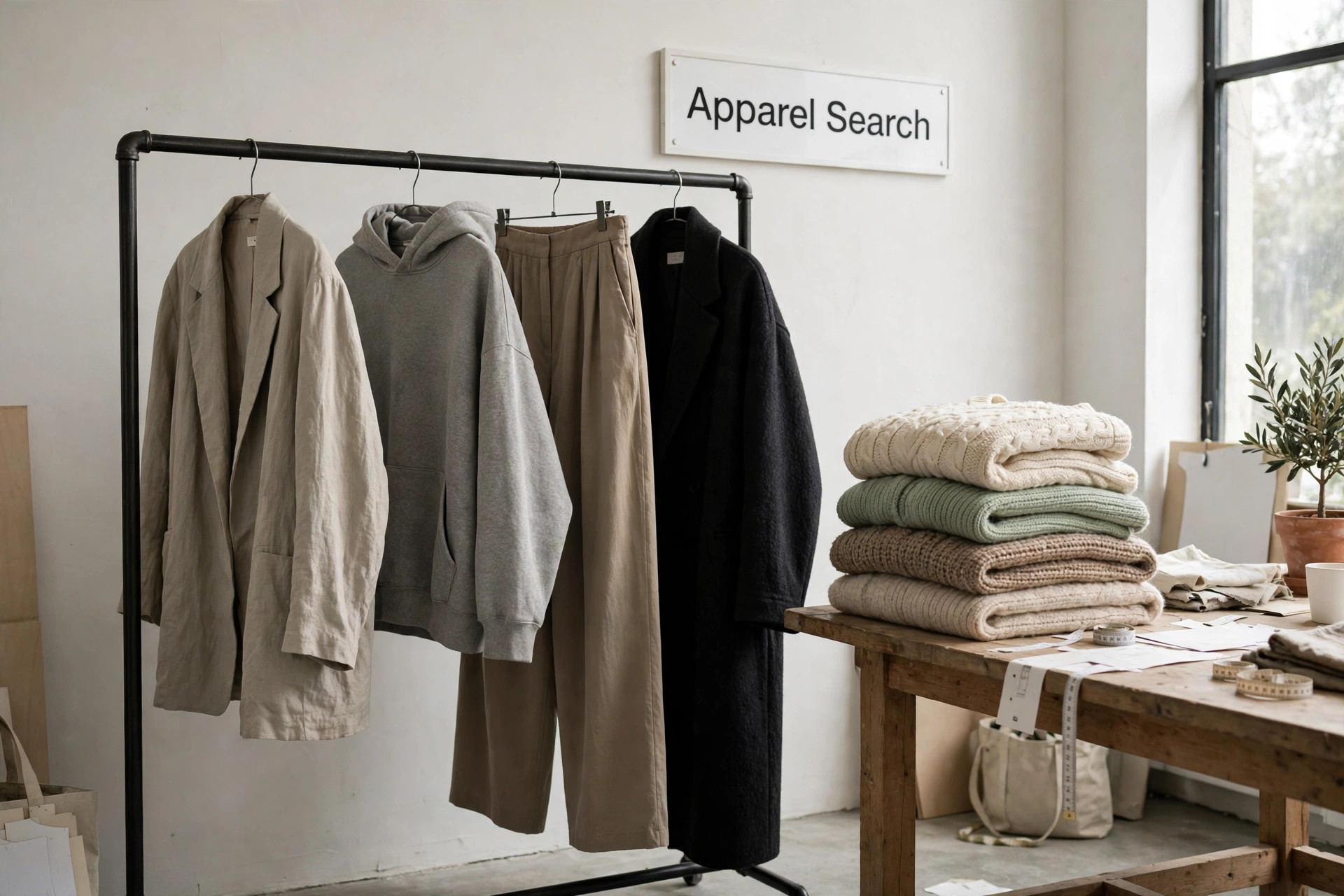
Oversized clothing is cut with deliberate extra volume — more ease through the body, a shoulder seam that drops below the natural shoulder, longer sleeves and hems, a wider leg. The key word is deliberate. A garment designed to be oversized is patterned that way from the first draft: the designer decides exactly where the extra cloth goes and, just as importantly, where it does not. The neckline usually stays close to standard, the armhole is shaped to drape rather than bind, and the hem is weighted so the garment hangs in a clean line instead of ballooning.
That is what separates oversized from simply buying two sizes up. A sized-up regular garment grows everywhere at once — the neckline widens, the shoulder seam slides to a place the pattern never intended, cuffs land in the wrong spot — and reads as borrowed. A true oversized piece looks intentional because it is: the proportions were engineered. Fashion also uses neighboring terms loosely, so it helps to separate them. Relaxed fit adds a little ease for comfort. Boxy describes a straight, squared body shape. Baggy is the streetwear end of the spectrum, with volume everywhere including the leg. Oversized is the umbrella: a designed silhouette with clearly more volume than the body inside it.
Oversized dressing runs in cycles — the broad shoulders of the 1980s, the hip-hop silhouettes of the 1990s, the minimalist volume of the 2010s — but it never fully leaves, because it does two things few other fits do. It is genuinely comfortable, and it makes proportion itself the design statement: the garment’s shape, not the body’s, is what the eye reads first.
02 — The Wardrobe
The Pieces That Work Oversized
Some garments take extra volume gracefully because their structure survives it. Coats and blazers lead the list: a strong shoulder and a long line turn volume into drape, and an oversized coat over slim layers is one of the most reliable silhouettes in modern dressing. Knitwear follows — a chunky oversized sweater or cardigan reads as warmth and ease, and the knitted fabric’s softness keeps the volume friendly rather than severe. Shirts and T-shirts are the everyday entry point, and streetwear has built an entire wardrobe grammar on the oversized tee; the dedicated guide to streetwear oversized graphic tees covers that corner in depth, and the oversized cotton hoodie shows the same logic in fleece.
- Coats and blazers — structure carries the volume; look for a defined shoulder and a hem that hangs straight.
- Knitwear and hoodies — soft fabrics make volume read as comfort; ribbed cuffs and hems keep the shape anchored.
- Shirts and tees — the easiest start; a dropped shoulder and a longer body are the designed markers.
- Wide trousers and jeans — volume below the waist works when the waist itself is fitted and the leg breaks cleanly over the shoe.
- Scarves and wraps — the low-commitment test of the look; an oversized scarf adds volume you can remove at the door.
What rarely works oversized: formal suiting meant to signal precision, delicate occasion dresses whose design lives in close fit, and anything whose function is protective or technical. The pattern is consistent — oversized succeeds where drape and ease are part of the garment’s job, and fails where exact fit is the job.
03 — Wearing It
Styling Oversized Without Looking Sloppy
The difference between an oversized outfit that looks designed and one that looks accidental is almost always proportion management. The working rule is one volume at a time: a wide top over a slim leg, or a full trouser under a close-fitting top. Volume everywhere at once can work — streetwear proves it daily — but it is the advanced version, held together by consistent fabric weight, a limited color palette and confident footwear, not the place to start.
Show the body one anchor point — a wrist, an ankle, a waistline — and the volume around it reads as a choice.
Anchors are the second rule. Rolling a sleeve to show the wrist, choosing a cropped or tucked front so the waist registers, letting an ankle show above the shoe: each tells the eye where the person is inside the clothes, and that single reference point converts “too big” into “oversized.” The step-by-step formulas in How to Style an Oversized T-Shirt apply the same ideas to the single most-worn oversized piece. Third, mind the vertical line: oversized pieces are usually longer, so keep at least one clean vertical — an open coat over a column of one color, a long shirt over straight trousers — to carry the eye down rather than out. Finally, footwear needs enough visual weight to balance the volume above it; a delicate shoe under wide trousers and a big sweater disappears, while a chunkier sole or a boot holds the ground.
Fit checks before buying save most mistakes. The neckline should sit where it belongs even when the body is wide. The shoulder drop should look even on both sides. And the garment should move well — a designed oversized piece swings and settles; a merely big one sags and stays.
04 — Buying Well
Fabric and Structure: Why Good Oversized Looks Expensive
Oversized is an unforgiving fit to manufacture cheaply, because there is more fabric on display and its behavior is the whole design. The first marker is drape versus stiffness, chosen on purpose. A fluid fabric — a soft wool, a heavy jersey, a washed cotton — falls in folds and reads as ease. A stiff fabric stands away from the body and reads as structure. Both are legitimate; what fails is the in-between cloth that neither drapes nor holds, which collapses into wrinkles and makes the volume look accidental.
The second marker is weight at the edges. Well-made oversized garments finish their hems, cuffs and fronts so the extra cloth hangs straight: a hem with some body, ribbing that recovers, a coat front that does not curl. The third is seam placement — dropped shoulders and raglan lines should be symmetrical and deliberate, with pattern pieces that meet cleanly even where the fit is loose. And the fourth is honest sizing information: a brand that designs oversized will usually say so and advise taking your normal size, because the ease is already in the pattern. That advice is worth following — sizing down a designed oversized piece distorts the very proportions that make it work.
Set against the opposite end of the fit spectrum, the point sharpens. Tailored clothing — covered in the men’s tailored clothing guide and the women’s tailored clothing guide — builds its effect from closeness and precision. Oversized builds its effect from volume and ease. A good wardrobe uses both, on different days, for different statements — and judges each by its own standard rather than asking one to behave like the other.
05 — Good to Know
Common Questions
Is oversized the same as buying a size or two up?
No. A designed oversized garment is patterned with extra volume in chosen places — a dropped shoulder, a wider body, a longer hem — while the neckline, armhole and finishing stay engineered for that shape. A regular garment bought larger grows everywhere at once, including the places that should not move, and usually reads as ill-fitting rather than oversized. If a brand labels a piece oversized, take your normal size: the ease is already built in.
Can oversized clothing look professional?
Yes, with the structured end of the category: an oversized blazer or coat with a defined shoulder, worn over slim, neat layers, reads as modern tailoring rather than casual dress. Keep one volume at a time, anchor the silhouette with a visible waist or a clean trouser line, and choose smooth fabrics over slouchy ones. The softest oversized pieces — hoodies, slouchy knits — stay casual no matter how they are styled.
Does oversized work on petite or shorter frames?
It does when the volume is managed vertically. Choose oversized pieces with a shorter body length or a cropped cut, keep the lower half slim or straight, and show an ankle or wrist as an anchor point. One oversized piece per outfit is the reliable formula; head-to-toe volume shortens the visual line. Many brands now cut oversized within petite ranges, which keeps the designed proportions at a smaller scale.
What is the difference between oversized, relaxed and baggy?
Relaxed fit adds modest ease to a standard pattern for comfort — the garment still follows the body. Oversized is a designed silhouette with clearly more volume than the body, placed deliberately. Baggy is the loose, full-volume streetwear expression, with width through the leg and body alike. In practice the terms blur at the edges, but the intent differs: relaxed is about comfort, oversized is about proportion, baggy is about attitude.
More to Explore
Search Apparel Search